THE ADVENTURE COLLECTIVE® · Independent discovery and booking for outdoor travel

Skip the lines to explore one of Europe’s grandest palaces and its three-kilometer Royal Gardens. This guide covers what to see, when to go, and how to plan a practical, awe-inspiring visit to the Reggia di Caserta.
Skip the lines to explore one of Europe’s grandest palaces and its three-kilometer Royal Gardens. This guide covers what to see, when to go, and how to plan a practical, awe-inspiring visit to the Reggia di Caserta.
You step through an iron gate and the scale of the Reggia di Caserta unfolds: a long façade of stone, broad stairs, and fountains that push water and attention outward toward a sculpted horizon. The palace greets you with Baroque grandeur—rooms layered in gilding and fresco—then opens onto a garden axis that dares you to follow its three-kilometer procession of water, statuary, and clipped lawns.
Verified experiences and guided adventures in the surrounding area.
Operated by Roots in Rome · Caserta, Campania
You step through an iron gate and the scale of the Reggia di Caserta unfolds: a long façade of stone, broad stairs, and fountains that push water and attention outward toward a sculpted horizon. The palace greets you with Baroque grandeur—rooms layered in gilding and fresco—then opens onto a garden axis that dares you to follow its three-kilometer procession of water, statuary, and clipped lawns.
Built in the 18th century for the Bourbon kings of Naples, Caserta was designed as a royal capital and a rival to Versailles; its architecture blends Baroque drama with Neoclassical restraint. Geologically the site sits on Campanian plains fed by nearby volcanic soils, which helped sustain the vast geometric gardens and ornamental plantings. Locally, the palace is as much a civic symbol as a historic residence—Casertans point to its steps and fountains as meeting places and seasonal stages.
Practical guidance: plan a three-hour visit if you include the gardens. Follow the central axis first for the major fountains—leave the English Garden for a quieter return. Wear comfortable shoes; many surfaces are flagstone or gravel. Peak hours are late morning, so early arrival or late afternoon reduces crowds and harsh light for photos.
Accessibility is excellent for most routes, but keep in mind that interior rooms can be crowded and require steady walking. Bring water, a light layer for coastal breezes, and a map or audio guide to orient historical highlights. In short: arrive curious, dress practically, and let the palace’s architecture and gardens set the pace.
easy.
2–3 hours.
Suitable for most fitness levels; expect several hundred meters of walking and some stairs.
Yes—this offering includes a skip-the-line entry to the Reggia di Caserta to reduce waiting time at the main entrance.
Allocate about 2–3 hours for the interior and major garden features; plan 3–4 hours if you want to walk the full garden axis and English Garden.
Many public areas, including primary garden routes and interior spaces, are wheelchair accessible, though some historic floors may present thresholds or steps.
Both mobile and paper tickets are accepted, and only one ticket is required per booking as noted in the ticket terms.
Commissioned in the 18th century by the Bourbon kings of Naples, the palace was designed to serve as a royal court and administrative center, reflecting continental trends in courtly architecture.
The Reggia and its gardens are managed with heritage conservation priorities; stay on designated paths to protect plantings and historic surfaces.
Roots in Rome operates guided outdoor trips and adventures with an emphasis on safety, stewardship, and memorable experiences.
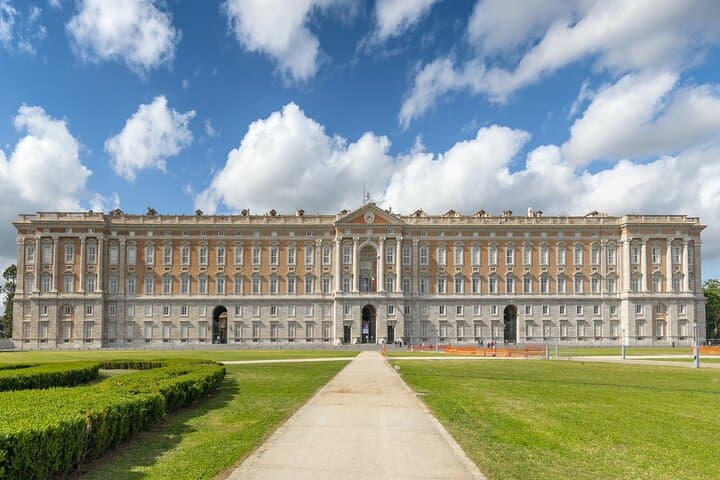
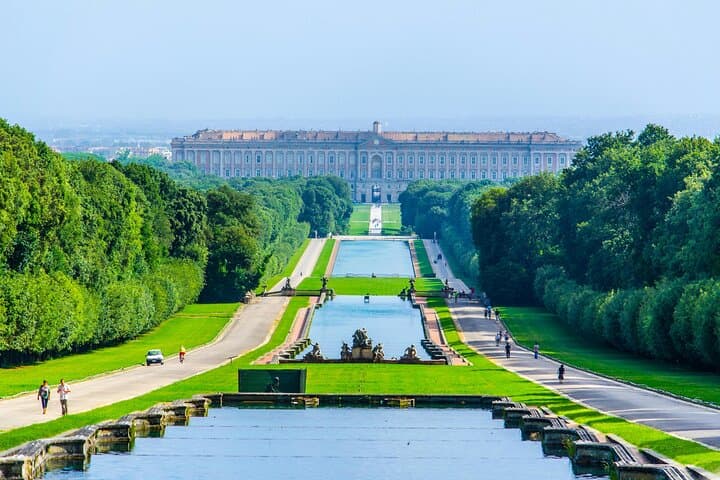
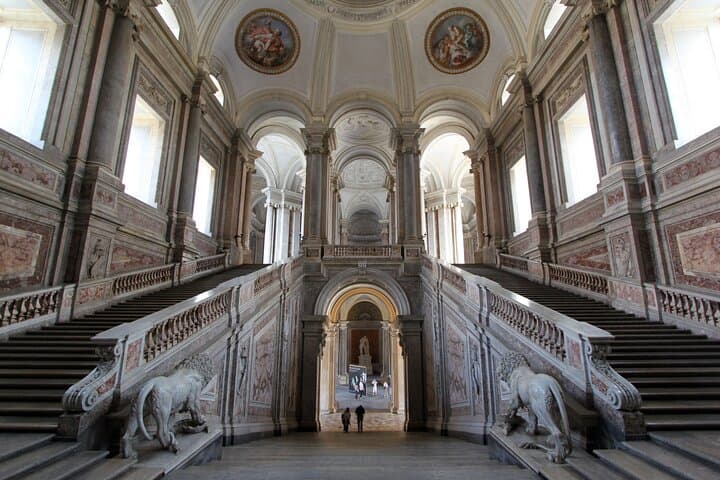

You step through an iron gate and the scale of the Reggia di Caserta unfolds: a long façade of stone, broad stairs, and fountains that push water and attention outward toward a sculpted horizon. The palace greets you with Baroque grandeur—rooms layered in gilding and fresco—then opens onto a garden axis that dares you to follow its three-kilometer procession of water, statuary, and clipped lawns.
You step through an iron gate and the scale of the Reggia di Caserta unfolds: a long façade of stone, broad stairs, and fountains that push water and attention outward toward a sculpted horizon. The palace greets you with Baroque grandeur—rooms layered in gilding and fresco—then opens onto a garden axis that dares you to follow its three-kilometer procession of water, statuary, and clipped lawns.
Built in the 18th century for the Bourbon kings of Naples, Caserta was designed as a royal capital and a rival to Versailles; its architecture blends Baroque drama with Neoclassical restraint. Geologically the site sits on Campanian plains fed by nearby volcanic soils, which helped sustain the vast geometric gardens and ornamental plantings. Locally, the palace is as much a civic symbol as a historic residence—Casertans point to its steps and fountains as meeting places and seasonal stages.
Practical guidance: plan a three-hour visit if you include the gardens. Follow the central axis first for the major fountains—leave the English Garden for a quieter return. Wear comfortable shoes; many surfaces are flagstone or gravel. Peak hours are late morning, so early arrival or late afternoon reduces crowds and harsh light for photos.
Accessibility is excellent for most routes, but keep in mind that interior rooms can be crowded and require steady walking. Bring water, a light layer for coastal breezes, and a map or audio guide to orient historical highlights. In short: arrive curious, dress practically, and let the palace’s architecture and gardens set the pace.