THE ADVENTURE COLLECTIVE® · Independent discovery and booking for outdoor travel

Glide from the marina to the wind-swept sands of Guincho on an e-bike loop that mixes jagged cliffs, royal-era architecture, and raw Atlantic surf—perfect for travelers who want accessibility without softening the edge of adventure.
Glide from the marina to the wind-swept sands of Guincho on an e-bike loop that mixes jagged cliffs, royal-era architecture, and raw Atlantic surf—perfect for travelers who want accessibility without softening the edge of adventure.
You push off from the eastern quay of Cascais Marina and the sea takes the lead.
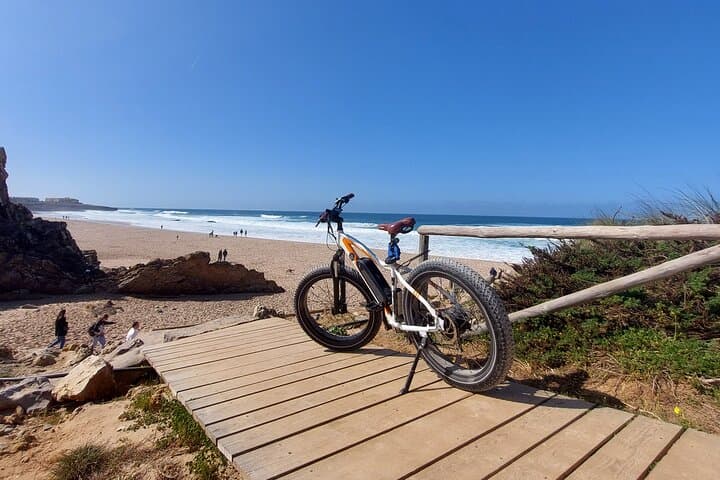
A ribbon of asphalt unfurls between sky and surf; gulls wheel and the Atlantic dares you closer with each gust. Your electric bike hums under you—quiet assistance for the climbs that punctuate the coastline—and the town’s pastel facades melt into headlands and jagged cliffs.
Verified experiences and guided adventures in the surrounding area.
Operated by Fully Charged eBikes · Cascais, Lisbon
You push off from the eastern quay of Cascais Marina and the sea takes the lead.
A ribbon of asphalt unfurls between sky and surf; gulls wheel and the Atlantic dares you closer with each gust. Your electric bike hums under you—quiet assistance for the climbs that punctuate the coastline—and the town’s pastel facades melt into headlands and jagged cliffs.
History and geology ride alongside. Once a sleepy fishing village, Cascais became a royal summer refuge in the 19th century, and the promenade reflects those layers: fishermen’s houses, Belle Époque villas, and modern marinas. The coastline here is carved from Cretaceous limestones and more recent sandstones; waves have ground hollows into the cliffs to form features like Boca do Inferno (the “Mouth of Hell”), where spouts of spray announce the ocean’s temper.
Culture is tactile: cafés open their doors to cyclists, surf schools dot Guincho, and Casa da Guia sits on a clifftop offering seafood and sea views. The Monte da Lua hills of Sintra rise inland, their forested slopes a quiet backdrop to the salt and wind. Local guides will point out when the route shifts from manicured promenade to cliffside road—pay attention to exposed headlands where wind and waves shape the day.
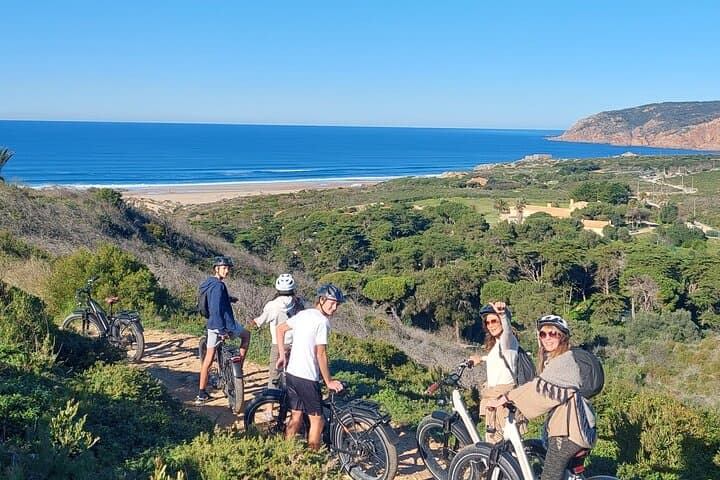
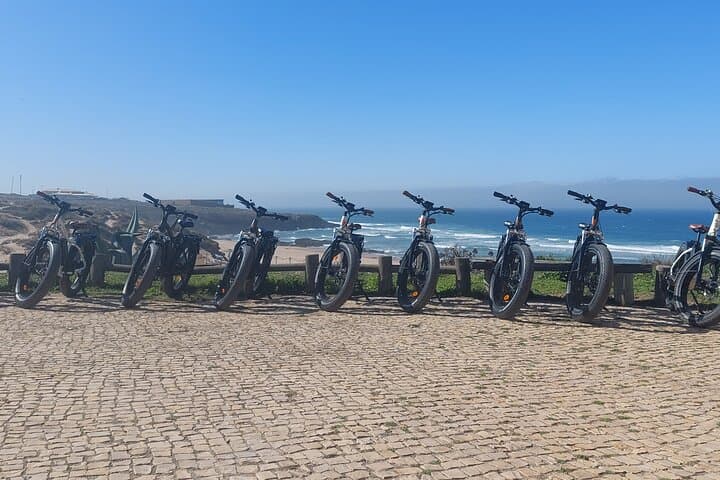
Practical guidance: this is a three-hour guided loop (about 20 km roundtrip) with the route designed for e-bikes so the effort stays light—expect a cumulative elevation gain of roughly 150–300 m from short coastal climbs and stair-like roads. Terrain alternates smooth paved promenade, narrow coastal roads, and short steep pitches; basic bike handling is required but no advanced skills. Helmets and bikes are included. Guides will set a steady pace with stops at Boca do Inferno, Casa da Guia, and a longer break at Guincho Beach—the wind-swept sand a chance to stretch legs and watch surfers wrestle the swell.
Timing matters: mornings are calmer and cooler; afternoons bring stronger onshore breezes that make Guincho famous among windsurfers. Dress in layers, bring a light windproof, and secure sunglasses—the glare off the ocean is real. Hydration is key; there are cafés but fewer services between Cascais center and Guincho.
Why go: it’s an accessible coastal tour that compresses natural drama, seaside history, and surf culture into a single, pedal-assisted morning. For travelers who want coastline beyond the car window—fast enough to cover ground, slow enough to notice—this ride delivers a clear, bracing taste of Portugal’s Atlantic edge.
easy.
3 hours.
Suitable for most fitness levels thanks to e-bike assistance; some stamina for 20 km and short climbs is helpful
The tour lasts about three hours and covers roughly 20 km roundtrip from Cascais Marina to Guincho Beach, including stops.
Yes—helmets and electric bicycles are provided as part of the tour price.
Yes—e-bikes reduce the effort required; however, participants should have basic bike handling skills and be comfortable on narrow coastal roads.
The operator may cancel tours in poor weather for safety; check cancellation terms and rebooking options before booking.
You can stop to enjoy the beach, but currents can be strong—avoid swimming outside lifeguarded areas and heed local warnings.
Public buses run between Cascais and nearby towns, but service is limited along the Guincho stretch; it’s simpler to complete the guided loop.
Cascais evolved from a fishing village into a 19th-century royal retreat, shaping its mix of maritime culture and period architecture along the waterfront.
This coastline lies near the Sintra-Cascais Natural Park—stay on designated roads and paths to protect dune systems and cliff vegetation.
Fully Charged eBikes operates guided outdoor trips and adventures with an emphasis on safety, stewardship, and memorable experiences.

You push off from the eastern quay of Cascais Marina and the sea takes the lead.
A ribbon of asphalt unfurls between sky and surf; gulls wheel and the Atlantic dares you closer with each gust. Your electric bike hums under you—quiet assistance for the climbs that punctuate the coastline—and the town’s pastel facades melt into headlands and jagged cliffs.
You push off from the eastern quay of Cascais Marina and the sea takes the lead.
A ribbon of asphalt unfurls between sky and surf; gulls wheel and the Atlantic dares you closer with each gust. Your electric bike hums under you—quiet assistance for the climbs that punctuate the coastline—and the town’s pastel facades melt into headlands and jagged cliffs.
History and geology ride alongside. Once a sleepy fishing village, Cascais became a royal summer refuge in the 19th century, and the promenade reflects those layers: fishermen’s houses, Belle Époque villas, and modern marinas. The coastline here is carved from Cretaceous limestones and more recent sandstones; waves have ground hollows into the cliffs to form features like Boca do Inferno (the “Mouth of Hell”), where spouts of spray announce the ocean’s temper.
Culture is tactile: cafés open their doors to cyclists, surf schools dot Guincho, and Casa da Guia sits on a clifftop offering seafood and sea views. The Monte da Lua hills of Sintra rise inland, their forested slopes a quiet backdrop to the salt and wind. Local guides will point out when the route shifts from manicured promenade to cliffside road—pay attention to exposed headlands where wind and waves shape the day.
Practical guidance: this is a three-hour guided loop (about 20 km roundtrip) with the route designed for e-bikes so the effort stays light—expect a cumulative elevation gain of roughly 150–300 m from short coastal climbs and stair-like roads. Terrain alternates smooth paved promenade, narrow coastal roads, and short steep pitches; basic bike handling is required but no advanced skills. Helmets and bikes are included. Guides will set a steady pace with stops at Boca do Inferno, Casa da Guia, and a longer break at Guincho Beach—the wind-swept sand a chance to stretch legs and watch surfers wrestle the swell.
Timing matters: mornings are calmer and cooler; afternoons bring stronger onshore breezes that make Guincho famous among windsurfers. Dress in layers, bring a light windproof, and secure sunglasses—the glare off the ocean is real. Hydration is key; there are cafés but fewer services between Cascais center and Guincho.
Why go: it’s an accessible coastal tour that compresses natural drama, seaside history, and surf culture into a single, pedal-assisted morning. For travelers who want coastline beyond the car window—fast enough to cover ground, slow enough to notice—this ride delivers a clear, bracing taste of Portugal’s Atlantic edge.