THE ADVENTURE COLLECTIVE® · Independent discovery and booking for outdoor travel

Make a full‑day sweep from Marrakech to Casablanca to see the Hassan II Mosque, drive the Atlantic Corniche and browse the Habous Quarter. This guided day trip blends architecture, coastal views and market culture into one manageable itinerary.
Make a full‑day sweep from Marrakech to Casablanca to see the Hassan II Mosque, drive the Atlantic Corniche and browse the Habous Quarter. This guided day trip blends architecture, coastal views and market culture into one manageable itinerary.
You leave Marrakech before sunrise and watch the red city shrink behind the bus window as olive groves and low hills blur past. By midmorning the Atlantic appears on the horizon, cold light skimming the water as Casablanca’s concrete coastline and the Hassan II Mosque assert themselves against the sea.
Verified experiences and guided adventures in the surrounding area.
Operated by Marruecos Para Viajar · Casablanca, Casablanca-Settat
You leave Marrakech before sunrise and watch the red city shrink behind the bus window as olive groves and low hills blur past. By midmorning the Atlantic appears on the horizon, cold light skimming the water as Casablanca’s concrete coastline and the Hassan II Mosque assert themselves against the sea.
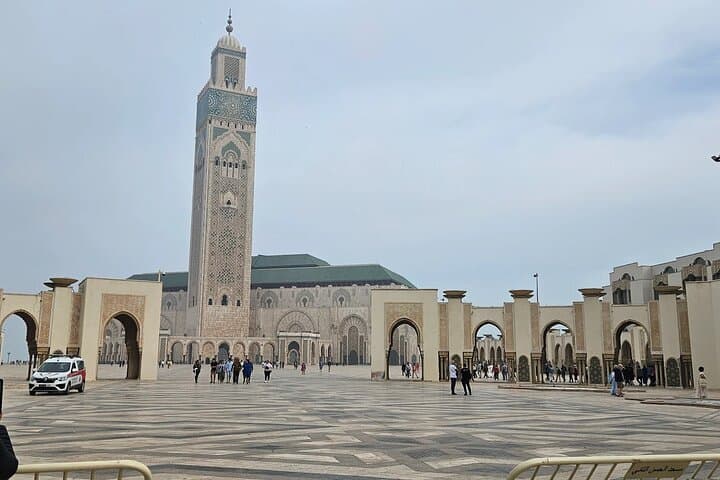
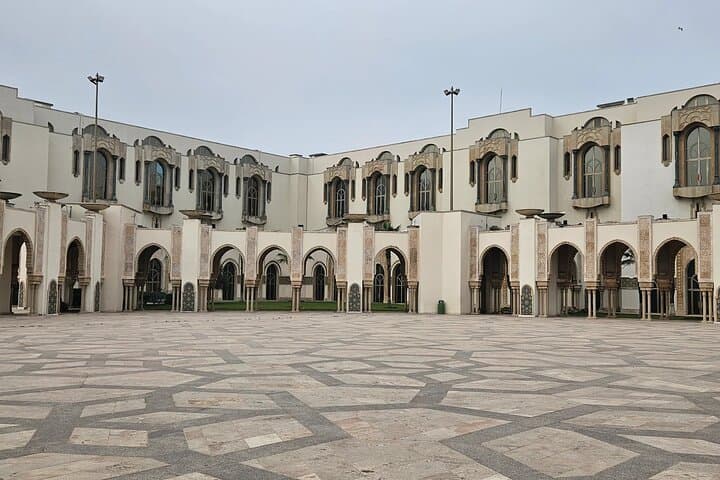
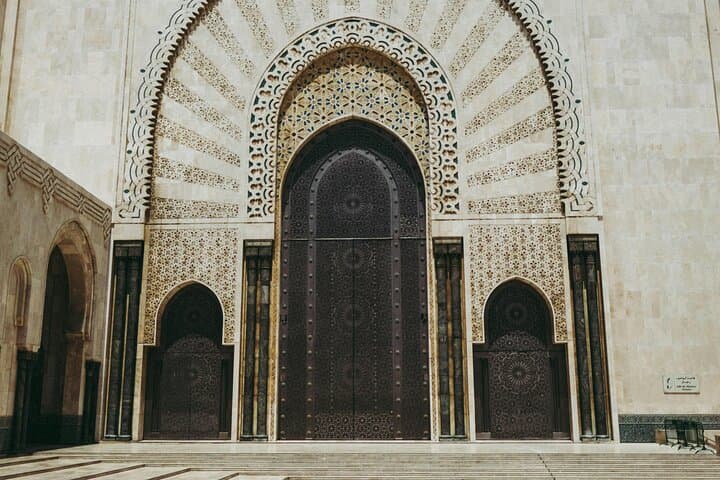
The mosque, completed in 1993, is a modern engineering statement—its 210-meter minaret rising like a lighthouse for a city shaped by trade, colonial planning and rapid post‑independence growth. Walk the glass-floored prayer hall and outside onto the Corniche, where the ocean pushes at the sea wall and fisherman’s boats bob near El Hank Lighthouse. Stroll the Habous Quarter to see a 20th‑century reinterpretation of Moroccan urban design: orderly souks, pastry shops such as Patisserie Bennis, and the ornate gates of the Royal Palace.
Practical guidance: this is a long but uncomplicated day—expect 9–12 hours including roughly 5 hours round‑trip driving. Standard mosque entry is paid on-site (€14 at time of writing) and interior access requires respect for dress codes; women should bring a scarf. Wear comfortable shoes for pavement and steps, bring layered clothing for cool sea breezes and a refillable water bottle. Photography is excellent at the Corniche at golden hour, but plan time windows: the itinerary compresses several stops into minutes, so prioritize mosque interior or a longer Habous visit if one appeals more.
Local tips: carry small change for pastries and tipping, keep valuables discreet in crowded markets, and allow extra time at hotel pickup—traffic can alter the schedule.
easy.
9–12 hours.
Light to moderate; be prepared for multiple short walks and stairs during stops
Standard entry is not included in the base price—there’s an on‑site fee (about €14) for interior access; some tour options offer skip‑the‑line upgrades.
Expect roughly 2.5–3 hours each way depending on traffic, with a scheduled break en route.
Lunch is not included; the itinerary offers options from seaside restaurants to casual cafés in the Habous Quarter—bringing local currency helps for small purchases.
Yes—infants can ride in strollers and child seats are available, but long driving time and mosque rules mean plan accordingly for young children.
Casablanca grew as a Moroccan port and then a French colonial hub; its Art Deco districts and Mohammed V Square reflect early 20th‑century urban planning, while Hassan II Mosque is a late‑20th‑century national project.
Coastal development pressures and heavy tourism demand mindful behavior—support local artisans, avoid single‑use plastics and respect religious sites when visiting.
Marruecos Para Viajar operates guided outdoor trips and adventures with an emphasis on safety, stewardship, and memorable experiences.

You leave Marrakech before sunrise and watch the red city shrink behind the bus window as olive groves and low hills blur past. By midmorning the Atlantic appears on the horizon, cold light skimming the water as Casablanca’s concrete coastline and the Hassan II Mosque assert themselves against the sea.
You leave Marrakech before sunrise and watch the red city shrink behind the bus window as olive groves and low hills blur past. By midmorning the Atlantic appears on the horizon, cold light skimming the water as Casablanca’s concrete coastline and the Hassan II Mosque assert themselves against the sea.
The mosque, completed in 1993, is a modern engineering statement—its 210-meter minaret rising like a lighthouse for a city shaped by trade, colonial planning and rapid post‑independence growth. Walk the glass-floored prayer hall and outside onto the Corniche, where the ocean pushes at the sea wall and fisherman’s boats bob near El Hank Lighthouse. Stroll the Habous Quarter to see a 20th‑century reinterpretation of Moroccan urban design: orderly souks, pastry shops such as Patisserie Bennis, and the ornate gates of the Royal Palace.
Practical guidance: this is a long but uncomplicated day—expect 9–12 hours including roughly 5 hours round‑trip driving. Standard mosque entry is paid on-site (€14 at time of writing) and interior access requires respect for dress codes; women should bring a scarf. Wear comfortable shoes for pavement and steps, bring layered clothing for cool sea breezes and a refillable water bottle. Photography is excellent at the Corniche at golden hour, but plan time windows: the itinerary compresses several stops into minutes, so prioritize mosque interior or a longer Habous visit if one appeals more.
Local tips: carry small change for pastries and tipping, keep valuables discreet in crowded markets, and allow extra time at hotel pickup—traffic can alter the schedule.