THE ADVENTURE COLLECTIVE® · Independent discovery and booking for outdoor travel

Spend a day between Casablanca’s Atlantic boulevards and Rabat’s fortified kasbahs on this private full-day tour. See Hassan II Mosque, wander the Habous quarter and explore Rabat’s Oudayas and Chellah with a local guide.
Spend a day between Casablanca’s Atlantic boulevards and Rabat’s fortified kasbahs on this private full-day tour. See Hassan II Mosque, wander the Habous quarter and explore Rabat’s Oudayas and Chellah with a local guide.
You step out of the car and the Atlantic breeze immediately rearranges your plan for the day—salt on your lips, seagulls arguing above the promenade, and the Hassan II Mosque looming with its minaret sliced sharply against the sky.
Verified experiences and guided adventures in the surrounding area.
Operated by Moroccan Local Tours · Casablanca, Casablanca-Settat
You step out of the car and the Atlantic breeze immediately rearranges your plan for the day—salt on your lips, seagulls arguing above the promenade, and the Hassan II Mosque looming with its minaret sliced sharply against the sky.
Morning in Casablanca moves between wide boulevards and cramped lanes: the modern business districts formed under the French protectorate, the reconstructed Anfa hill with its wartime conference history, and the Habous quarter where artisans still polish tin lamps and roll pastries in narrow alleys.
Rabat flips the script: river mouths, the hollowed Hassan Tower, and the Oudayas Kasbah—fortified walls that once marked imperial authority now host tiled patios and a quiet museum. Chellah’s Roman and medieval ruins lie reclaimed by cypress and nesting storks, evidence of layers of conquest and commerce.
Geology here is immediate: Atlantic sands buttress limestone cliffs; the coastal plain supports palms, pines and ornamental gardens that track centuries of urban expansion. Culture is tactile—call to prayer, souk bargaining, and tea rituals at family-run cafés.
Practical guidance: expect 7–9 hours of guided walking and chauffeured transfers between highlights; bring walking shoes, sun protection, a small daypack and modest clothing for mosque entry. Carry small bills for entrance fees (Hassan II ticket sold on-site) and tipping. Timing matters—start early to avoid heat and give the medinas the late-afternoon glow when light softens the stone.
This is a day of contrasts: Atlantic openness and compact medina lanes, modern architecture and ruined towers—designed to be seen on foot, but stitched together by a private vehicle that keeps the pace efficient and the experience intimate.
easy.
7–9 hours.
Light walking ability; you should be comfortable on uneven medina alleys and stairs for multiple short visits.
Entrance tickets are not included; they are purchased on-site (around 130 MAD) and can be paid by card at the mosque ticket office.
Expect several short walking segments totalling a few kilometers—mostly flat but with uneven cobbles and staircases in medinas and kasbahs.
Carry ID or a photocopy of your passport for hotel transfers and any official checkpoints; your guide will advise if originals are required.
Lunch is usually at a local restaurant but is not always included—check booking details and plan for a typical Moroccan meal budget if not provided.
Casablanca and Rabat reflect layers of Roman, Almohad and French protectorate influence—the Hassan Tower and Chellah mark medieval power while Habous was a 20th-century planned district.
Coastal erosion and urban expansion pressure shorelines and historic sites; travel with a guide who follows local conservation rules and supports preservation of medina neighborhoods.
Moroccan Local Tours operates guided outdoor trips and adventures with an emphasis on safety, stewardship, and memorable experiences.

You step out of the car and the Atlantic breeze immediately rearranges your plan for the day—salt on your lips, seagulls arguing above the promenade, and the Hassan II Mosque looming with its minaret sliced sharply against the sky.
You step out of the car and the Atlantic breeze immediately rearranges your plan for the day—salt on your lips, seagulls arguing above the promenade, and the Hassan II Mosque looming with its minaret sliced sharply against the sky.
Morning in Casablanca moves between wide boulevards and cramped lanes: the modern business districts formed under the French protectorate, the reconstructed Anfa hill with its wartime conference history, and the Habous quarter where artisans still polish tin lamps and roll pastries in narrow alleys.
Rabat flips the script: river mouths, the hollowed Hassan Tower, and the Oudayas Kasbah—fortified walls that once marked imperial authority now host tiled patios and a quiet museum. Chellah’s Roman and medieval ruins lie reclaimed by cypress and nesting storks, evidence of layers of conquest and commerce.
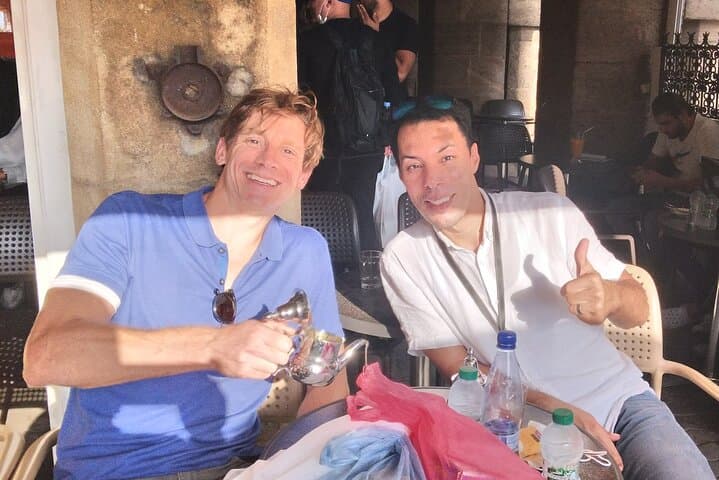
Geology here is immediate: Atlantic sands buttress limestone cliffs; the coastal plain supports palms, pines and ornamental gardens that track centuries of urban expansion. Culture is tactile—call to prayer, souk bargaining, and tea rituals at family-run cafés.
Practical guidance: expect 7–9 hours of guided walking and chauffeured transfers between highlights; bring walking shoes, sun protection, a small daypack and modest clothing for mosque entry. Carry small bills for entrance fees (Hassan II ticket sold on-site) and tipping. Timing matters—start early to avoid heat and give the medinas the late-afternoon glow when light softens the stone.
This is a day of contrasts: Atlantic openness and compact medina lanes, modern architecture and ruined towers—designed to be seen on foot, but stitched together by a private vehicle that keeps the pace efficient and the experience intimate.