THE ADVENTURE COLLECTIVE® · Independent discovery and booking for outdoor travel

Explore UNESCO‑listed Carthage, wander the blue‑and‑white alleys of Sidi Bou Said, then finish with a short camel ride along Gammarth’s coast. This full‑day tour from Hammamet or Sousse packs history, views, and a touch of local charm into eight hours.
Explore UNESCO‑listed Carthage, wander the blue‑and‑white alleys of Sidi Bou Said, then finish with a short camel ride along Gammarth’s coast. This full‑day tour from Hammamet or Sousse packs history, views, and a touch of local charm into eight hours.
The day begins with a cool Mediterranean light as an air‑conditioned vehicle winds north from Hammamet or Sousse toward the ruins of Carthage. You step out onto sun‑baked stone; seawinds nudge you toward Byrsa Hill where the silhouette of Saint‑Louis Cathedral watches over the scrub and ancient foundations.
Verified experiences and guided adventures in the surrounding area.
Operated by TUNISIVISION · Tunis, Tunis Governorate
The day begins with a cool Mediterranean light as an air‑conditioned vehicle winds north from Hammamet or Sousse toward the ruins of Carthage. You step out onto sun‑baked stone; seawinds nudge you toward Byrsa Hill where the silhouette of Saint‑Louis Cathedral watches over the scrub and ancient foundations.
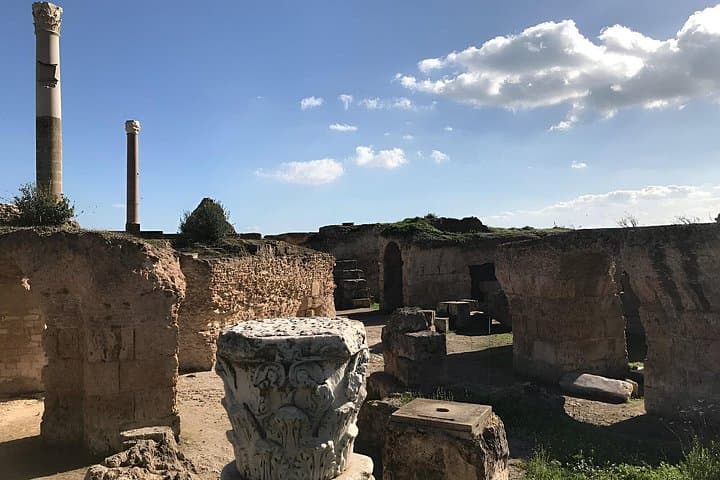
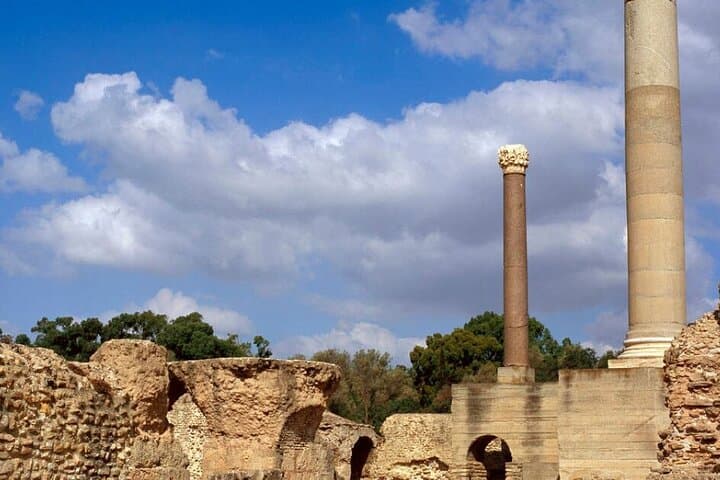
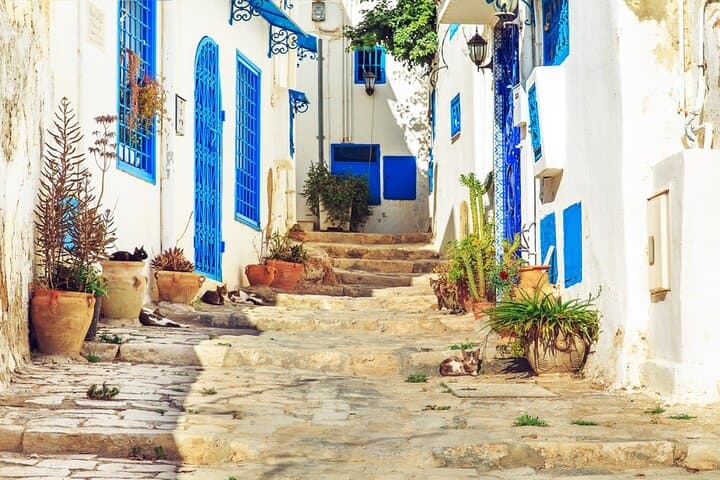
Carthage carries layers — Phoenician harbors, Punic walls, Roman baths — all sitting on limestone terraces carved by wind and time. The nearby American Cemetery stretches across green slopes, a quiet contrast where rows of markers meet the sea. Later, Sidi Bou Said appears like a painted idea of a village: white houses framed in ultramarine, alleys that funnel sea breezes and conversations. The Nejma Ezahra Palace recalls Baron d’Erlanger’s turn‑of‑the‑century love of music and Moorish revival detail.
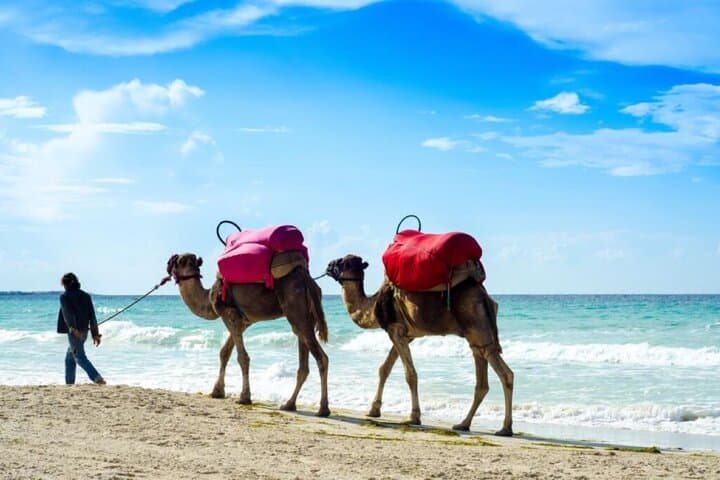
A short drive to Gammarth finishes with a gentle camel ride along coastal dunes; the animals rock and breathe as the ocean dares you to look farther out.
Practical guidance: expect uneven archaeological paths and short stair sections; wear sturdy shoes and bring sunscreen. The camel portion is brief and low‑impact but involves mounting and dismounting — not recommended for serious back problems. Midday heat makes morning or late‑afternoon visits more comfortable; park facilities and bottled water are generally available. Bring a compact camera, cash for small purchases and tips, and a light layer for coastal breeze. This full‑day tour balances historical depth with a memorable local touch — a compact cross‑section of northern Tunisia’s coast and culture.
moderate.
8 hours.
Moderate fitness recommended: able to walk 2–4 miles on uneven ground and climb short stair sections.
The camel ride is a short, introductory experience—about 20–30 minutes total—intended for photos and a mild coastal ride.
Admission is typically not included in operator pricing; check your booking details or bring cash for site fees if required.
Yes—children can participate, but note camel rides and archaeological terrain may be challenging for very young kids; strollers are not practical on ruins.
Pickups are provided from accommodations in Hammamet or Sousse; your exact pickup point and time will be confirmed at booking.
Carthage was a major Phoenician and later Roman metropolis; the ruins reflect successive civilizations and were listed as a UNESCO World Heritage Site in 1979.
Visitors should stay on marked paths to protect fragile archaeological remains and avoid taking artifacts; choose local guides who support site conservation efforts.
TUNISIVISION operates guided outdoor trips and adventures with an emphasis on safety, stewardship, and memorable experiences.
The day begins with a cool Mediterranean light as an air‑conditioned vehicle winds north from Hammamet or Sousse toward the ruins of Carthage. You step out onto sun‑baked stone; seawinds nudge you toward Byrsa Hill where the silhouette of Saint‑Louis Cathedral watches over the scrub and ancient foundations.
The day begins with a cool Mediterranean light as an air‑conditioned vehicle winds north from Hammamet or Sousse toward the ruins of Carthage. You step out onto sun‑baked stone; seawinds nudge you toward Byrsa Hill where the silhouette of Saint‑Louis Cathedral watches over the scrub and ancient foundations.
Carthage carries layers — Phoenician harbors, Punic walls, Roman baths — all sitting on limestone terraces carved by wind and time. The nearby American Cemetery stretches across green slopes, a quiet contrast where rows of markers meet the sea. Later, Sidi Bou Said appears like a painted idea of a village: white houses framed in ultramarine, alleys that funnel sea breezes and conversations. The Nejma Ezahra Palace recalls Baron d’Erlanger’s turn‑of‑the‑century love of music and Moorish revival detail.
A short drive to Gammarth finishes with a gentle camel ride along coastal dunes; the animals rock and breathe as the ocean dares you to look farther out.
Practical guidance: expect uneven archaeological paths and short stair sections; wear sturdy shoes and bring sunscreen. The camel portion is brief and low‑impact but involves mounting and dismounting — not recommended for serious back problems. Midday heat makes morning or late‑afternoon visits more comfortable; park facilities and bottled water are generally available. Bring a compact camera, cash for small purchases and tips, and a light layer for coastal breeze. This full‑day tour balances historical depth with a memorable local touch — a compact cross‑section of northern Tunisia’s coast and culture.