THE ADVENTURE COLLECTIVE® · Independent discovery and booking for outdoor travel

Ride a 4×4 into the Apuan Alps to inspect the vast white quarries that supplied marble to Rome and Renaissance masters. This two-hour guided Land Rover tour mixes geology, history, and a Colonnata tasting for a compact, off-road introduction to Carrara’s working landscape.
Ride a 4×4 into the Apuan Alps to inspect the vast white quarries that supplied marble to Rome and Renaissance masters. This two-hour guided Land Rover tour mixes geology, history, and a Colonnata tasting for a compact, off-road introduction to Carrara’s working landscape.
A low sun paints the exposed faces of the Apuan Alps white as the convoy climbs out of Carrara. You sit in a sturdy 4×4 as switchbacks tighten, vineyards give way to scree and the road edges reveal the raw, carved scars of the marble basins. Wind pushes around the vehicle and the quarry rims open like pages of geological history.
Verified experiences and guided adventures in the surrounding area.
Operated by Curioseety SRLS · Carrara, Tuscany
A low sun paints the exposed faces of the Apuan Alps white as the convoy climbs out of Carrara. You sit in a sturdy 4×4 as switchbacks tighten, vineyards give way to scree and the road edges reveal the raw, carved scars of the marble basins. Wind pushes around the vehicle and the quarry rims open like pages of geological history.
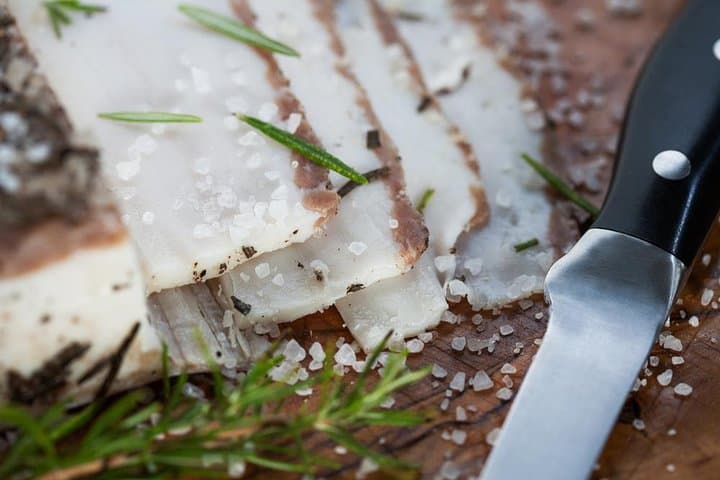
These quarries have supplied stone to Rome and Renaissance sculptors for more than two millennia; blocks hewn here built the Pantheon and supplied the marble Michelangelo prized. Geologically, you’re on compacted metamorphic marble pushed up with the Apennine uplift—hard, dense, and highly sought after for its uniform white veins. Culturally, the Colonnata valley bears a working-class heritage: families, centuries-old extraction techniques, and the cured Lardo di Colonnata, salted and matured in marble troughs.
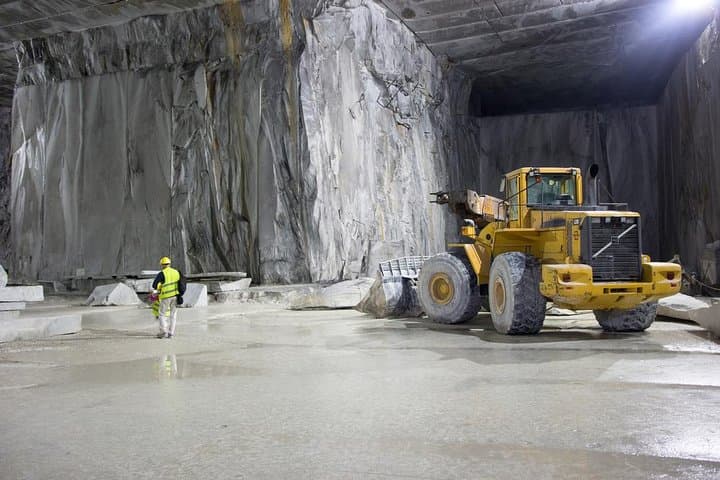
Practical guidance: the tour is a two-hour, guided off-road drive with short stops for views and a tasting. Expect unpaved stretches, exposed ledges, and altitude near 1,000 m; dress in layers and wear closed shoes with grip. Bring sun protection and a camera with zoom—the quarry faces and distant Tyrrhenian Sea line are photogenic but dusty. The guide explains modern and historic mining methods; you’ll learn where famous blocks were extracted and how contemporary operations balance production and safety.
Timing matters—mornings offer crisper light and fewer vehicles. Respect fenced areas and local workers; quarries are active industrial sites. End the outing in Colonnata for a slice of lardo and small-town authenticity before descending toward the coast.
easy.
2 hours.
Suitable for most fitness levels—tour is vehicle-based with short, easy walks at stops.
The tour lasts about two hours; expect roughly 60–90 minutes of on-road driving with multiple stops, including a main 4x4 ascent and a quarry visit.
Yes—it's vehicle-based and rated easy, but short walks may be uneven; those with mobility issues should check in advance and inform the operator.
Guides stop at safe, designated viewpoints; active extraction areas remain off-limits for safety and are only observed from a distance.
The tour offers a sampling stop, and the guide will point to local producers—full tastings or purchases are typically done independently in Colonnata.
Carrara’s marble has been quarried since Roman times and supplied stone for imperial monuments and Renaissance sculpture, including blocks favored by Michelangelo.
Quarrying reshapes landscapes; local regulation, access limits, and guided routes help protect workers and sensitive areas—stick to guided paths and support local IGP producers.
Curioseety SRLS operates guided outdoor trips and adventures with an emphasis on safety, stewardship, and memorable experiences.
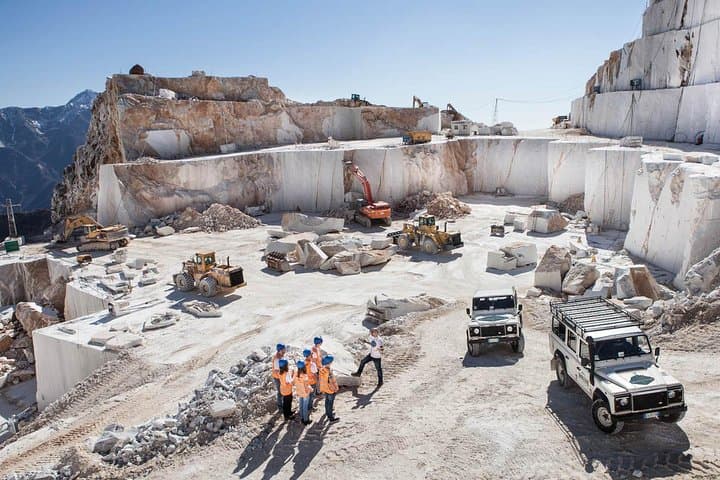
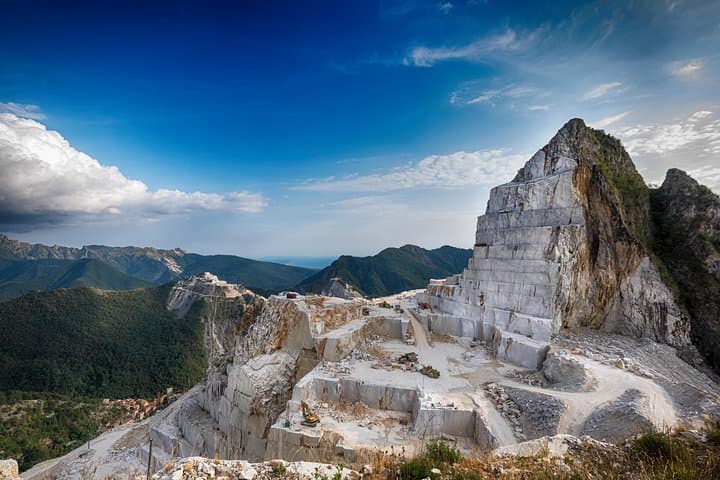
A low sun paints the exposed faces of the Apuan Alps white as the convoy climbs out of Carrara. You sit in a sturdy 4×4 as switchbacks tighten, vineyards give way to scree and the road edges reveal the raw, carved scars of the marble basins. Wind pushes around the vehicle and the quarry rims open like pages of geological history.
A low sun paints the exposed faces of the Apuan Alps white as the convoy climbs out of Carrara. You sit in a sturdy 4×4 as switchbacks tighten, vineyards give way to scree and the road edges reveal the raw, carved scars of the marble basins. Wind pushes around the vehicle and the quarry rims open like pages of geological history.
These quarries have supplied stone to Rome and Renaissance sculptors for more than two millennia; blocks hewn here built the Pantheon and supplied the marble Michelangelo prized. Geologically, you’re on compacted metamorphic marble pushed up with the Apennine uplift—hard, dense, and highly sought after for its uniform white veins. Culturally, the Colonnata valley bears a working-class heritage: families, centuries-old extraction techniques, and the cured Lardo di Colonnata, salted and matured in marble troughs.
Practical guidance: the tour is a two-hour, guided off-road drive with short stops for views and a tasting. Expect unpaved stretches, exposed ledges, and altitude near 1,000 m; dress in layers and wear closed shoes with grip. Bring sun protection and a camera with zoom—the quarry faces and distant Tyrrhenian Sea line are photogenic but dusty. The guide explains modern and historic mining methods; you’ll learn where famous blocks were extracted and how contemporary operations balance production and safety.
Timing matters—mornings offer crisper light and fewer vehicles. Respect fenced areas and local workers; quarries are active industrial sites. End the outing in Colonnata for a slice of lardo and small-town authenticity before descending toward the coast.