THE ADVENTURE COLLECTIVE® · Independent discovery and booking for outdoor travel

Sit quietly in a purpose-built hide and watch Carpathian brown bears emerge from beech forests on a private 4–5 hour outing near Odorheiu Secuiesc. This guide covers what to expect, logistics, and the local natural history behind one of Europe’s richest bear populations.
Sit quietly in a purpose-built hide and watch Carpathian brown bears emerge from beech forests on a private 4–5 hour outing near Odorheiu Secuiesc. This guide covers what to expect, logistics, and the local natural history behind one of Europe’s richest bear populations.
Dawn and dusk sharpen into a single charged hour in the Carpathian foothills: the forest exhales mist, the undergrowth clicks under boot soles, and the hide sits low and patient among beech trunks. Guests slip into the camouflaged blind, settle on hard benches and practice the deliberate stillness a wild place demands — the air tastes of pine and wet earth, and somewhere beyond the contour of trees a brown bear may choose to step into view.
Verified experiences and guided adventures in the surrounding area.
Operated by Carpathian Escapes Ltd · Cristuru Secuiesc, Harghita
Dawn and dusk sharpen into a single charged hour in the Carpathian foothills: the forest exhales mist, the undergrowth clicks under boot soles, and the hide sits low and patient among beech trunks. Guests slip into the camouflaged blind, settle on hard benches and practice the deliberate stillness a wild place demands — the air tastes of pine and wet earth, and somewhere beyond the contour of trees a brown bear may choose to step into view.
This part of the Eastern Carpathians has long supported dense bear populations thanks to mixed beech-fir habitat, steep ridges, and traditional pastoral land use. The geology — folded flysch and volcanic outcrops — carves sheltered valleys that concentrate wild fruit and mast, drawing bears in late summer and autumn. Locally, Szekler hunting traditions and recent conservation efforts have shaped how people and predators co-exist; guides here are often former forest rangers with deep local knowledge.
Practical guidance is straightforward: expect a 20–45 minute 4x4 drive from town, then an easy ~500 m walk to the hide. Watching usually lasts about three hours within a 4–5 hour outing. There are no restroom facilities at the hide; bring layers, a thermos, and quiet patience. Cameras and binoculars are recommended; avoid strong scents and sudden movement.
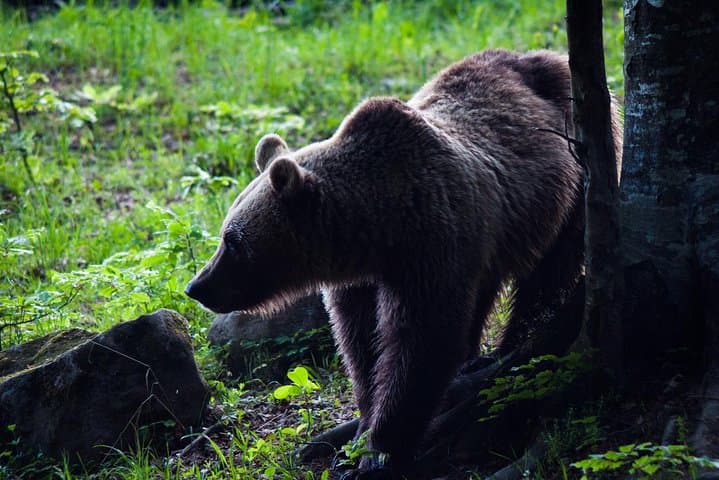
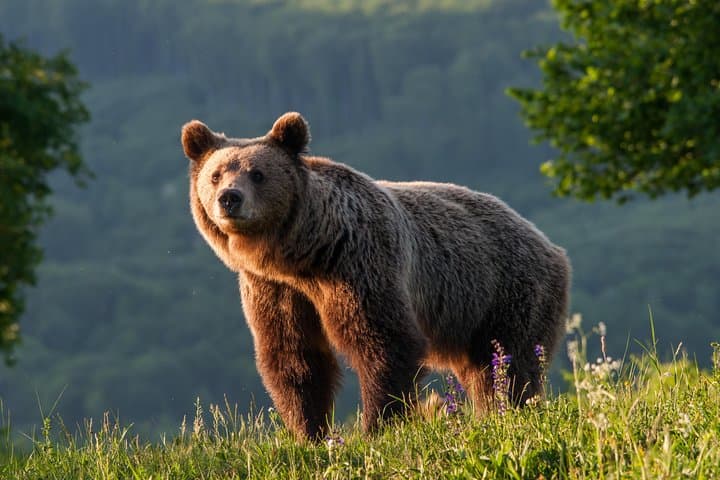
Wildlife sightings commonly include feeding and social behavior of brown bears, plus wild boar, deer and foxes. While success rates are high, sightings are never guaranteed — the experience values respectful distance and the rhythm of the forest more than a checklist of animals. For photographers and serious wildlife watchers this private hide offers one of the most reliable and low-impact ways to observe large carnivores in Europe.
moderate.
4–5 hours.
Suitable for most fitness levels; requires a short (≈500 m) uneven walk and the ability to sit quietly for several hours
Statistically high in this region — operators report strong sighting rates (often quoted >75%), but sightings depend on season, weather and animal movement and are never guaranteed.
Yes, children around age 8 and older are usually permitted but must be accompanied by an adult and able to remain quiet in the hide.
Guides may carry a firearm for extreme emergency protection; its presence is for safety protocols and not used during observation.
No — there are no restroom facilities at the hide, so plan accordingly before you depart and bring necessary supplies.
The Szekler communities here have long hunting and pastoral traditions; during the Communist era elite hunts took place in these forests, a history reflected in local stories guides often share.
Wildlife-watching income supports local rewilding and anti-poaching efforts; visitors are asked to follow low-impact rules to avoid disturbing bears and other species.
Carpathian Escapes Ltd operates guided outdoor trips and adventures with an emphasis on safety, stewardship, and memorable experiences.
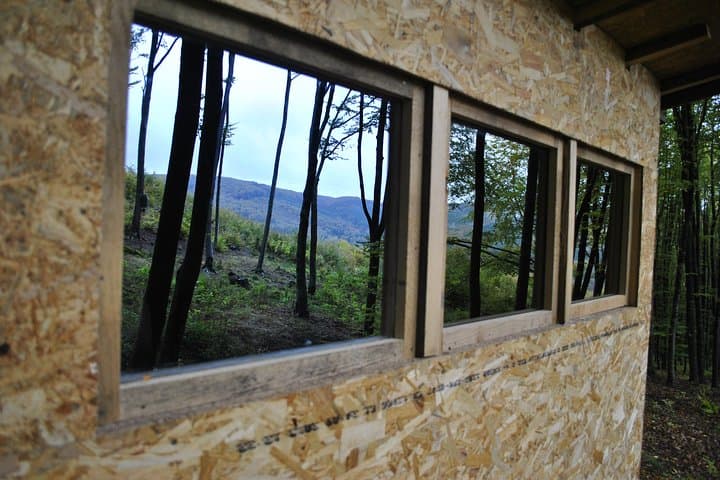
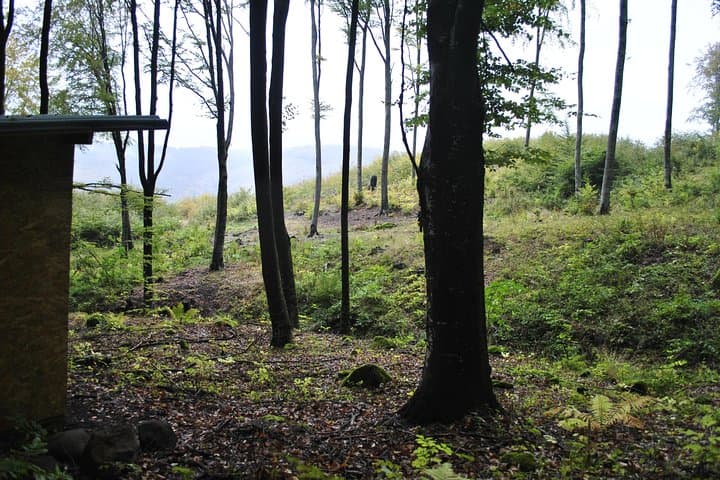
Dawn and dusk sharpen into a single charged hour in the Carpathian foothills: the forest exhales mist, the undergrowth clicks under boot soles, and the hide sits low and patient among beech trunks. Guests slip into the camouflaged blind, settle on hard benches and practice the deliberate stillness a wild place demands — the air tastes of pine and wet earth, and somewhere beyond the contour of trees a brown bear may choose to step into view.
Dawn and dusk sharpen into a single charged hour in the Carpathian foothills: the forest exhales mist, the undergrowth clicks under boot soles, and the hide sits low and patient among beech trunks. Guests slip into the camouflaged blind, settle on hard benches and practice the deliberate stillness a wild place demands — the air tastes of pine and wet earth, and somewhere beyond the contour of trees a brown bear may choose to step into view.
This part of the Eastern Carpathians has long supported dense bear populations thanks to mixed beech-fir habitat, steep ridges, and traditional pastoral land use. The geology — folded flysch and volcanic outcrops — carves sheltered valleys that concentrate wild fruit and mast, drawing bears in late summer and autumn. Locally, Szekler hunting traditions and recent conservation efforts have shaped how people and predators co-exist; guides here are often former forest rangers with deep local knowledge.
Practical guidance is straightforward: expect a 20–45 minute 4x4 drive from town, then an easy ~500 m walk to the hide. Watching usually lasts about three hours within a 4–5 hour outing. There are no restroom facilities at the hide; bring layers, a thermos, and quiet patience. Cameras and binoculars are recommended; avoid strong scents and sudden movement.
Wildlife sightings commonly include feeding and social behavior of brown bears, plus wild boar, deer and foxes. While success rates are high, sightings are never guaranteed — the experience values respectful distance and the rhythm of the forest more than a checklist of animals. For photographers and serious wildlife watchers this private hide offers one of the most reliable and low-impact ways to observe large carnivores in Europe.