THE ADVENTURE COLLECTIVE® · Independent discovery and booking for outdoor travel

Explore Carisbrooke Station and the fossil-rich Lark Quarry Stampede on a full‑day tour from Winton. Walk the preserved dinosaur trackways, learn station life, and understand the geology that froze a moment 95 million years ago.
Explore Carisbrooke Station and the fossil-rich Lark Quarry Stampede on a full‑day tour from Winton. Walk the preserved dinosaur trackways, learn station life, and understand the geology that froze a moment 95 million years ago.
You step out of the air‑conditioned vehicle and the outback hits you: a broad, sunbaked plain that seems to push the sky higher. The guide leads a short walk across spinifex and red clay to the slab of sandstone where, 95 million years ago, thousands of dinosaur footprints were frozen in motion. The impressions read like a prehistoric crowd scene — small ornithopods scurrying, larger predators cutting through — and you can almost feel the earth pressing their story back up through time.
Verified experiences and guided adventures in the surrounding area.
Operated by Red Dirt Tours · Winton, Queensland
You step out of the air‑conditioned vehicle and the outback hits you: a broad, sunbaked plain that seems to push the sky higher. The guide leads a short walk across spinifex and red clay to the slab of sandstone where, 95 million years ago, thousands of dinosaur footprints were frozen in motion. The impressions read like a prehistoric crowd scene — small ornithopods scurrying, larger predators cutting through — and you can almost feel the earth pressing their story back up through time.
This day tour threads geology, pastoral life and palaeontology. The sandstones at Lark Quarry record a moment when a muddy wetland dried and hardened; today the site sits inside Lark Quarry Conservation Park, protected for its global scientific value. Carisbrooke Station adds a working‑cattle perspective: learn how people have managed water, stock and country in a landscape shaped by ancient seas and seasonal floods.
Cultural notes appear in stories of local station families and how remote communities depend on seasonal work and tourism. Interpretive signage at the Stampede explains trackway science; guides elaborate with local anecdotes and practical fieldwork context.
Practical guidance: plan for a long, remote day — expect a 9‑hour outing with vehicle transfers from Winton, uneven footing around the tracks, strong sun and limited shade. Bring 2–3 L of water, sun protection, sturdy shoes and a camera with a zoom lens. The tour is suitable for most fitness levels but carries typical outback hazards: heat, dust and distant roads, so time your visit for cooler mornings or late afternoons when possible.
easy.
9 hours.
Suitable for most fitness levels; requires short, easy walks on uneven ground and the ability to board a tour vehicle.
The tour is approximately 9 hours and includes pick up from Winton accommodation, guided visits to Carisbrooke Station and Lark Quarry, lunch, and tea/coffee. Transport is in an air‑conditioned vehicle.
The site has short walkways and an interpretive platform; infants and small children can be in prams but some paths are uneven—bring a sturdy stroller and be prepared to carry small children in a few spots.
Lark Quarry is a protected conservation park—access is managed and interpretive tours are recommended; some private land access requires permission, so joining a guided tour simplifies logistics.
Bring sun protection, a refillable water bottle, light layers for cooler mornings, insect repellent, and sturdy shoes. In summer expect high heat; in winter mornings can be chilly.
The Stampede site records a unique mid‑Cretaceous moment preserved in sandstone; Winton later became an outback pastoral hub and a center for Australian dinosaur discoveries.
Lark Quarry is managed for scientific research and visitor protection—stay on paths, avoid touching prints, and follow park signage to minimize erosion and impact.
Red Dirt Tours operates guided outdoor trips and adventures with an emphasis on safety, stewardship, and memorable experiences.
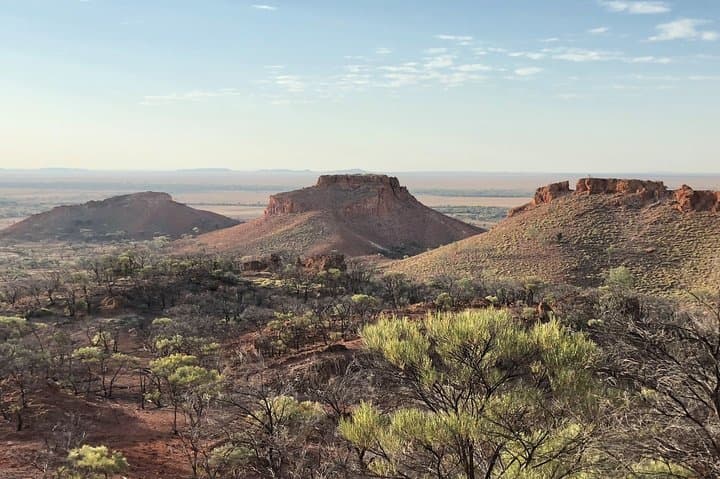


You step out of the air‑conditioned vehicle and the outback hits you: a broad, sunbaked plain that seems to push the sky higher. The guide leads a short walk across spinifex and red clay to the slab of sandstone where, 95 million years ago, thousands of dinosaur footprints were frozen in motion. The impressions read like a prehistoric crowd scene — small ornithopods scurrying, larger predators cutting through — and you can almost feel the earth pressing their story back up through time.
You step out of the air‑conditioned vehicle and the outback hits you: a broad, sunbaked plain that seems to push the sky higher. The guide leads a short walk across spinifex and red clay to the slab of sandstone where, 95 million years ago, thousands of dinosaur footprints were frozen in motion. The impressions read like a prehistoric crowd scene — small ornithopods scurrying, larger predators cutting through — and you can almost feel the earth pressing their story back up through time.
This day tour threads geology, pastoral life and palaeontology. The sandstones at Lark Quarry record a moment when a muddy wetland dried and hardened; today the site sits inside Lark Quarry Conservation Park, protected for its global scientific value. Carisbrooke Station adds a working‑cattle perspective: learn how people have managed water, stock and country in a landscape shaped by ancient seas and seasonal floods.
Cultural notes appear in stories of local station families and how remote communities depend on seasonal work and tourism. Interpretive signage at the Stampede explains trackway science; guides elaborate with local anecdotes and practical fieldwork context.
Practical guidance: plan for a long, remote day — expect a 9‑hour outing with vehicle transfers from Winton, uneven footing around the tracks, strong sun and limited shade. Bring 2–3 L of water, sun protection, sturdy shoes and a camera with a zoom lens. The tour is suitable for most fitness levels but carries typical outback hazards: heat, dust and distant roads, so time your visit for cooler mornings or late afternoons when possible.