THE ADVENTURE COLLECTIVE® · Independent discovery and booking for outdoor travel

Spend a day exploring Carara National Park’s rainforest trails and a crocodile- and bird-filled boat trip on the Tárcoles River. This small-group tour from San José pairs guided hikes with a mangrove cruise for close wildlife encounters.
Spend a day exploring Carara National Park’s rainforest trails and a crocodile- and bird-filled boat trip on the Tárcoles River. This small-group tour from San José pairs guided hikes with a mangrove cruise for close wildlife encounters.
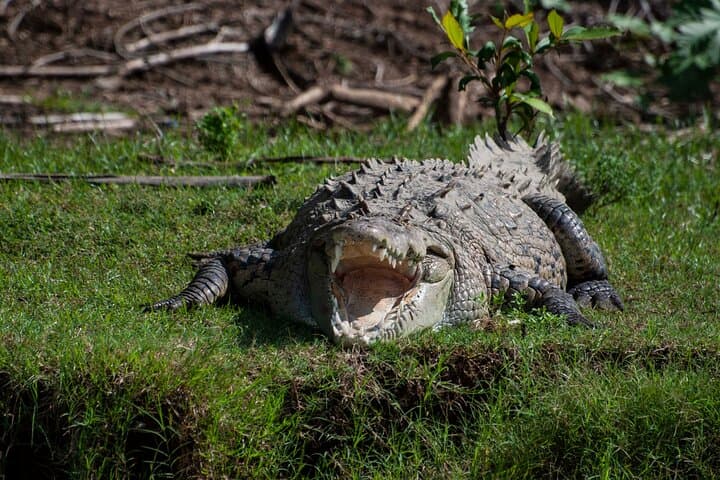
You step out of the van into humid air and the forest inhales you back — a high canopy filters golden light while distant calls of macaws and howler monkeys insist you listen. For the next 8–12 hours you alternate between feet-on-trail exploration through Carara’s towering figs and a low-slung boat slipping into the mangrove throat of the Tárcoles River where crocodiles sun themselves on muddy banks.
Verified experiences and guided adventures in the surrounding area.
Operated by Oropopo Experience · Jaco, Puntarenas
You step out of the van into humid air and the forest inhales you back — a high canopy filters golden light while distant calls of macaws and howler monkeys insist you listen. For the next 8–12 hours you alternate between feet-on-trail exploration through Carara’s towering figs and a low-slung boat slipping into the mangrove throat of the Tárcoles River where crocodiles sun themselves on muddy banks.
Carara sits on the Pacific transition zone where dry and humid forest meet, a geological seam that has concentrated biodiversity and made it a key birding site. The park’s soil is largely alluvial and volcanic sediments, carved by seasonal rains into the river systems that feed the mangroves. Locals still recall the days before hard roads — small communities here grew around fishing and cattle, and conservation efforts in recent decades have shifted attention toward eco-tourism and restoration.
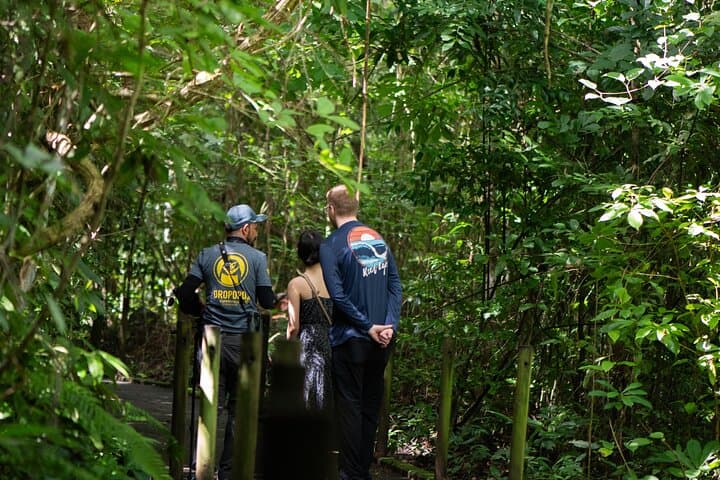
Expect guided trail walks led by biologists who point out canopy guilds, leaf-litter specialists, and fruiting trees that attract toucans and macaws. On the river, local boatmen navigate tidal channels while crocodiles and waders size you up with patient curiosity.
Practical notes: this is a full-day outing (8–12 hours) from San José with hotel pickup; bring sun and rain protection, insect repellent, and a water bottle you can refill. Slower pace on trails; uneven roots and muddy patches are common. Binoculars and a small group size mean excellent wildlife views — plan for humid heat, quick tropical showers in the wet season, and strong sun in the dry months.
moderate.
8–12 hours.
Suitable for people in reasonable walking shape; expect several hours of easy-to-moderate hiking on uneven terrain and a calm boat ride.
The tour lasts about 8–12 hours and typically includes hotel pickup and drop-off in San José; exact pickup time depends on group location.
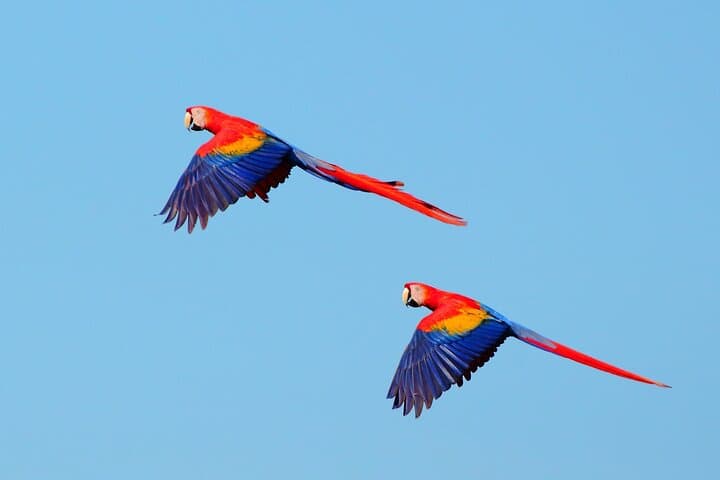
Sightings are common—American crocodiles are often visible from the river and scarlet macaws are regularly seen and heard in Carara’s canopy, though wildlife cannot be guaranteed.
The tour is marked as accessible and suitable for most fitness levels, but trails have uneven terrain; contact the operator to discuss specific mobility needs and pickup logistics.
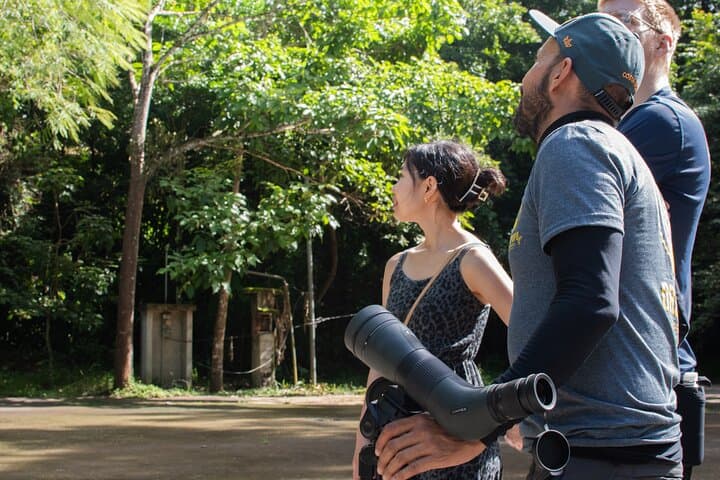
The tour provides binoculars/telescopes and includes the Carara National Park entrance fee, and a portion of earnings supports local conservation partners.
Carara sits at the ecological crossroad between dry and wet Pacific forests; its protection gained momentum in the late 20th century as birders documented its high diversity.
The Tárcoles basin faces pollution challenges; local operators and NGOs run restoration and education projects, and the tour contributes funds to Funga Conservation to support local initiatives.
Oropopo Experience operates guided outdoor trips and adventures with an emphasis on safety, stewardship, and memorable experiences.
You step out of the van into humid air and the forest inhales you back — a high canopy filters golden light while distant calls of macaws and howler monkeys insist you listen. For the next 8–12 hours you alternate between feet-on-trail exploration through Carara’s towering figs and a low-slung boat slipping into the mangrove throat of the Tárcoles River where crocodiles sun themselves on muddy banks.
You step out of the van into humid air and the forest inhales you back — a high canopy filters golden light while distant calls of macaws and howler monkeys insist you listen. For the next 8–12 hours you alternate between feet-on-trail exploration through Carara’s towering figs and a low-slung boat slipping into the mangrove throat of the Tárcoles River where crocodiles sun themselves on muddy banks.
Carara sits on the Pacific transition zone where dry and humid forest meet, a geological seam that has concentrated biodiversity and made it a key birding site. The park’s soil is largely alluvial and volcanic sediments, carved by seasonal rains into the river systems that feed the mangroves. Locals still recall the days before hard roads — small communities here grew around fishing and cattle, and conservation efforts in recent decades have shifted attention toward eco-tourism and restoration.
Expect guided trail walks led by biologists who point out canopy guilds, leaf-litter specialists, and fruiting trees that attract toucans and macaws. On the river, local boatmen navigate tidal channels while crocodiles and waders size you up with patient curiosity.
Practical notes: this is a full-day outing (8–12 hours) from San José with hotel pickup; bring sun and rain protection, insect repellent, and a water bottle you can refill. Slower pace on trails; uneven roots and muddy patches are common. Binoculars and a small group size mean excellent wildlife views — plan for humid heat, quick tropical showers in the wet season, and strong sun in the dry months.