THE ADVENTURE COLLECTIVE® · Independent discovery and booking for outdoor travel

Explore Carara National Park with a private naturalist guide where dry forest meets humid jungle and scarlet macaws patrol the canopy. This guided walk combines wildlife viewing, geology, and accessible trails suited to photographers and nature lovers.
Explore Carara National Park with a private naturalist guide where dry forest meets humid jungle and scarlet macaws patrol the canopy. This guided walk combines wildlife viewing, geology, and accessible trails suited to photographers and nature lovers.
You step from the shaded vehicle and the forest takes over: a low, humid breath of leaf mold and wet wood, the distant rattle of a toucan announcing itself. Trails thread through a patchwork where Pacific dry forest meets humid lowland jungle — the meeting point that gives Carara its fringe-of-ecosystems energy. Scarlet macaws wheel like punctuation over the canopy; rivers dare you with their chorus of crocodile-sunned sandbanks downstream.
Verified experiences and guided adventures in the surrounding area.
Operated by JungleXpeditions · Tarcoles, Puntarenas
You step from the shaded vehicle and the forest takes over: a low, humid breath of leaf mold and wet wood, the distant rattle of a toucan announcing itself. Trails thread through a patchwork where Pacific dry forest meets humid lowland jungle — the meeting point that gives Carara its fringe-of-ecosystems energy. Scarlet macaws wheel like punctuation over the canopy; rivers dare you with their chorus of crocodile-sunned sandbanks downstream.
Carara occupies a transitional zone on Costa Rica’s central Pacific slope, where Tertiary sedimentary soils give rise to deep, loamy floors and exposed river terraces. Historically this corridor was a pathway for indigenous groups and later cacao and timber operations that shaped the park’s edge communities. Local culture remains tied to small coastal towns — fishermen, guide families and roadside soda joints serve as practical touchpoints before and after a walk.
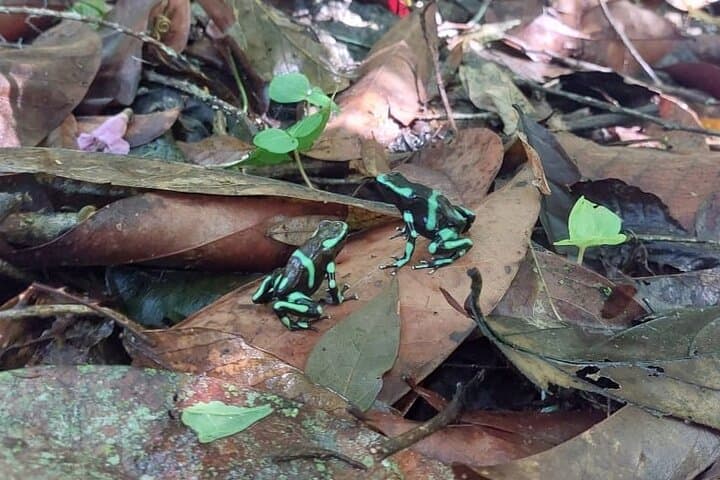
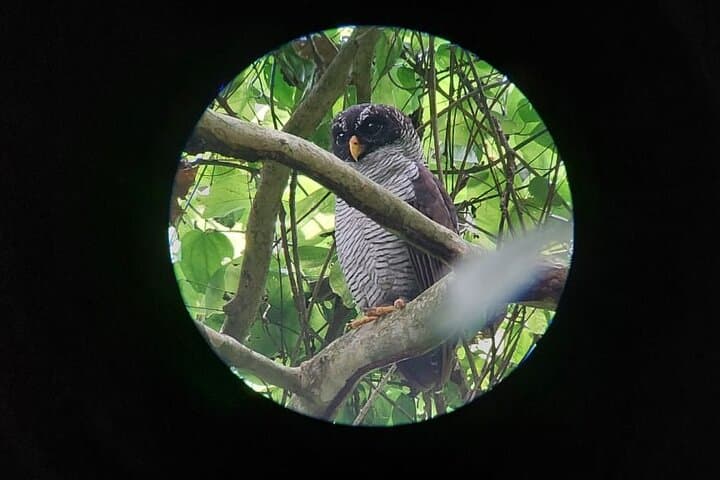
On a private guided tour you’ll move deliberately: a naturalist points out ancient strangler figs, leaf-cutter ant highways and the subtle differences between dry-forest and wet-forest species. Photography lovers will want early light for macaws and late afternoon for mammals that become more visible.
Practical guidance: wear grippy shoes for muddy boardwalks, carry water and insect repellent, and schedule visits in the cooler morning window for the best bird activity. Respect viewing distances for nesting macaws and avoid flash photography. A private guide and entrance fee are included, making logistics simple — arrive prepared to walk 2–4 miles over uneven terrain and to let the forest set the pace.
easy.
3–4 hours.
Suitable for most fitness levels; expect 2–4 miles of walking on uneven, sometimes muddy terrain
The full experience runs about 3–4 hours including park time; itineraries typically allocate around 180 minutes inside the park.
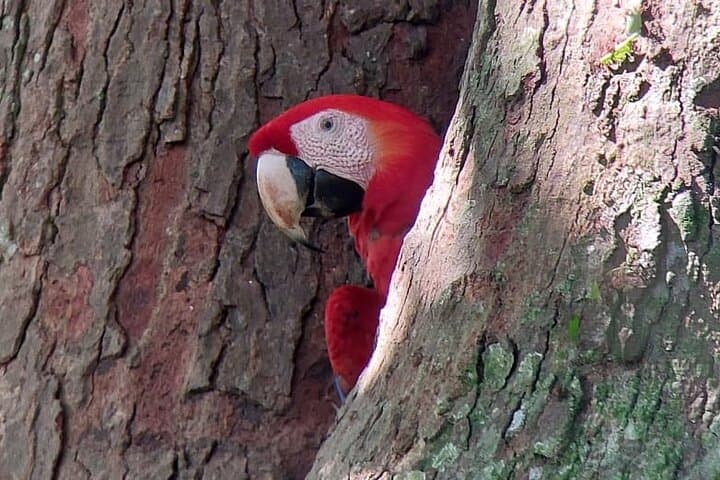
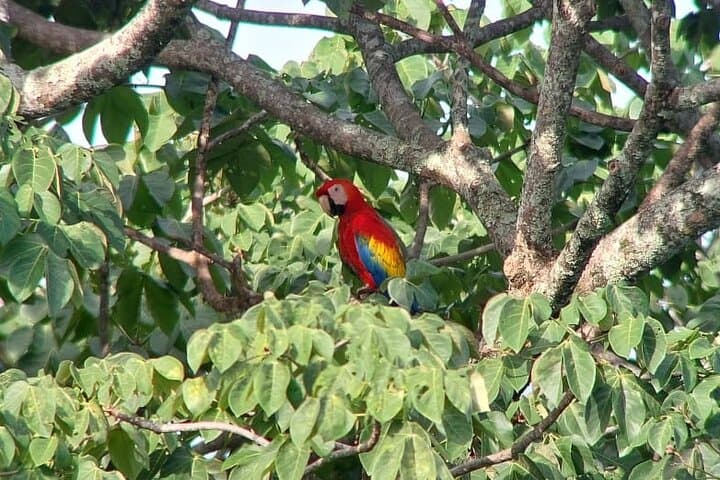
Carara is one of the best places on the central Pacific coast to see scarlet macaws, especially in the morning and late afternoon when they move between roosting and feeding areas, but sightings are never guaranteed.
Some sections are stroller- and wheelchair-accessible near the visitor areas, but many paths are uneven; confirm accessibility needs with your operator in advance.
Early morning offers cooler temperatures and peak bird activity; late afternoon is also good for mammal sightings and softer light for photography.
Carara sits on a historic trade and migration corridor; land use shifted from smallholder agriculture and timber to conservation when the park was established in 1978 to protect remaining lowland forest.
The park protects critical habitat for endemic and migratory species; visitors should stick to trails and avoid feeding wildlife to limit human-wildlife conflict and habitat disturbance.
JungleXpeditions operates guided outdoor trips and adventures with an emphasis on safety, stewardship, and memorable experiences.
You step from the shaded vehicle and the forest takes over: a low, humid breath of leaf mold and wet wood, the distant rattle of a toucan announcing itself. Trails thread through a patchwork where Pacific dry forest meets humid lowland jungle — the meeting point that gives Carara its fringe-of-ecosystems energy. Scarlet macaws wheel like punctuation over the canopy; rivers dare you with their chorus of crocodile-sunned sandbanks downstream.
You step from the shaded vehicle and the forest takes over: a low, humid breath of leaf mold and wet wood, the distant rattle of a toucan announcing itself. Trails thread through a patchwork where Pacific dry forest meets humid lowland jungle — the meeting point that gives Carara its fringe-of-ecosystems energy. Scarlet macaws wheel like punctuation over the canopy; rivers dare you with their chorus of crocodile-sunned sandbanks downstream.
Carara occupies a transitional zone on Costa Rica’s central Pacific slope, where Tertiary sedimentary soils give rise to deep, loamy floors and exposed river terraces. Historically this corridor was a pathway for indigenous groups and later cacao and timber operations that shaped the park’s edge communities. Local culture remains tied to small coastal towns — fishermen, guide families and roadside soda joints serve as practical touchpoints before and after a walk.
On a private guided tour you’ll move deliberately: a naturalist points out ancient strangler figs, leaf-cutter ant highways and the subtle differences between dry-forest and wet-forest species. Photography lovers will want early light for macaws and late afternoon for mammals that become more visible.
Practical guidance: wear grippy shoes for muddy boardwalks, carry water and insect repellent, and schedule visits in the cooler morning window for the best bird activity. Respect viewing distances for nesting macaws and avoid flash photography. A private guide and entrance fee are included, making logistics simple — arrive prepared to walk 2–4 miles over uneven terrain and to let the forest set the pace.