THE ADVENTURE COLLECTIVE® · Independent discovery and booking for outdoor travel

Start before sunrise and follow a guide into Carara’s transition forest where scarlet macaws, motmots, trogons, and a rich mix of Pacific and humid-forest species concentrate. This private, six-hour tour is tailored for all skill levels and includes scope use, bottled water, and a typical Costa Rican lunch.
Start before sunrise and follow a guide into Carara’s transition forest where scarlet macaws, motmots, trogons, and a rich mix of Pacific and humid-forest species concentrate. This private, six-hour tour is tailored for all skill levels and includes scope use, bottled water, and a typical Costa Rican lunch.
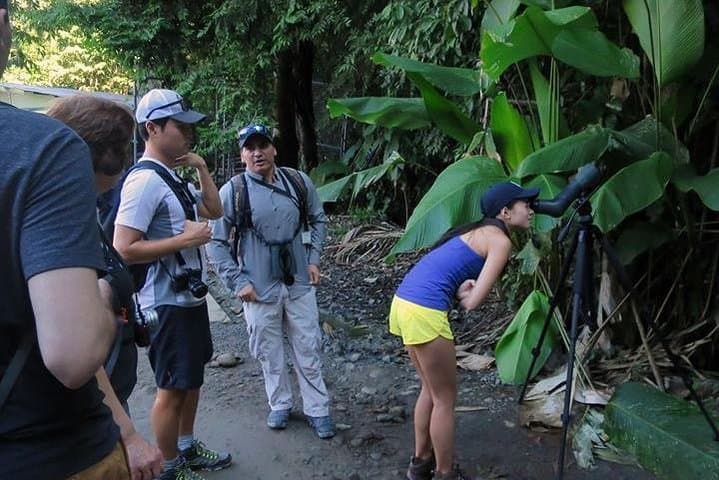
Dawn arrives as a chimney of mist lifts off the Tarcoles River and the forest stirs—vesper-like flycatchers dart, a motmot clacks from a branch, and a pair of scarlet macaws argue overhead. On this private guided birding tour you follow narrow park trails and river-edge stops where local guides read the forest as a map of species, behavior, and seasonal movement.
Verified experiences and guided adventures in the surrounding area.
Operated by Costa Rica Wáköö Tours · Quepos, Puntarenas
Dawn arrives as a chimney of mist lifts off the Tarcoles River and the forest stirs—vesper-like flycatchers dart, a motmot clacks from a branch, and a pair of scarlet macaws argue overhead. On this private guided birding tour you follow narrow park trails and river-edge stops where local guides read the forest as a map of species, behavior, and seasonal movement.
Carara sits on a biogeographic edge where Pacific dry forest meets humid tropical canopy; that transition explains the park’s unusually high diversity. Geologically the area is low-elevation coastal plain punctuated by alluvial soils and river terraces carved by the Grande de Tárcoles. Culturally, the park has long been important to nearby communities in Puntarenas for sustainable tourism and environmental education.
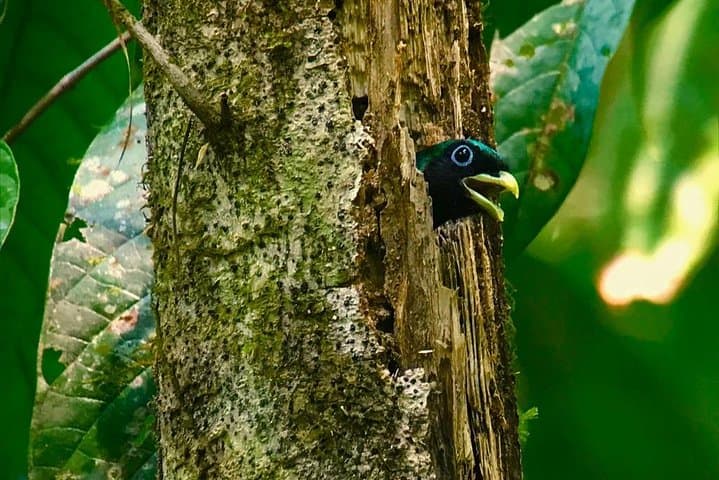
Expect concentrated birding: trogons, motmots, multiple toucan species, hummingbirds, and the dense, raucous flocks of scarlet macaws that draw enthusiasts. Tracks and calls are as useful as optics—your guide will point out perches, lek sites, and microhabitats.
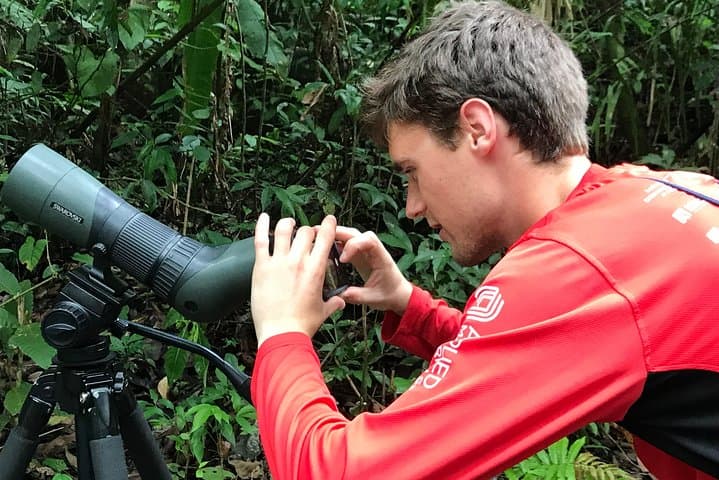
Practically, the outing is an early-start, on-foot experience over mostly flat, sometimes muddy trails with shady cover and a few exposed viewpoints. Bring optics, a rain layer, and quiet patience; the best hours are early morning. Pickup is typically from Quepos or Manuel Antonio; tours include bottled water, lunch, and a Swarovski spotting scope for shared photos. The pace is adjustable for beginners and experienced birders alike—expect six hours in the field and a day of close, focused observation.
moderate.
6 hours.
Light-to-moderate fitness: mostly flat walking with some uneven, muddy sections; able to stand and move quietly for long bouts.
Pickup times typically begin around 4:30 AM from Quepos or Manuel Antonio; exact pickup point and time are confirmed after booking.
Carara hosts one of the largest central Pacific macaw populations and sightings are common but not guaranteed; your guide will position you at known roosts and feeding trees when possible.
Yes—guides tailor the pace and identification help for beginners through advanced birders and use a spotting scope to share views.
The operator may reschedule or refund in cases of severe weather; light rain usually doesn't cancel—bring waterproof gear.
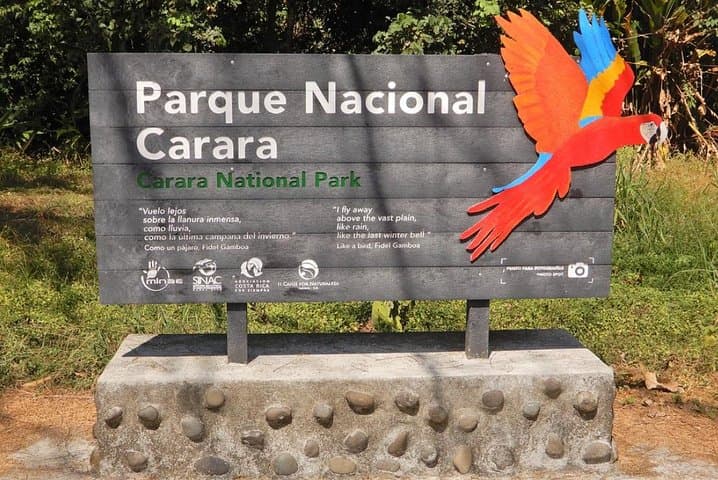
Carara was designated a national park in 1978 to protect one of the last patches of moist forest on the central Pacific slope and to conserve its notable macaw population.
Conservation efforts focus on habitat protection and eco-tourism revenue for local communities; visitors are asked to minimize disturbance and follow Leave No Trace practices.
Costa Rica Wáköö Tours operates guided outdoor trips and adventures with an emphasis on safety, stewardship, and memorable experiences.
Dawn arrives as a chimney of mist lifts off the Tarcoles River and the forest stirs—vesper-like flycatchers dart, a motmot clacks from a branch, and a pair of scarlet macaws argue overhead. On this private guided birding tour you follow narrow park trails and river-edge stops where local guides read the forest as a map of species, behavior, and seasonal movement.
Dawn arrives as a chimney of mist lifts off the Tarcoles River and the forest stirs—vesper-like flycatchers dart, a motmot clacks from a branch, and a pair of scarlet macaws argue overhead. On this private guided birding tour you follow narrow park trails and river-edge stops where local guides read the forest as a map of species, behavior, and seasonal movement.
Carara sits on a biogeographic edge where Pacific dry forest meets humid tropical canopy; that transition explains the park’s unusually high diversity. Geologically the area is low-elevation coastal plain punctuated by alluvial soils and river terraces carved by the Grande de Tárcoles. Culturally, the park has long been important to nearby communities in Puntarenas for sustainable tourism and environmental education.
Expect concentrated birding: trogons, motmots, multiple toucan species, hummingbirds, and the dense, raucous flocks of scarlet macaws that draw enthusiasts. Tracks and calls are as useful as optics—your guide will point out perches, lek sites, and microhabitats.
Practically, the outing is an early-start, on-foot experience over mostly flat, sometimes muddy trails with shady cover and a few exposed viewpoints. Bring optics, a rain layer, and quiet patience; the best hours are early morning. Pickup is typically from Quepos or Manuel Antonio; tours include bottled water, lunch, and a Swarovski spotting scope for shared photos. The pace is adjustable for beginners and experienced birders alike—expect six hours in the field and a day of close, focused observation.