THE ADVENTURE COLLECTIVE® · Independent discovery and booking for outdoor travel

Walk early into Carara National Park with an expert guide to find scarlet macaws, toucans, and migratory species. This 3–4 hour morning tour focuses on close encounters, expert identification, and accessible trails.
Walk early into Carara National Park with an expert guide to find scarlet macaws, toucans, and migratory species. This 3–4 hour morning tour focuses on close encounters, expert identification, and accessible trails.
A dawn chorus rises before the trail opens: calls and clicks thread through humid air while guides lift spotting scopes and point toward the treeline. On this 3–4 hour guided walk through Carara National Park you move steadily along flat, sometimes muddy trails where the rainforest leans toward the Pacific and the river dares you to look closer.
Verified experiences and guided adventures in the surrounding area.
Operated by Birdwatching and Nature Tours in Carara · Tárcoles, Puntarenas
A dawn chorus rises before the trail opens: calls and clicks thread through humid air while guides lift spotting scopes and point toward the treeline. On this 3–4 hour guided walk through Carara National Park you move steadily along flat, sometimes muddy trails where the rainforest leans toward the Pacific and the river dares you to look closer.
Carara sits on the ecological seam between Central America's dry forest and the wet Pacific lowlands, a geologic and climatic junction that concentrates bird diversity. The park was created in the late 1970s to protect that transition and the migratory routes that pass through it. Culturally, nearby coastal towns grew up around fishing and agriculture, and local guides blend scientific ID skills with generational knowledge of the land.
Expect low-elevation trails with brief undulations, shaded canopy corridors, and open river edges where keel-billed toucans, scarlet macaws, and motmots make regular appearances. Guides use telescopes and call playback judiciously to reveal secretive understory species; groups are usually small and intimate, capped near ten people.
Practical notes: tours start early (7:00 am Dec–Apr, 8:00 am May–Nov), last about 3–4 hours, and require a moderate fitness level for steady walking on uneven, sometimes slippery ground. Bring binoculars, closed-toe shoes with traction, rain protection, and water. Move quietly, follow the guide, and keep camera flashes off to avoid disturbing nesting birds. With a patient eye and experienced guide, Carara rewards you with close looks at edge specialists and the electric flash of macaws against green foliage.
moderate.
3–4 hours.
Moderate—able to walk 2–4 miles on uneven, sometimes wet trails with occasional short inclines.
Tours run about 3–4 hours; start time is 7:00 am from December to April and 8:00 am from May to November.
Yes—guides accommodate all skill levels and provide identification help; basic mobility to walk forest trails is required.
Guides typically bring a spotting scope and may have binoculars, but bringing your own binoculars is recommended for comfort.
You may spot coatis, agoutis, and other lowland mammals, plus reptiles near waterways; sightings vary by season and time of day.
Carara was established in the late 1970s to protect a rare transitional forest between dry and wet zones and the migratory corridors along the Pacific coast.
The park buffers fragmented forest and supports local ecotourism; visitors should stick to trails, avoid feeding wildlife, and follow guide instructions to reduce disturbance.
Birdwatching and Nature Tours in Carara operates guided outdoor trips and adventures with an emphasis on safety, stewardship, and memorable experiences.


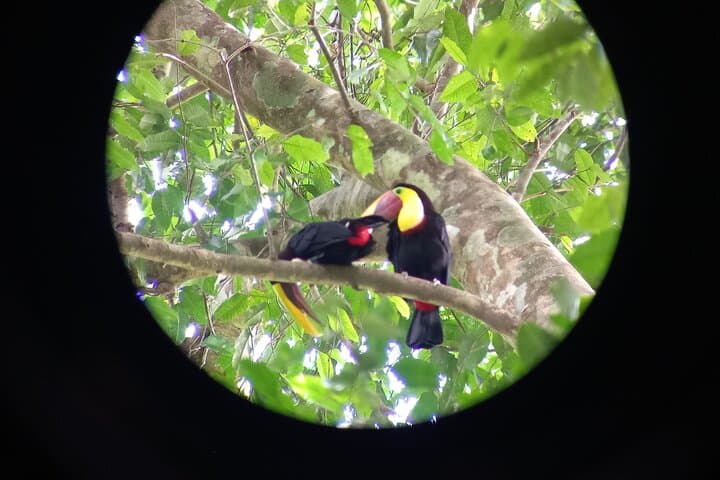
A dawn chorus rises before the trail opens: calls and clicks thread through humid air while guides lift spotting scopes and point toward the treeline. On this 3–4 hour guided walk through Carara National Park you move steadily along flat, sometimes muddy trails where the rainforest leans toward the Pacific and the river dares you to look closer.
A dawn chorus rises before the trail opens: calls and clicks thread through humid air while guides lift spotting scopes and point toward the treeline. On this 3–4 hour guided walk through Carara National Park you move steadily along flat, sometimes muddy trails where the rainforest leans toward the Pacific and the river dares you to look closer.
Carara sits on the ecological seam between Central America's dry forest and the wet Pacific lowlands, a geologic and climatic junction that concentrates bird diversity. The park was created in the late 1970s to protect that transition and the migratory routes that pass through it. Culturally, nearby coastal towns grew up around fishing and agriculture, and local guides blend scientific ID skills with generational knowledge of the land.
Expect low-elevation trails with brief undulations, shaded canopy corridors, and open river edges where keel-billed toucans, scarlet macaws, and motmots make regular appearances. Guides use telescopes and call playback judiciously to reveal secretive understory species; groups are usually small and intimate, capped near ten people.
Practical notes: tours start early (7:00 am Dec–Apr, 8:00 am May–Nov), last about 3–4 hours, and require a moderate fitness level for steady walking on uneven, sometimes slippery ground. Bring binoculars, closed-toe shoes with traction, rain protection, and water. Move quietly, follow the guide, and keep camera flashes off to avoid disturbing nesting birds. With a patient eye and experienced guide, Carara rewards you with close looks at edge specialists and the electric flash of macaws against green foliage.