THE ADVENTURE COLLECTIVE® · Independent discovery and booking for outdoor travel

Walk among 5,000-year-old pyramids in the Supe Valley on a private full-day tour from Lima. This archaeological outing pairs panoramic coastal views with guided access to Caral and the coastal settlement of Bandurria.
Walk among 5,000-year-old pyramids in the Supe Valley on a private full-day tour from Lima. This archaeological outing pairs panoramic coastal views with guided access to Caral and the coastal settlement of Bandurria.
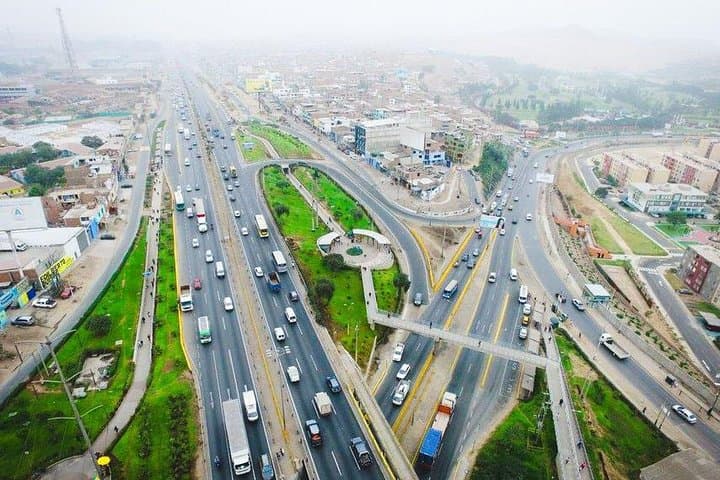
The morning air outside Lima thins as the highway unfurls north toward the Supe Valley; the ocean hovers at your shoulder and the desert rises ahead, daring you to read the stones left behind by a 5,000-year-old city. By late morning you step onto broad, sun-warmed plazas where low, weathered pyramids hold the silence of long gatherings.
Verified experiences and guided adventures in the surrounding area.
Operated by PERU CARAL TOURS SAC · Supe, Lima Region
The morning air outside Lima thins as the highway unfurls north toward the Supe Valley; the ocean hovers at your shoulder and the desert rises ahead, daring you to read the stones left behind by a 5,000-year-old city. By late morning you step onto broad, sun-warmed plazas where low, weathered pyramids hold the silence of long gatherings.
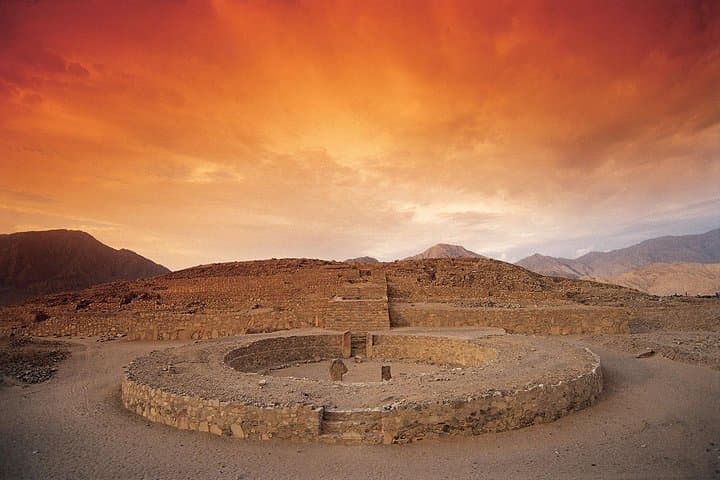
Caral is one of the oldest urban centers in the Americas, emerging around 3000–2000 BCE when coastal communities developed large-scale ceremonial architecture. The geology here is coastal alluvium—flat valley floors cut by seasonal rivers—so the city’s builders raised platforms and pyramids in compact, durable stone and shell mortar.
Culturally, Caral emphasizes public architecture over pottery or elaborate grave goods; plazas, amphitheaters and sun-facing temples define social life. Nearby Bandurria adds a coastal fishing dimension, with mounds and circular compounds that link maritime subsistence to ceremonial life.
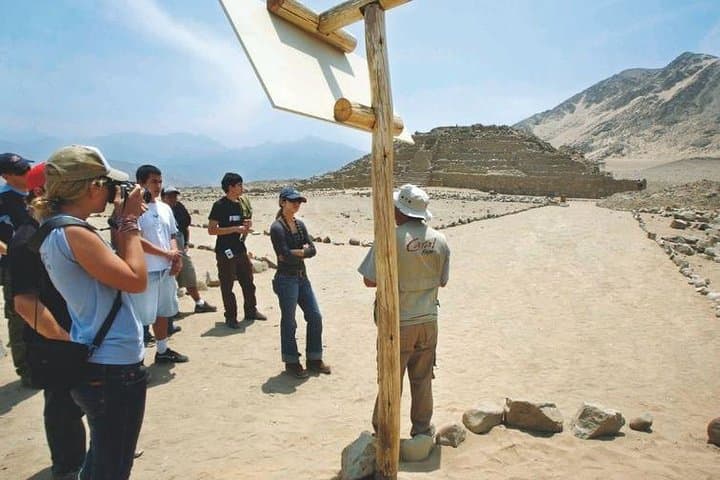
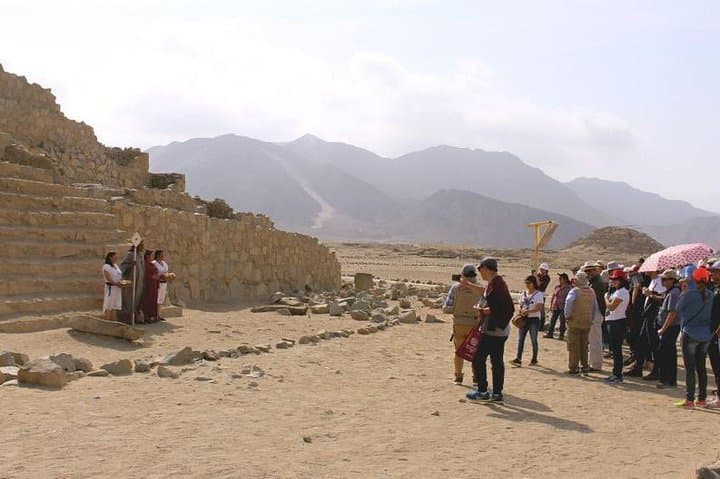
Expect a guided walking tour of roughly 1–1.5 hours at the site, with expansive valley and glimpse-of-ocean views. Photographs work best in morning light or late afternoon; midday is stark and contrast-heavy.
Practical notes: the trip is a full day from Lima (11–12 hours total), with private transportation and a lunch stop in Huacho. Wear closed shoes for uneven dirt paths, bring sun protection and at least 1–2 liters of water, and prepare for light walking on loose sand and stone steps. Respect fenced areas—many structures are fragile—and follow the authorized guide’s path to minimize erosion.
This is an immersive archaeological day that pairs coastal landscapes with deep-time human engineering—accessible, outdoor-focused, and rich in historical context.
moderate.
11–12 hours.
Moderate fitness—able to walk 1–2 hours with intermittent standing and some gentle elevation changes
The drive is roughly 3.5–4 hours each way depending on traffic and starting point in Lima.
Yes—the tour includes admission to Caral and Bandurria, plus a typical Peruvian lunch in Huacho as listed in inclusions.
The tour is family-friendly but requires moderate mobility; note there is walking on uneven ground and some low steps.
Photography is generally allowed in open areas, but always follow the authorized guide’s directions and avoid entering fenced or restricted zones.
Caral dates back around 5,000 years and is one of the earliest urban centers in the Americas, notable for monumental public architecture rather than elaborate pottery.
The site is sensitive to erosion and foot traffic; visitors are asked to stay on designated paths and avoid climbing on structures to protect fragile lime-based masonry.
PERU CARAL TOURS SAC operates guided outdoor trips and adventures with an emphasis on safety, stewardship, and memorable experiences.
The morning air outside Lima thins as the highway unfurls north toward the Supe Valley; the ocean hovers at your shoulder and the desert rises ahead, daring you to read the stones left behind by a 5,000-year-old city. By late morning you step onto broad, sun-warmed plazas where low, weathered pyramids hold the silence of long gatherings.
The morning air outside Lima thins as the highway unfurls north toward the Supe Valley; the ocean hovers at your shoulder and the desert rises ahead, daring you to read the stones left behind by a 5,000-year-old city. By late morning you step onto broad, sun-warmed plazas where low, weathered pyramids hold the silence of long gatherings.
Caral is one of the oldest urban centers in the Americas, emerging around 3000–2000 BCE when coastal communities developed large-scale ceremonial architecture. The geology here is coastal alluvium—flat valley floors cut by seasonal rivers—so the city’s builders raised platforms and pyramids in compact, durable stone and shell mortar.
Culturally, Caral emphasizes public architecture over pottery or elaborate grave goods; plazas, amphitheaters and sun-facing temples define social life. Nearby Bandurria adds a coastal fishing dimension, with mounds and circular compounds that link maritime subsistence to ceremonial life.
Expect a guided walking tour of roughly 1–1.5 hours at the site, with expansive valley and glimpse-of-ocean views. Photographs work best in morning light or late afternoon; midday is stark and contrast-heavy.
Practical notes: the trip is a full day from Lima (11–12 hours total), with private transportation and a lunch stop in Huacho. Wear closed shoes for uneven dirt paths, bring sun protection and at least 1–2 liters of water, and prepare for light walking on loose sand and stone steps. Respect fenced areas—many structures are fragile—and follow the authorized guide’s path to minimize erosion.
This is an immersive archaeological day that pairs coastal landscapes with deep-time human engineering—accessible, outdoor-focused, and rich in historical context.