THE ADVENTURE COLLECTIVE® · Independent discovery and booking for outdoor travel

Visit Caral, the oldest known city in the Americas, on a private full‑day tour from Lima. Spend several hours walking the terraces, plazas and platform mounds of a 5,000‑year‑old urban plan, with transport, guide and entry included.
Visit Caral, the oldest known city in the Americas, on a private full‑day tour from Lima. Spend several hours walking the terraces, plazas and platform mounds of a 5,000‑year‑old urban plan, with transport, guide and entry included.
You step out of the air-conditioned van onto sun-baked earth and the wind immediately feels like an old guide, nudging you toward wide stone platforms and low, terraced pyramids.
Verified experiences and guided adventures in the surrounding area.
Operated by CHASKY XPEDITION · Supe, Lima
You step out of the air-conditioned van onto sun-baked earth and the wind immediately feels like an old guide, nudging you toward wide stone platforms and low, terraced pyramids.
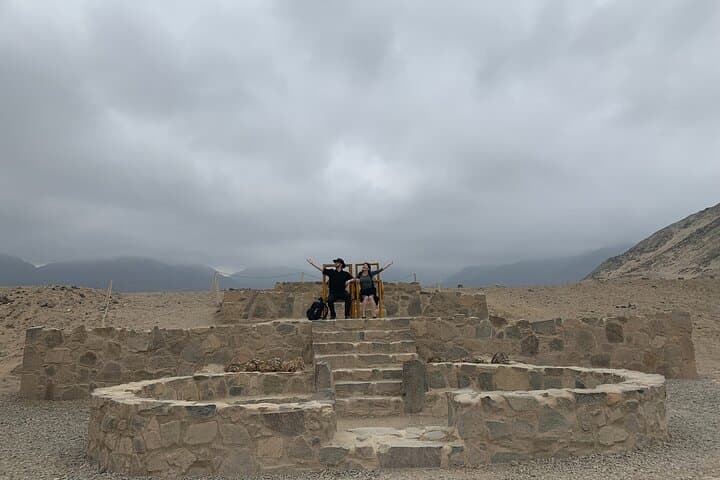
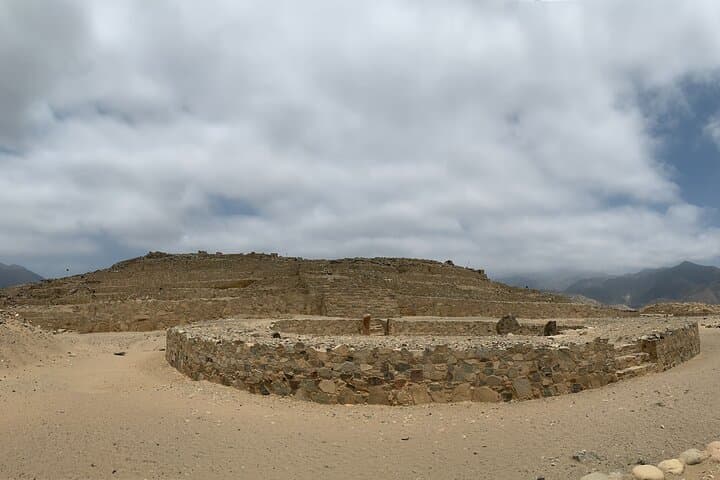
Caral sits on a low terrace above the Supe River valley, its plazas and sunken circular spaces laid out more than 5,000 years ago. The site’s 32 monumental buildings—elite residences, ceremonial platforms and compact workshops—outline a civic plan that predates Andean civilizations better known to travelers. Geologically, the valley’s alluvial terraces provided stable, irrigable ground; archaeologists note that the city’s builders used local river stone and adobe to shape broad stepped platforms.
Culturally, Caral was part of a regional network of 24 linked settlements, and evidence of ritual plazas and quipu-like artifacts points to sophisticated social organization in the Late Archaic Period. Locals in Supe still fish and farm the valley; the town of Huacho, passed en route, offers straightforward coastal cuisine where guides usually stop for lunch.
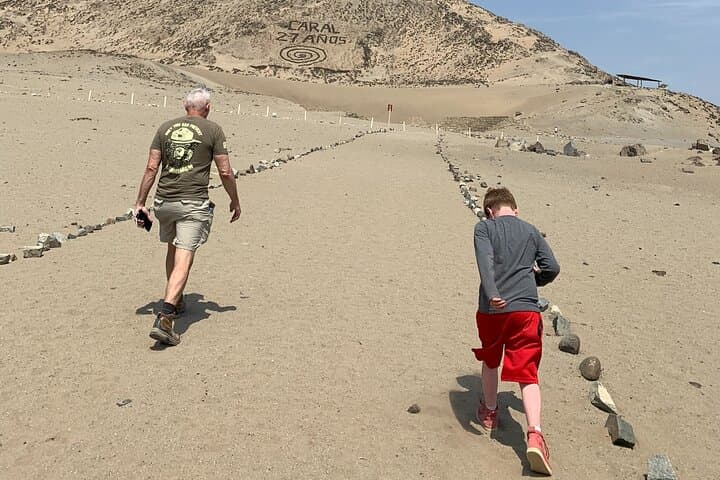
Practical guidance: expect roughly 3.5 hours each way from Lima, so this is a long day—plan for 10–12 hours door-to-door. Paths at the site are mostly flat but uneven; good walking shoes, sun protection and at least 2 liters of water are smart. The tour includes entry, a private guide and hotel pickup from Miraflores/Barranco/San Isidro, and is wheelchair accessible in main areas. Bring cash for lunch or souvenirs, and arrive with charged devices for photography—the wide, open light on the terraces rewards a careful lens.
easy.
12 hours.
Suitable for most fitness levels; requires standing and walking on uneven surfaces for several hours
The transfer is approximately 3.5 hours each way, making this a full‑day excursion (about 10–12 hours door‑to‑door).
Yes, the tour price includes entry to Caral and a private official guide; transport and hotel pickup/drop‑off from central Lima neighborhoods are also provided.
Primary areas and surfaces are wheelchair accessible according to the operator, though some uneven zones may be harder to navigate.
The itinerary typically stops in Huacho after visiting Caral; there are inexpensive local restaurants where dishes run around $10 and cash may be preferred.
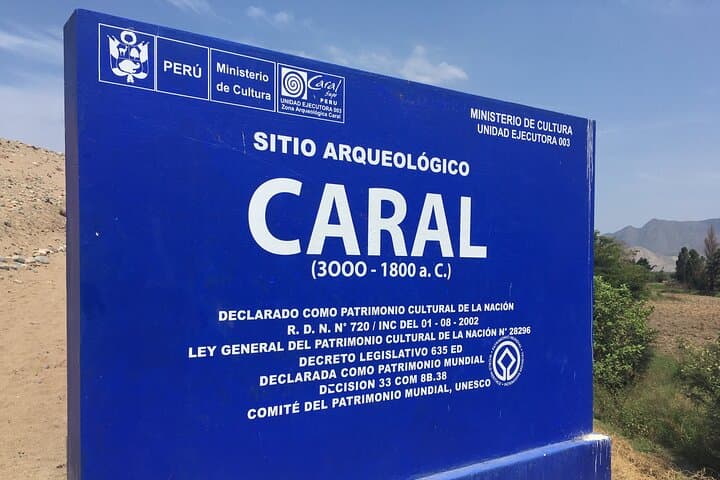
Caral is one of the earliest urban centers in the Americas, active around 3000–2000 BCE and notable for ceremonial plazas and complex residential tiers that indicate early centralized organization.
Caral is managed to protect fragile adobe and stone structures; visitors should stay on marked paths, avoid climbing platforms and follow guide instructions to limit erosion and wear.
CHASKY XPEDITION operates guided outdoor trips and adventures with an emphasis on safety, stewardship, and memorable experiences.
You step out of the air-conditioned van onto sun-baked earth and the wind immediately feels like an old guide, nudging you toward wide stone platforms and low, terraced pyramids.
You step out of the air-conditioned van onto sun-baked earth and the wind immediately feels like an old guide, nudging you toward wide stone platforms and low, terraced pyramids.
Caral sits on a low terrace above the Supe River valley, its plazas and sunken circular spaces laid out more than 5,000 years ago. The site’s 32 monumental buildings—elite residences, ceremonial platforms and compact workshops—outline a civic plan that predates Andean civilizations better known to travelers. Geologically, the valley’s alluvial terraces provided stable, irrigable ground; archaeologists note that the city’s builders used local river stone and adobe to shape broad stepped platforms.
Culturally, Caral was part of a regional network of 24 linked settlements, and evidence of ritual plazas and quipu-like artifacts points to sophisticated social organization in the Late Archaic Period. Locals in Supe still fish and farm the valley; the town of Huacho, passed en route, offers straightforward coastal cuisine where guides usually stop for lunch.
Practical guidance: expect roughly 3.5 hours each way from Lima, so this is a long day—plan for 10–12 hours door-to-door. Paths at the site are mostly flat but uneven; good walking shoes, sun protection and at least 2 liters of water are smart. The tour includes entry, a private guide and hotel pickup from Miraflores/Barranco/San Isidro, and is wheelchair accessible in main areas. Bring cash for lunch or souvenirs, and arrive with charged devices for photography—the wide, open light on the terraces rewards a careful lens.