THE ADVENTURE COLLECTIVE® · Independent discovery and booking for outdoor travel

Visit Caral, one of the oldest cities in the Americas, then slide down the sand dunes of Ancón on a single full-day excursion from Lima. This trip pairs ancient archaeology with hands-on sandboarding and coastal desert landscapes.
Visit Caral, one of the oldest cities in the Americas, then slide down the sand dunes of Ancón on a single full-day excursion from Lima. This trip pairs ancient archaeology with hands-on sandboarding and coastal desert landscapes.
You step out of the van into the dry breath of the Supe Valley: wind threading grit through the terraces, sunlight flattening mud-brick pyramids into warm relief. Ahead, Caral’s broad plazas and stepped platforms rise from the desert like a planned city fossilized in sand — a place where daily life, ritual and engineering met five millennia ago.
Verified experiences and guided adventures in the surrounding area.
Operated by Desert Expeditions · Supe, Lima
You step out of the van into the dry breath of the Supe Valley: wind threading grit through the terraces, sunlight flattening mud-brick pyramids into warm relief. Ahead, Caral’s broad plazas and stepped platforms rise from the desert like a planned city fossilized in sand — a place where daily life, ritual and engineering met five millennia ago.
Caral is one of the hemisphere’s oldest urban centers, occupied around 2600–2000 BCE. The site’s low, compact pyramids and sunken plazas reveal a society that organized labor, traded along the coast and engineered agriculture in an arid river valley. Geologically the valley is a thin sliver of fertile alluvium bounded by coastal range ridges; nearby Ancón’s lomas are fog-fed dunes and scrub where morning garúa brings green to otherwise barren slopes.
After archaeology comes adrenaline: the Pasamayo stretch narrows to a coastal ribbon, then you walk between wind-sculpted dunes and learn to sand-sled. Expect loose sand, steep runs up to 40–80 vertical meters, and instructors who teach launching and safe stops.
Practically: the full loop is a long day (roughly 10 hours door-to-door from Lima), with several short walks on uneven ground and dune climbs that reward steady pacing and frequent water breaks. Wear sturdy closed-toe shoes, sun protection and layers for coastal fog. Guides generally provide sleds, snacks and photos — bring a small daypack, reusable water bottle, and a sense of curiosity. The day pairs cultural depth with hands-on desert terrain, making for an accessible but memorable Peruvian coastal adventure.
easy.
10 hours.
Suitable for travelers in generally good health who can walk short distances on uneven ground and climb sand slopes; no special fitness required.
Expect about 10 hours total door-to-door from central Lima, with roughly 2.5–3 hours driving each way to Caral plus time at the site and dunes.
Yes—the tour typically includes admission to Caral, sand sleds, instruction, snacks, and photos as noted in the itinerary.
The activity is family-friendly and billed as suitable for all fitness levels, but participants should be able to climb sandy slopes and walk uneven archaeological paths; check restrictions for very young children or those with mobility issues.
Bring your passport for booking, a reusable water bottle, sun protection, comfortable shoes, and a small daypack; the operator often provides bandanas, snacks and water.
Caral is a 5,000-year-old urban complex in the Supe Valley and is considered one of the oldest urban centers in the Americas, showing early forms of architecture and social organization.
Lomas ecosystems rely on coastal fog; stay on established routes to avoid trampling fragile vegetation and support local guides who practice low-impact visits.
Desert Expeditions operates guided outdoor trips and adventures with an emphasis on safety, stewardship, and memorable experiences.
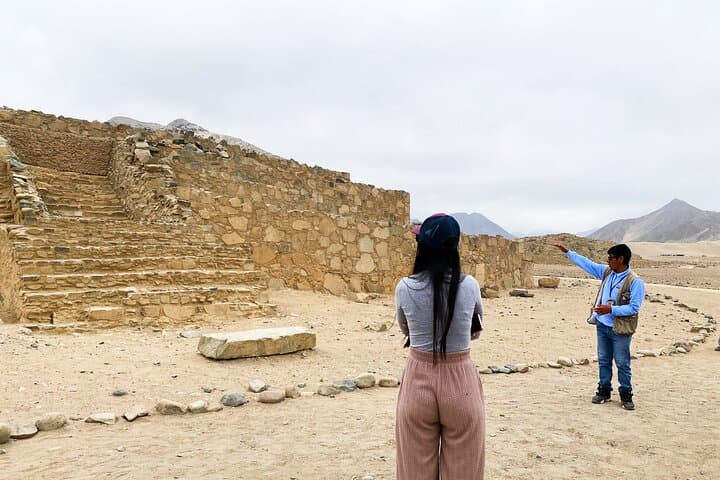

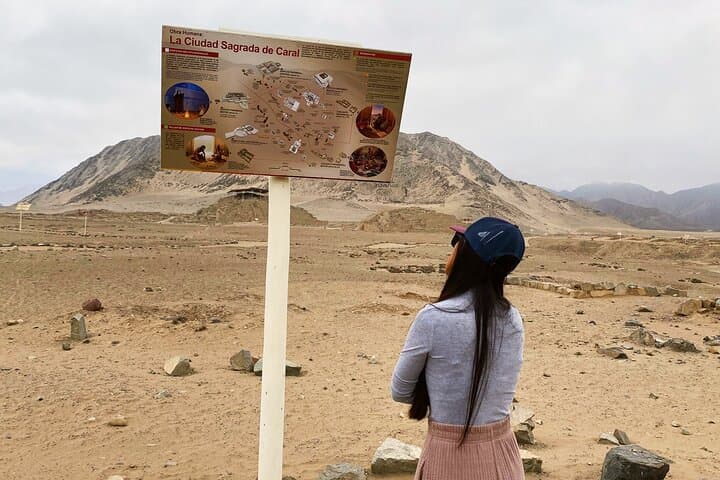
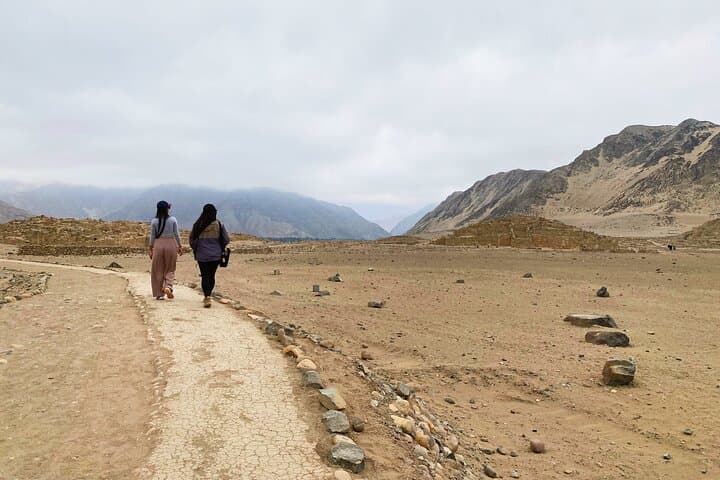
You step out of the van into the dry breath of the Supe Valley: wind threading grit through the terraces, sunlight flattening mud-brick pyramids into warm relief. Ahead, Caral’s broad plazas and stepped platforms rise from the desert like a planned city fossilized in sand — a place where daily life, ritual and engineering met five millennia ago.
You step out of the van into the dry breath of the Supe Valley: wind threading grit through the terraces, sunlight flattening mud-brick pyramids into warm relief. Ahead, Caral’s broad plazas and stepped platforms rise from the desert like a planned city fossilized in sand — a place where daily life, ritual and engineering met five millennia ago.
Caral is one of the hemisphere’s oldest urban centers, occupied around 2600–2000 BCE. The site’s low, compact pyramids and sunken plazas reveal a society that organized labor, traded along the coast and engineered agriculture in an arid river valley. Geologically the valley is a thin sliver of fertile alluvium bounded by coastal range ridges; nearby Ancón’s lomas are fog-fed dunes and scrub where morning garúa brings green to otherwise barren slopes.
After archaeology comes adrenaline: the Pasamayo stretch narrows to a coastal ribbon, then you walk between wind-sculpted dunes and learn to sand-sled. Expect loose sand, steep runs up to 40–80 vertical meters, and instructors who teach launching and safe stops.
Practically: the full loop is a long day (roughly 10 hours door-to-door from Lima), with several short walks on uneven ground and dune climbs that reward steady pacing and frequent water breaks. Wear sturdy closed-toe shoes, sun protection and layers for coastal fog. Guides generally provide sleds, snacks and photos — bring a small daypack, reusable water bottle, and a sense of curiosity. The day pairs cultural depth with hands-on desert terrain, making for an accessible but memorable Peruvian coastal adventure.