THE ADVENTURE COLLECTIVE® · Independent discovery and booking for outdoor travel

Spend two hours under Pyhä’s northern sky learning camera settings, composition, and low-light technique. This hands-on workshop pairs practical instruction with storytelling, hot berry drinks, and a short walk to a low ridgeline ideal for aurora viewing.
Spend two hours under Pyhä’s northern sky learning camera settings, composition, and low-light technique. This hands-on workshop pairs practical instruction with storytelling, hot berry drinks, and a short walk to a low ridgeline ideal for aurora viewing.
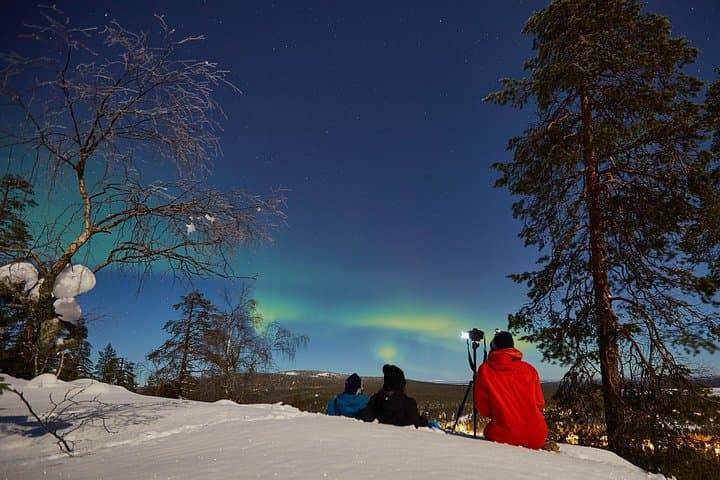
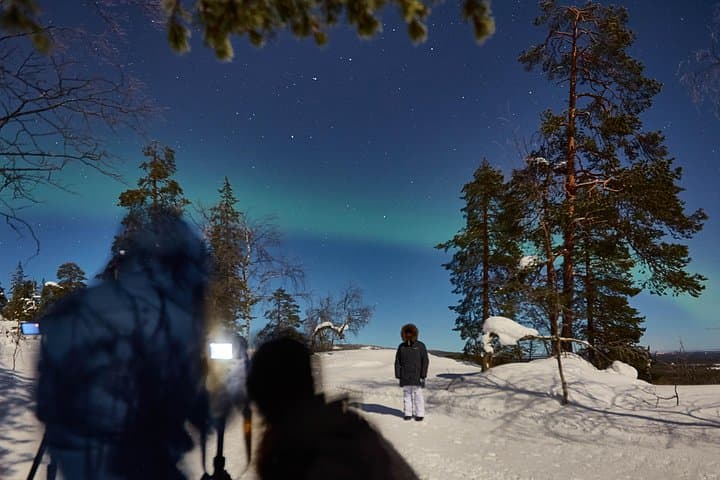
The meeting point is a warm cluster of wood and light at CAMP Kitchen & Bar, where steam from berry tea fogs your gloves and your guide checks the night's forecast on a phone screen that never lies. From Hotel Pyhätunturi it’s a ten-minute walk across crisp, open tundra to Tajukangas, a low ridgeline that frames the northern sky like a dark theater. Once assembled, the group spreads tripods into the snow; the sky, when it chooses, will steal the show.
Verified experiences and guided adventures in the surrounding area.
Operated by Bliss Adventure · Pyhä, Lapland
The meeting point is a warm cluster of wood and light at CAMP Kitchen & Bar, where steam from berry tea fogs your gloves and your guide checks the night's forecast on a phone screen that never lies. From Hotel Pyhätunturi it’s a ten-minute walk across crisp, open tundra to Tajukangas, a low ridgeline that frames the northern sky like a dark theater. Once assembled, the group spreads tripods into the snow; the sky, when it chooses, will steal the show.
Pyhä sits at the edge of Pyhä-Luosto National Park, a place shaped by ancient bedrock and glacial sculpting. The rocky ridges and heathland here are part of the region’s story—where Sámi reindeer herders and modern skiers meet under the same sky. Northern Lights (aurora borealis) are a geomagnetic conversation between the sun and Earth; Lapland is a favored listener because its latitude and low light pollution make night-time displays relatively frequent between late autumn and early spring.
This workshop is practical: two hours led by a Bliss Adventure instructor who will explain aurora science, camera settings, and composition. You’ll learn how shutter speed, ISO and aperture trade off against one another; you’ll get a pocket guide and the use of a tripod and headlamp, and enjoy hot berry beverages to keep fingers nimble. If the auroras are shy, the guide pivots—star fields or creative light-painting with headlamps become the project instead.
What to expect on the ground: Tajukangas is a gentle stroll with compacted snow and occasional uneven rock. Temperatures can dive well below freezing; batteries drain faster, and condensation is a real risk when bringing cold gear back indoors. The group size is small, practical for one-on-one help, and the guide tailors instruction to cameras that offer basic manual control.
Planning tips: bring a camera that lets you set shutter speed and ISO, spare batteries stored close to your body, and insulated boots with good traction. Time your booking between September and March for aurora season—summer’s midnight sun washes out any chance of visible auroras. Check space weather forecasts (KP index) and local cloud cover; even a strong aurora can hide behind low clouds.
Cultural note: be mindful of the dark-sky etiquette here—use red headlamp modes, keep noise low, and respect reindeer grazing areas. The workshop is designed to be accessible to beginners but rewarding to anyone who wants to turn a fleeting celestial event into a photograph that lasts.
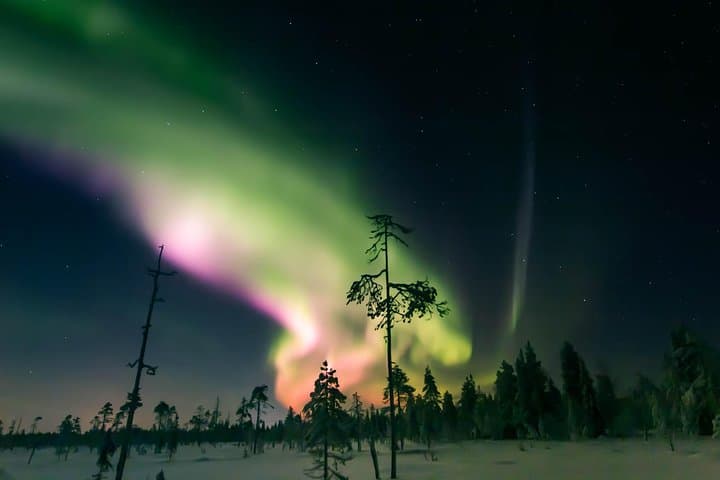
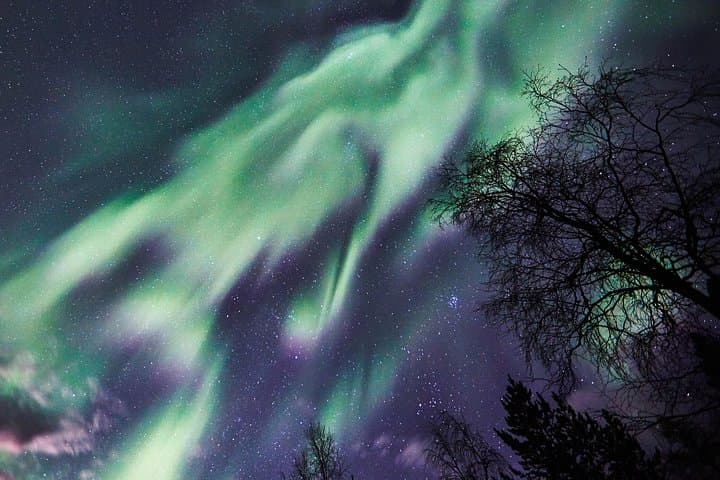
In two focused hours you’ll leave with technical know-how, a handful of test frames, and perhaps an image of the aurora arching green and violet over a sharpened silhouette of Lapland’s winter ridge.
easy.
2 hours.
Suitable for most fitness levels—requires a short, flat walk and ability to stand in cold for extended periods
Yes—your camera must allow manual control of shutter speed, aperture and ISO; tripods and headlamps are provided.
Guides adapt the workshop to photograph the starry sky or run creative exercises like light-painting so you still get practical instruction.
Night temperatures can be well below freezing—dress in insulated layers, bring waterproof outerwear, thermal socks and warm gloves.
Meet at CAMP Kitchen & Bar next to Hotel Pyhätunturi reception; Tajukangas is about a 10-minute walk from there.
All sales are final per the booking policy; the guide will pivot activities if the aurora isn’t visible.
Yes—this workshop is designed for beginners and families, though children should be able to handle cold conditions and basic instruction.
The Pyhä region has long been part of Sámi lands and later a winter destination for Finnish skiers; local culture blends reindeer husbandry with outdoor recreation.
Low light pollution here makes responsible night-time practices important—avoid unnecessary lighting and follow park rules to protect fragile tundra.
Bliss Adventure operates guided outdoor trips and adventures with an emphasis on safety, stewardship, and memorable experiences.
The meeting point is a warm cluster of wood and light at CAMP Kitchen & Bar, where steam from berry tea fogs your gloves and your guide checks the night's forecast on a phone screen that never lies. From Hotel Pyhätunturi it’s a ten-minute walk across crisp, open tundra to Tajukangas, a low ridgeline that frames the northern sky like a dark theater. Once assembled, the group spreads tripods into the snow; the sky, when it chooses, will steal the show.
The meeting point is a warm cluster of wood and light at CAMP Kitchen & Bar, where steam from berry tea fogs your gloves and your guide checks the night's forecast on a phone screen that never lies. From Hotel Pyhätunturi it’s a ten-minute walk across crisp, open tundra to Tajukangas, a low ridgeline that frames the northern sky like a dark theater. Once assembled, the group spreads tripods into the snow; the sky, when it chooses, will steal the show.
Pyhä sits at the edge of Pyhä-Luosto National Park, a place shaped by ancient bedrock and glacial sculpting. The rocky ridges and heathland here are part of the region’s story—where Sámi reindeer herders and modern skiers meet under the same sky. Northern Lights (aurora borealis) are a geomagnetic conversation between the sun and Earth; Lapland is a favored listener because its latitude and low light pollution make night-time displays relatively frequent between late autumn and early spring.
This workshop is practical: two hours led by a Bliss Adventure instructor who will explain aurora science, camera settings, and composition. You’ll learn how shutter speed, ISO and aperture trade off against one another; you’ll get a pocket guide and the use of a tripod and headlamp, and enjoy hot berry beverages to keep fingers nimble. If the auroras are shy, the guide pivots—star fields or creative light-painting with headlamps become the project instead.
What to expect on the ground: Tajukangas is a gentle stroll with compacted snow and occasional uneven rock. Temperatures can dive well below freezing; batteries drain faster, and condensation is a real risk when bringing cold gear back indoors. The group size is small, practical for one-on-one help, and the guide tailors instruction to cameras that offer basic manual control.
Planning tips: bring a camera that lets you set shutter speed and ISO, spare batteries stored close to your body, and insulated boots with good traction. Time your booking between September and March for aurora season—summer’s midnight sun washes out any chance of visible auroras. Check space weather forecasts (KP index) and local cloud cover; even a strong aurora can hide behind low clouds.
Cultural note: be mindful of the dark-sky etiquette here—use red headlamp modes, keep noise low, and respect reindeer grazing areas. The workshop is designed to be accessible to beginners but rewarding to anyone who wants to turn a fleeting celestial event into a photograph that lasts.
In two focused hours you’ll leave with technical know-how, a handful of test frames, and perhaps an image of the aurora arching green and violet over a sharpened silhouette of Lapland’s winter ridge.