THE ADVENTURE COLLECTIVE® · Independent discovery and booking for outdoor travel

Board a fast ferry from Naples for a private day on Capri — from the glowing Blue Grotto and the Faraglioni sea stacks to chairlift views at Monte Solaro. This tour combines sea caves, cliff roads, and village streets into a single, well-paced day.
Board a fast ferry from Naples for a private day on Capri — from the glowing Blue Grotto and the Faraglioni sea stacks to chairlift views at Monte Solaro. This tour combines sea caves, cliff roads, and village streets into a single, well-paced day.
The ferry slips away from Molo Beverello and the Bay of Naples opens like a moving map — Vesuvius on the rim, the shoreline shrinking, Capri swelling out of the Tyrrhenian. On arrival the island pushes a dozen landscapes at once: a cliffside ribbon of road, the sudden hush of sea caves, whitewashed alleys that funnel you toward the Piazzetta.
Verified experiences and guided adventures in the surrounding area.
Operated by Capri Tours with Michele · Capri, Campania
The ferry slips away from Molo Beverello and the Bay of Naples opens like a moving map — Vesuvius on the rim, the shoreline shrinking, Capri swelling out of the Tyrrhenian. On arrival the island pushes a dozen landscapes at once: a cliffside ribbon of road, the sudden hush of sea caves, whitewashed alleys that funnel you toward the Piazzetta.
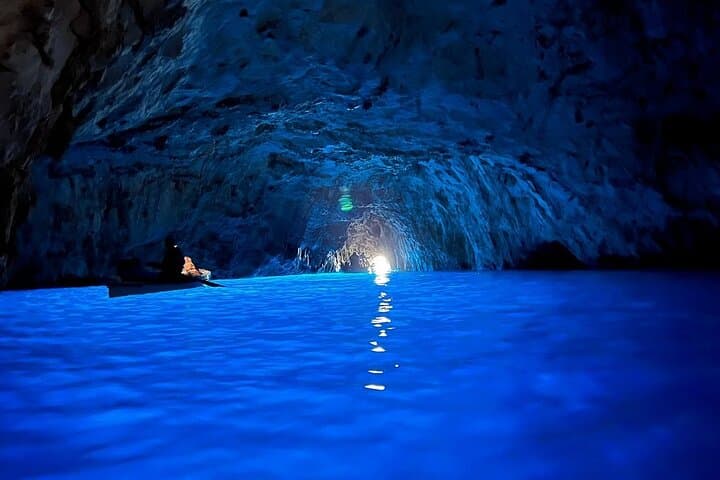
Capri’s human story reads in marble and ruins: Roman emperors chose its headlands, and traces of Tiberius’ Villa Jovis perch above the eastern coast. Geologically, the island is limestone folded and scoured by the sea; that same calcium rock makes the caves glow when sunlight hits the water — the Blue Grotto’s electric color is optical physics and tidal choreography combined.
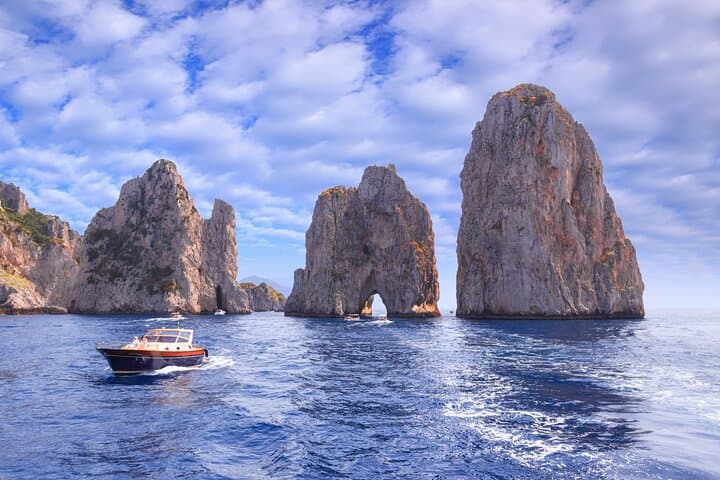
Culturally, Capri oscillates between sleepy Anacapri workshops and Capri town’s more cosmopolitan flair; local artisans sell inlaid sandals and hand-painted ceramics while cafés pour espresso into afternoons. Nature here is active: currents tease the grotto’s mouth, gulls patrol the Faraglioni, and the chairlift to Monte Solaro rises through pine-scented air.
Practical guidance: plan for about nine hours total from Naples. The Blue Grotto is weather-dependent — if it’s closed expect a boat perimeter tour of the island instead. Wear sturdy shoes for steep alleys and steps, carry a light wind layer and water, and bring cash for small purchases. Timing matters: earlier ferries reduce crowd waits and improve chances for cave entry. For visitors with limited mobility, the tour can be adapted but some stretches remain uneven. With a local guide and included tickets, the day compresses Capri’s highlights into an efficient, sensory-rich loop that balances sea, summit, and village life.
moderate.
9 hours.
Suitable for travelers with moderate fitness who can handle stairs, short walks on uneven surfaces, and brief boat transfers.
No — entry depends on sea and light conditions; when closed, the itinerary provides a shared boat tour around Capri and the Faraglioni.
The tour is approximately 9 hours (540 minutes) including round-trip fast ferry time; meeting is at Molo Beverello in Naples and exact ferry schedules are confirmed at booking.
The tour can be adapted in parts, but Capri has many steep steps and uneven streets; notify organizers in advance to arrange the most accessible options.
Yes — the meeting point is Naples’ main port; allow extra time for cruise disembarkation and port transfers to Molo Beverello.
Capri was a favored retreat of Roman elites — Emperor Tiberius built Villa Jovis on the island’s eastern ridge, leaving ruins that still punctuate the landscape.
High visitor numbers and boat traffic stress coastal habitats; stay on marked paths, avoid climbing rock formations, and support local guides who follow regulated marine access.
Capri Tours with Michele operates guided outdoor trips and adventures with an emphasis on safety, stewardship, and memorable experiences.
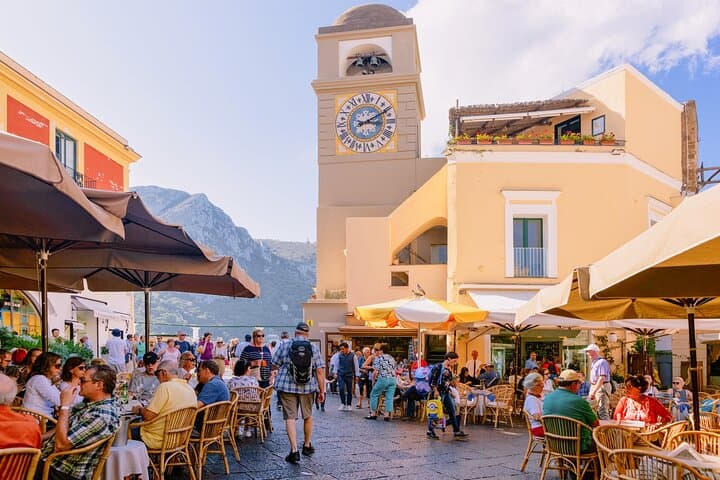
The ferry slips away from Molo Beverello and the Bay of Naples opens like a moving map — Vesuvius on the rim, the shoreline shrinking, Capri swelling out of the Tyrrhenian. On arrival the island pushes a dozen landscapes at once: a cliffside ribbon of road, the sudden hush of sea caves, whitewashed alleys that funnel you toward the Piazzetta.
The ferry slips away from Molo Beverello and the Bay of Naples opens like a moving map — Vesuvius on the rim, the shoreline shrinking, Capri swelling out of the Tyrrhenian. On arrival the island pushes a dozen landscapes at once: a cliffside ribbon of road, the sudden hush of sea caves, whitewashed alleys that funnel you toward the Piazzetta.
Capri’s human story reads in marble and ruins: Roman emperors chose its headlands, and traces of Tiberius’ Villa Jovis perch above the eastern coast. Geologically, the island is limestone folded and scoured by the sea; that same calcium rock makes the caves glow when sunlight hits the water — the Blue Grotto’s electric color is optical physics and tidal choreography combined.
Culturally, Capri oscillates between sleepy Anacapri workshops and Capri town’s more cosmopolitan flair; local artisans sell inlaid sandals and hand-painted ceramics while cafés pour espresso into afternoons. Nature here is active: currents tease the grotto’s mouth, gulls patrol the Faraglioni, and the chairlift to Monte Solaro rises through pine-scented air.
Practical guidance: plan for about nine hours total from Naples. The Blue Grotto is weather-dependent — if it’s closed expect a boat perimeter tour of the island instead. Wear sturdy shoes for steep alleys and steps, carry a light wind layer and water, and bring cash for small purchases. Timing matters: earlier ferries reduce crowd waits and improve chances for cave entry. For visitors with limited mobility, the tour can be adapted but some stretches remain uneven. With a local guide and included tickets, the day compresses Capri’s highlights into an efficient, sensory-rich loop that balances sea, summit, and village life.