THE ADVENTURE COLLECTIVE® · Independent discovery and booking for outdoor travel

See Capri’s Blue Grotto and Positano’s cliffside lanes in one well-paced day from Sorrento. Expect boat transfers, short coastal walks, and sweeping sea views — weather permitting for grotto access.
See Capri’s Blue Grotto and Positano’s cliffside lanes in one well-paced day from Sorrento. Expect boat transfers, short coastal walks, and sweeping sea views — weather permitting for grotto access.
A morning ferry slips away from Sorrento’s Marina Piccola and the island of Capri grows from a silver horizon into cliffs and citrus-scented terraces. The day unfolds in measured stages: a coastal crossing, a minibus ride that clings to switchback roads, a small-boat approach to the Blue Grotto if sea conditions allow, then a jetfoil hop to Positano’s steep lanes and sunlit piazzas.
Verified experiences and guided adventures in the surrounding area.
Operated by Tours of Sorrento-Capri,Amalfi Coast & Pompeii · Sorrento, Campania
A morning ferry slips away from Sorrento’s Marina Piccola and the island of Capri grows from a silver horizon into cliffs and citrus-scented terraces. The day unfolds in measured stages: a coastal crossing, a minibus ride that clings to switchback roads, a small-boat approach to the Blue Grotto if sea conditions allow, then a jetfoil hop to Positano’s steep lanes and sunlit piazzas.
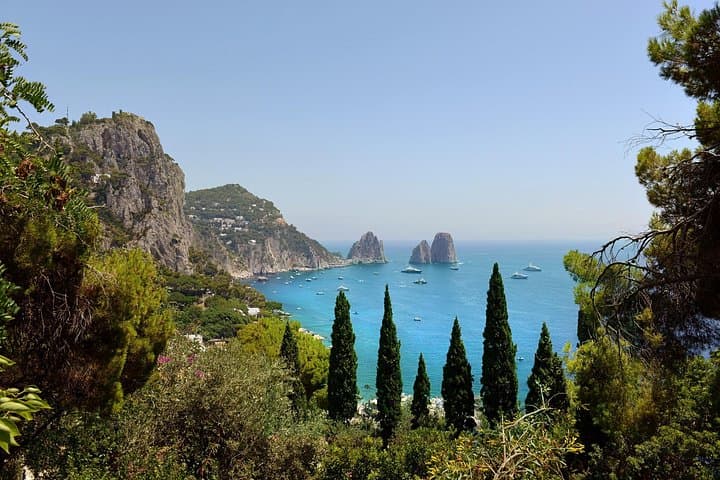
Capri’s history reads like an itinerary of power and leisure — Roman emperors, later 19th-century visitors, and contemporary artists have all found refuge here. Geologically, the island is limestone folded by tectonic uplift; sea caves and the Faraglioni stacks are sculpted by persistent waves. Positano, a former fishing village, shows the region’s Mediterranean culture in its lemon groves, linen shops, and stair-stepped houses tumbling toward Spiaggia Grande.
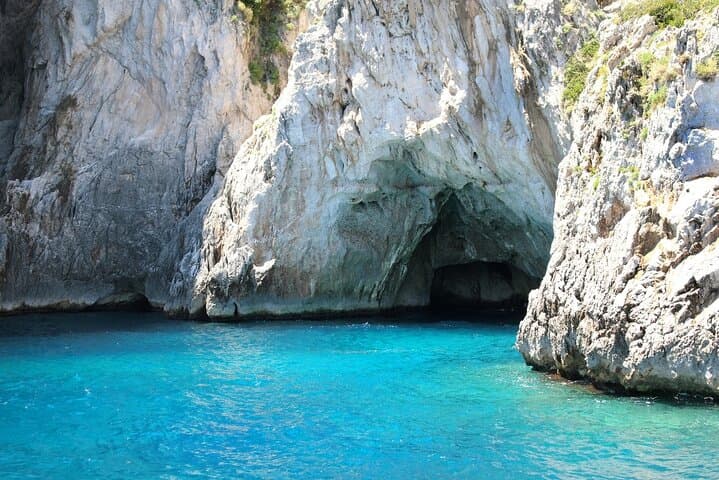
Practically, expect several short walks on cobbled streets, staircases, and boat transfers; the Blue Grotto is accessible only in calm seas, otherwise boats will cruise Capri’s coastal caves and the Faraglioni stacks. The tour returns to Sorrento by private Mercedes van, with a guide handling tickets and timings.
Bring sun protection, comfortable shoes for stairs and uneven surfaces, and a light daypack for water and a camera. Plan for crowds at main viewpoints and allow extra time if the grotto is closed; alternate coastal boat routes still deliver dramatic sea caves and photo opportunities. The experience is full-day but physically easy — mostly walking and short boat rides — and rewards travelers with classic Amalfi Coast scenery in a single, well-paced day.
easy.
8 hours.
Suitable for travelers in average physical condition; requires walking on stairs and uneven ground but no sustained climbs.
No — entry depends on sea conditions and tide; if access is closed the tour will include a boat cruise of other caves and the Faraglioni rock formations.
Infants can ride in strollers, but expect many stairs and cobbled streets; strollers may be impractical in Capri and Positano’s steep lanes.
See above
Bring travel antiemetics or wristbands and sit mid-boat where motion is less pronounced; inform the guide in advance if you are prone to seasickness.
Capri was a favored retreat of Roman emperors (notably Tiberius) and later a magnet for artists and 19th-century travelers, shaping its mix of villas and public gardens.
The island and coastal waters are sensitive to erosion and over-tourism; stick to marked paths, avoid single-use plastics, and respect local marine protections.
Tours of Sorrento-Capri,Amalfi Coast & Pompeii operates guided outdoor trips and adventures with an emphasis on safety, stewardship, and memorable experiences.

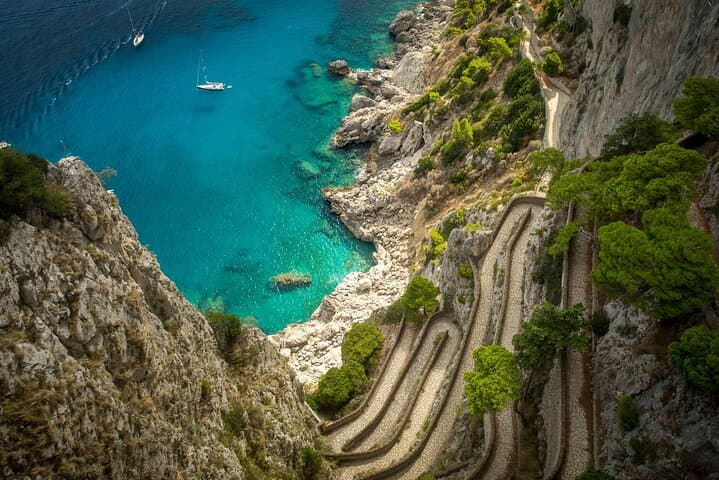
A morning ferry slips away from Sorrento’s Marina Piccola and the island of Capri grows from a silver horizon into cliffs and citrus-scented terraces. The day unfolds in measured stages: a coastal crossing, a minibus ride that clings to switchback roads, a small-boat approach to the Blue Grotto if sea conditions allow, then a jetfoil hop to Positano’s steep lanes and sunlit piazzas.
A morning ferry slips away from Sorrento’s Marina Piccola and the island of Capri grows from a silver horizon into cliffs and citrus-scented terraces. The day unfolds in measured stages: a coastal crossing, a minibus ride that clings to switchback roads, a small-boat approach to the Blue Grotto if sea conditions allow, then a jetfoil hop to Positano’s steep lanes and sunlit piazzas.
Capri’s history reads like an itinerary of power and leisure — Roman emperors, later 19th-century visitors, and contemporary artists have all found refuge here. Geologically, the island is limestone folded by tectonic uplift; sea caves and the Faraglioni stacks are sculpted by persistent waves. Positano, a former fishing village, shows the region’s Mediterranean culture in its lemon groves, linen shops, and stair-stepped houses tumbling toward Spiaggia Grande.
Practically, expect several short walks on cobbled streets, staircases, and boat transfers; the Blue Grotto is accessible only in calm seas, otherwise boats will cruise Capri’s coastal caves and the Faraglioni stacks. The tour returns to Sorrento by private Mercedes van, with a guide handling tickets and timings.
Bring sun protection, comfortable shoes for stairs and uneven surfaces, and a light daypack for water and a camera. Plan for crowds at main viewpoints and allow extra time if the grotto is closed; alternate coastal boat routes still deliver dramatic sea caves and photo opportunities. The experience is full-day but physically easy — mostly walking and short boat rides — and rewards travelers with classic Amalfi Coast scenery in a single, well-paced day.