THE ADVENTURE COLLECTIVE® · Independent discovery and booking for outdoor travel

Spend a day tracing Cappadocia’s geology and craft on the Red Tour: Uchisar Castle views, Zelve’s cave village, the sculpted chimneys of Monks Valley and hands-on pottery in Avanos. This full-day loop blends short hikes with cultural stops and practical local insights.
Spend a day tracing Cappadocia’s geology and craft on the Red Tour: Uchisar Castle views, Zelve’s cave village, the sculpted chimneys of Monks Valley and hands-on pottery in Avanos. This full-day loop blends short hikes with cultural stops and practical local insights.
You step onto the bus from Göreme with the same impatience that the basalt and volcanic ash of Cappadocia once had—eager to be shaped. The route unfolds like a map of deep time: low ridges of tuff, conical spires that have been whittled by wind and rain, and a skyline pierced by the squat silhouette of Uchisar Castle. On the Red Tour, these features become the itinerary—each stop a different chapter of geological and human hands at work.
Verified experiences and guided adventures in the surrounding area.
Operated by Tripster Travel Agency · Göreme, Nevşehir
You step onto the bus from Göreme with the same impatience that the basalt and volcanic ash of Cappadocia once had—eager to be shaped. The route unfolds like a map of deep time: low ridges of tuff, conical spires that have been whittled by wind and rain, and a skyline pierced by the squat silhouette of Uchisar Castle. On the Red Tour, these features become the itinerary—each stop a different chapter of geological and human hands at work.
Begin at Uchisar where a short photo stop at the castle viewpoint offers a broad read on the region’s layered history; the rock has held caves and fortifications for millennia, and the view helps you understand why people carved into it rather than simply building on top. The tour replaces the well-trodden Göreme Open Air Museum with Zelve Open Air Museum, a quieter valley of hollowed houses, pigeon lofts and chapels where locals lived until the 1970s. Walking through Zelve feels like entering a slow-motion film: the soft tuff accepts chisels and picks, and erosion keeps rewriting the facades.
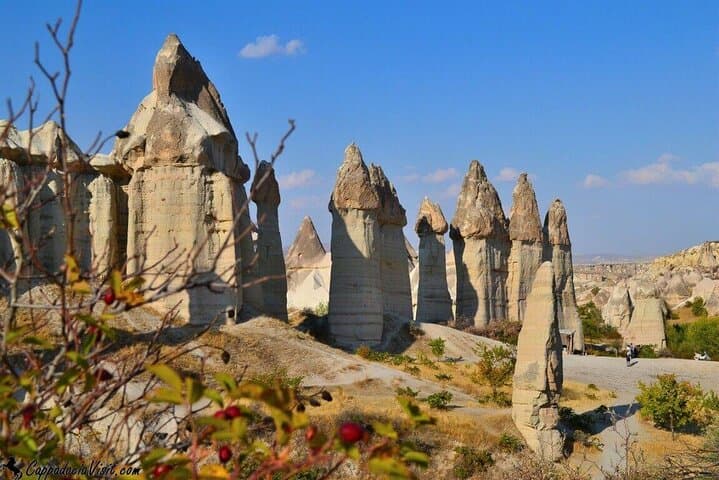
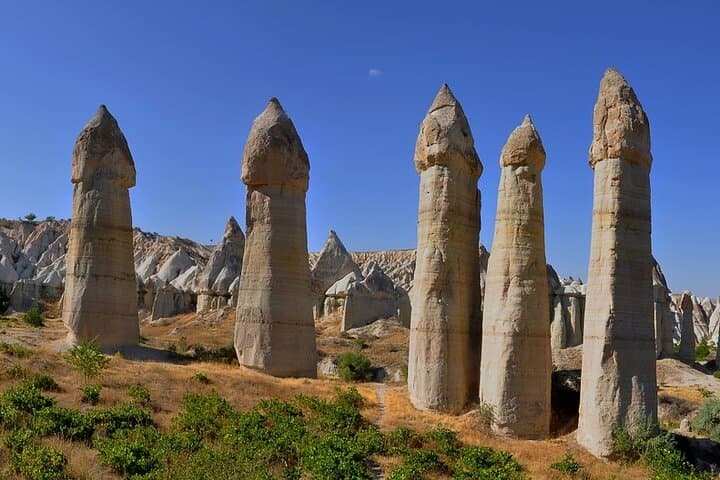
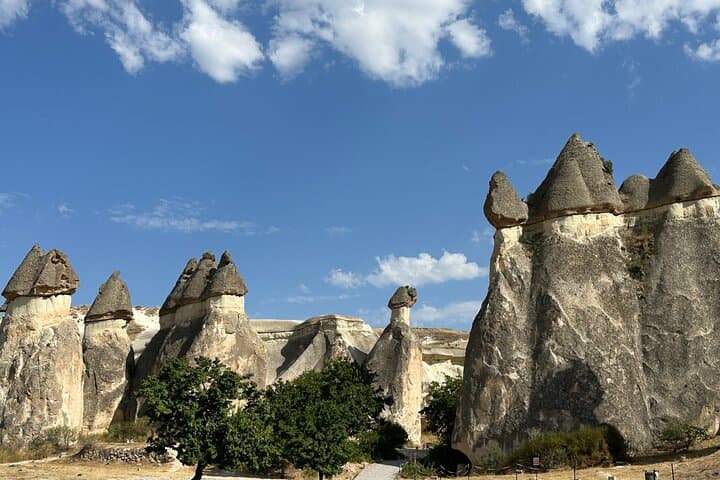
Monks Valley (Paşabağları) presents the fairy chimneys in their most sculptural form—tall columns capped by harder rock that refused to erode as fast. Here, the stones almost seem to be listening, their columns pointing like questions to the sky. A guided short hike threads along paths between the hoodoos; the terrain is uneven but never technical. Later, Avanos shifts the day from stone to clay. At the Red River (Kızılırmak) the region’s pottery tradition continues in studios where you can try the wheel and watch artisans coax vessels from terracotta that’s been traded across Anatolia for centuries.
History and geology meet in practical terms on this seven-hour loop: volcanic eruptions from ancient central Anatolian volcanoes deposited thick tuff layers; weather sculpted them; humans carved homes, churches and storage into the soft rock. The tour’s English-speaking guide will point out fresco fragments, explain the role of pigeons in fertilizing fields, and tell why the Zelve valley was abandoned.
For planning: wear sturdy shoes with good grip, bring a sun hat and layered clothing (mornings can be chilly), and carry cash for handicrafts. Museum admission and lunch are included, and the operator offers hotel pickup from Göreme and surrounding villages. Expect many photo moments—charge batteries and bring a polarizing filter for saturated skies. If you want fewer crowds at viewpoints, ask your guide about early departures on cooler months. The Red Tour is a practical, compact way to read the land: it shows you how fire, water and human patience shaped Cappadocia into a landscape that still asks to be explored.
moderate.
6–7 hours.
Suitable for travelers comfortable with multiple short walks and standing during explanations; not strenuous but requires mobility over uneven ground.
The tour runs about 6–7 hours including transport, guided stops, lunch and short walks at each site.
Yes—museum tickets mentioned in the itinerary are included in the booking.
The tour provides hotel pickup from Göreme and many nearby hotels—confirm your hotel name during booking.
Walks are short and on uneven ground; basic mobility is required but the tour is suitable for most fitness levels.
A lunch is included; if you have dietary restrictions note them when booking so the operator can accommodate where possible.
Yes—children can join, though some paths and viewpoints have exposed edges; infant seats and pickup options are available.
Cappadocia’s soft volcanic tuff was carved into homes, churches and dovecotes over thousands of years; many cave settlements date to early Christian communities and earlier Anatolian cultures.
Erosion and visitor impact are managed by limiting access to fragile caves and by guided routes; support local artisans and follow signposted trails to reduce wear.
Tripster Travel Agency operates guided outdoor trips and adventures with an emphasis on safety, stewardship, and memorable experiences.
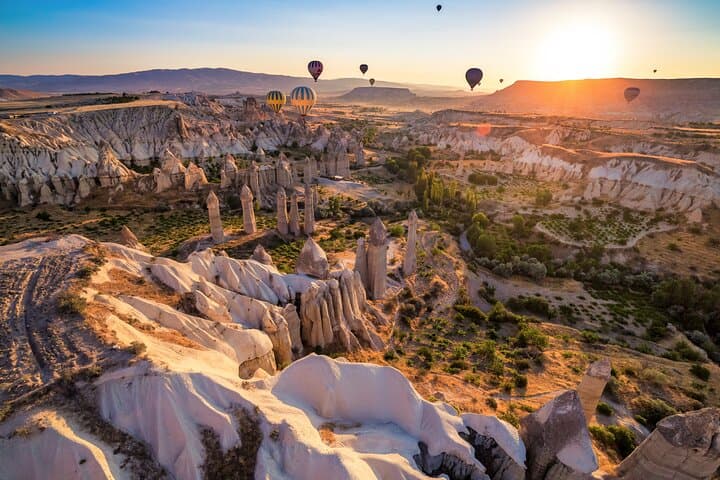
You step onto the bus from Göreme with the same impatience that the basalt and volcanic ash of Cappadocia once had—eager to be shaped. The route unfolds like a map of deep time: low ridges of tuff, conical spires that have been whittled by wind and rain, and a skyline pierced by the squat silhouette of Uchisar Castle. On the Red Tour, these features become the itinerary—each stop a different chapter of geological and human hands at work.
You step onto the bus from Göreme with the same impatience that the basalt and volcanic ash of Cappadocia once had—eager to be shaped. The route unfolds like a map of deep time: low ridges of tuff, conical spires that have been whittled by wind and rain, and a skyline pierced by the squat silhouette of Uchisar Castle. On the Red Tour, these features become the itinerary—each stop a different chapter of geological and human hands at work.
Begin at Uchisar where a short photo stop at the castle viewpoint offers a broad read on the region’s layered history; the rock has held caves and fortifications for millennia, and the view helps you understand why people carved into it rather than simply building on top. The tour replaces the well-trodden Göreme Open Air Museum with Zelve Open Air Museum, a quieter valley of hollowed houses, pigeon lofts and chapels where locals lived until the 1970s. Walking through Zelve feels like entering a slow-motion film: the soft tuff accepts chisels and picks, and erosion keeps rewriting the facades.
Monks Valley (Paşabağları) presents the fairy chimneys in their most sculptural form—tall columns capped by harder rock that refused to erode as fast. Here, the stones almost seem to be listening, their columns pointing like questions to the sky. A guided short hike threads along paths between the hoodoos; the terrain is uneven but never technical. Later, Avanos shifts the day from stone to clay. At the Red River (Kızılırmak) the region’s pottery tradition continues in studios where you can try the wheel and watch artisans coax vessels from terracotta that’s been traded across Anatolia for centuries.
History and geology meet in practical terms on this seven-hour loop: volcanic eruptions from ancient central Anatolian volcanoes deposited thick tuff layers; weather sculpted them; humans carved homes, churches and storage into the soft rock. The tour’s English-speaking guide will point out fresco fragments, explain the role of pigeons in fertilizing fields, and tell why the Zelve valley was abandoned.
For planning: wear sturdy shoes with good grip, bring a sun hat and layered clothing (mornings can be chilly), and carry cash for handicrafts. Museum admission and lunch are included, and the operator offers hotel pickup from Göreme and surrounding villages. Expect many photo moments—charge batteries and bring a polarizing filter for saturated skies. If you want fewer crowds at viewpoints, ask your guide about early departures on cooler months. The Red Tour is a practical, compact way to read the land: it shows you how fire, water and human patience shaped Cappadocia into a landscape that still asks to be explored.