THE ADVENTURE COLLECTIVE® · Independent discovery and booking for outdoor travel

Spend a day moving from underground cities to sculpted valleys on the Cappadocia Red Tour. Expect mushroom-shaped chimneys, hands-on pottery in Avanos, and a guide who links geology and history with clear, practical tips.
Spend a day moving from underground cities to sculpted valleys on the Cappadocia Red Tour. Expect mushroom-shaped chimneys, hands-on pottery in Avanos, and a guide who links geology and history with clear, practical tips.
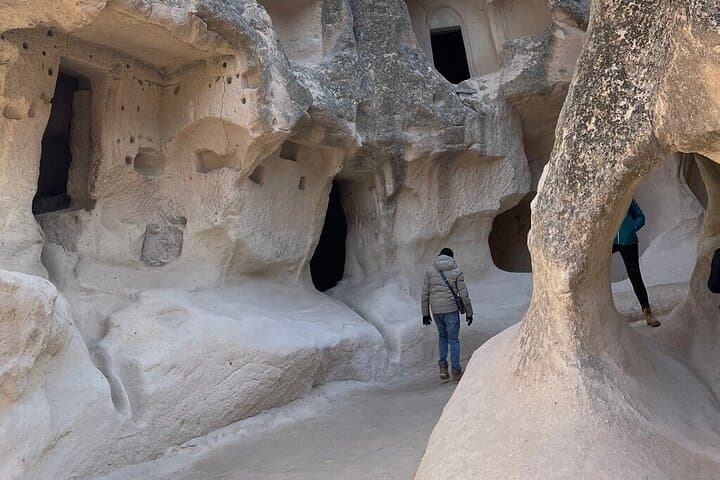
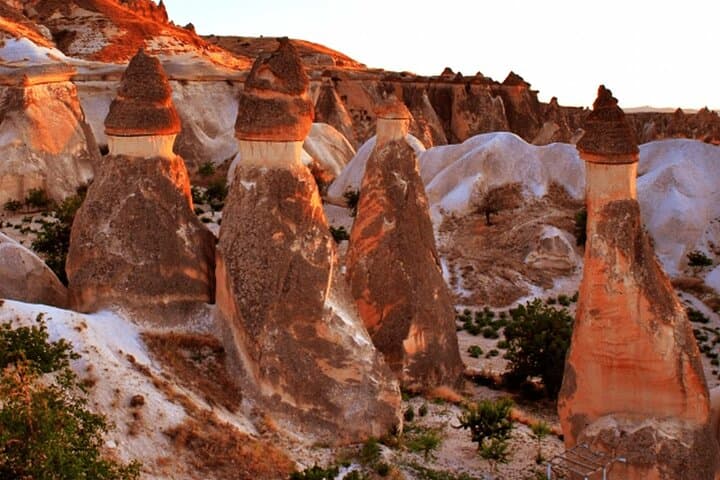
You step out of an air-conditioned van into a landscape that refuses a single adjective. Wind-polished pillars of rock rise like the props of some ancient stage, their caps balanced on narrow columns; the earth here has been sculpted by fire, ash and patient erosion. The guide points to a low entrance cut into the slope and you imagine what it must have felt like to descend into an underground city—cool, dim, deliberate—where communities once moved, slept and worshipped beneath the surface.
Verified experiences and guided adventures in the surrounding area.
Operated by Cappadocia Concept Tour & Travel · Göreme, Nevşehir Province
You step out of an air-conditioned van into a landscape that refuses a single adjective. Wind-polished pillars of rock rise like the props of some ancient stage, their caps balanced on narrow columns; the earth here has been sculpted by fire, ash and patient erosion. The guide points to a low entrance cut into the slope and you imagine what it must have felt like to descend into an underground city—cool, dim, deliberate—where communities once moved, slept and worshipped beneath the surface.
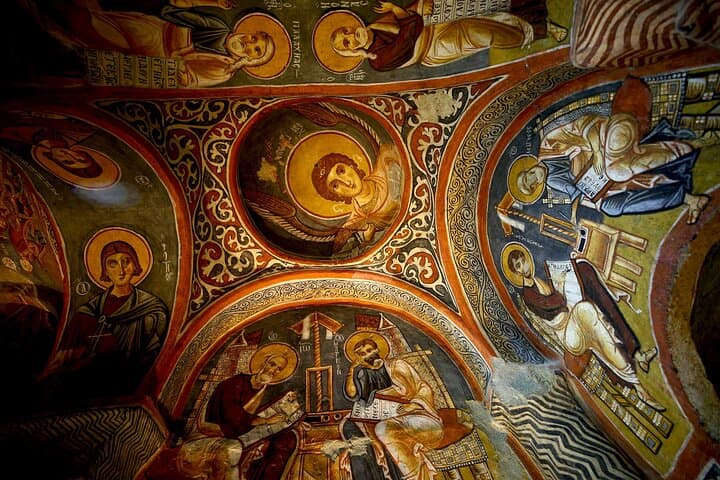
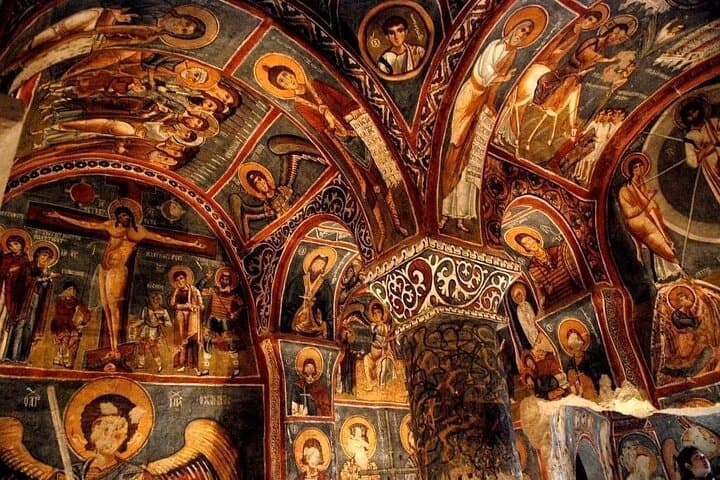
The Red Tour stitches together Cappadocia's most readable pages of geology and human adaptation. Volcanic tuff—soft, workable ash compressed over millennia—gave locals the means to carve dwellings, churches and storage rooms. Early Christians and Byzantine communities exploited that softness to build sanctuaries hidden from invaders; later, towns like Avanos built livelihoods on the Kızılırmak River, shaping clay on a wheel the same way local potters still do.
On this roughly 6-hour route you’ll visit a carved underground city (often Kaymaklı or Derinkuyu), stroll among the mushroom-shaped chimneys at Pasabagi (Monks Valley), and explore the veined lanes of Zelve Open Air Museum. A pottery workshop in Avanos turns observation into practice: your hands learn the wheel while the teacher shows how pieces are fired—many tours offer to ship finished work home. The day finishes at Love Valley’s rim, where rounded chimneys and wide views give a final, postcard-ready perspective.
The tour moves at an easy pace with guided stops and time for photos; an included lunch and hotel pickup mean logistics are streamlined. Expect uneven stone steps, narrow subterranean passages and short walks across loose scree in open-air sites. Temperatures swing—hot and exposed on summer afternoons, sharply cool underground—so layers matter.
Practical matters: book early in high season, arrive with sturdy shoes and sunscreen, and carry a small daypack with water and a camera. If you’re prone to claustrophobia, the underground city involves low ceilings and narrow corridors—ask the guide about accessible alternatives. Bring some cash for pottery souvenirs and tips; respect posted paths, and consider visiting early or late in the day to avoid the busiest crowds.
This Red Tour balances big views and tactile culture: geology that shaped a people, pottery that keeps a craft alive, and valleys that still tell stories in stone. It’s a practical, immersive way to read Cappadocia in a day while leaving room to linger afterwards.
easy.
6–7 hours.
Suitable for travelers in average physical condition who can handle short walks, stairs and uneven footing
The tour runs about 380 minutes (roughly 6–7 hours), including guided stops, lunch and transport between sites.
Yes—hotel pickup and drop-off in Göreme and surrounding towns are included; confirm your pickup point when booking.
Some sites are included; the itinerary lists which stops include admission—ask your operator to confirm if specific museums are covered.
Yes—most workshops offer firing and shipping services for a fee; provide your address and confirm shipping costs ahead of time.
Children can join but underground city passages involve stairs and low ceilings; travelers with mobility limitations should check with the operator before booking.
Guides typically provide commentary in the language on your booking—confirm availability of your preferred language when reserving.
Cappadocia’s carved villages were hollowed from volcanic tuff by communities from Hittite times through Byzantine eras; subterranean cities provided refuge and storage for centuries.
High visitor numbers are eroding soft tuff in places—stay on marked paths, avoid climbing fragile formations, and support local artisans to keep traditional crafts viable.
Cappadocia Concept Tour & Travel operates guided outdoor trips and adventures with an emphasis on safety, stewardship, and memorable experiences.
You step out of an air-conditioned van into a landscape that refuses a single adjective. Wind-polished pillars of rock rise like the props of some ancient stage, their caps balanced on narrow columns; the earth here has been sculpted by fire, ash and patient erosion. The guide points to a low entrance cut into the slope and you imagine what it must have felt like to descend into an underground city—cool, dim, deliberate—where communities once moved, slept and worshipped beneath the surface.
You step out of an air-conditioned van into a landscape that refuses a single adjective. Wind-polished pillars of rock rise like the props of some ancient stage, their caps balanced on narrow columns; the earth here has been sculpted by fire, ash and patient erosion. The guide points to a low entrance cut into the slope and you imagine what it must have felt like to descend into an underground city—cool, dim, deliberate—where communities once moved, slept and worshipped beneath the surface.
The Red Tour stitches together Cappadocia's most readable pages of geology and human adaptation. Volcanic tuff—soft, workable ash compressed over millennia—gave locals the means to carve dwellings, churches and storage rooms. Early Christians and Byzantine communities exploited that softness to build sanctuaries hidden from invaders; later, towns like Avanos built livelihoods on the Kızılırmak River, shaping clay on a wheel the same way local potters still do.
On this roughly 6-hour route you’ll visit a carved underground city (often Kaymaklı or Derinkuyu), stroll among the mushroom-shaped chimneys at Pasabagi (Monks Valley), and explore the veined lanes of Zelve Open Air Museum. A pottery workshop in Avanos turns observation into practice: your hands learn the wheel while the teacher shows how pieces are fired—many tours offer to ship finished work home. The day finishes at Love Valley’s rim, where rounded chimneys and wide views give a final, postcard-ready perspective.
The tour moves at an easy pace with guided stops and time for photos; an included lunch and hotel pickup mean logistics are streamlined. Expect uneven stone steps, narrow subterranean passages and short walks across loose scree in open-air sites. Temperatures swing—hot and exposed on summer afternoons, sharply cool underground—so layers matter.
Practical matters: book early in high season, arrive with sturdy shoes and sunscreen, and carry a small daypack with water and a camera. If you’re prone to claustrophobia, the underground city involves low ceilings and narrow corridors—ask the guide about accessible alternatives. Bring some cash for pottery souvenirs and tips; respect posted paths, and consider visiting early or late in the day to avoid the busiest crowds.
This Red Tour balances big views and tactile culture: geology that shaped a people, pottery that keeps a craft alive, and valleys that still tell stories in stone. It’s a practical, immersive way to read Cappadocia in a day while leaving room to linger afterwards.