THE ADVENTURE COLLECTIVE® · Independent discovery and booking for outdoor travel

Spend a full day moving through Cappadocia’s sculpted valleys, ancient cave villages and pottery workshops. This Red Tour pairs geological storytelling with hands-on culture, ideal for travelers who want depth without a multi-day commitment.
Spend a full day moving through Cappadocia’s sculpted valleys, ancient cave villages and pottery workshops. This Red Tour pairs geological storytelling with hands-on culture, ideal for travelers who want depth without a multi-day commitment.
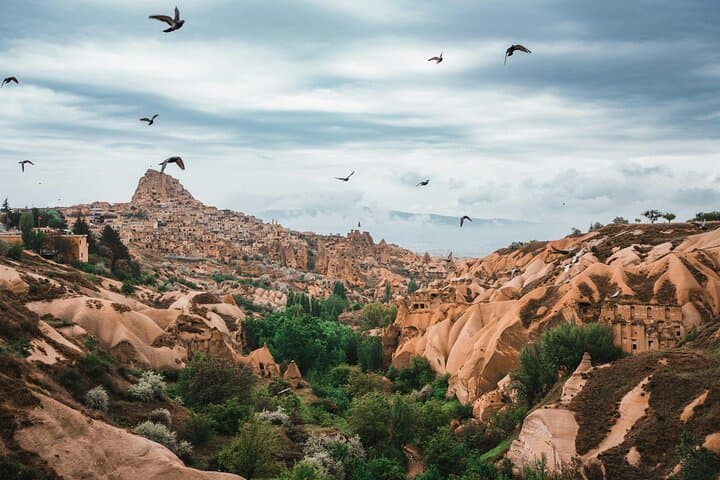
You step out of the minivan into a low, dry wind and the land seems to insist on a second look—rock pillars that could pass for a ruined city, ridgelines that glow ochre in the late morning sun. On this full-day Red Tour around Cappadocia, the landscape does the talking: fairy chimneys loom like eroded towers, pigeon holes score the soft stone, and narrow lanes in Avanos carry the smell of wet clay and baking bread.
Verified experiences and guided adventures in the surrounding area.
Operated by Lotus Cappadocia Travel Agency · Göreme, Nevşehir
You step out of the minivan into a low, dry wind and the land seems to insist on a second look—rock pillars that could pass for a ruined city, ridgelines that glow ochre in the late morning sun. On this full-day Red Tour around Cappadocia, the landscape does the talking: fairy chimneys loom like eroded towers, pigeon holes score the soft stone, and narrow lanes in Avanos carry the smell of wet clay and baking bread.
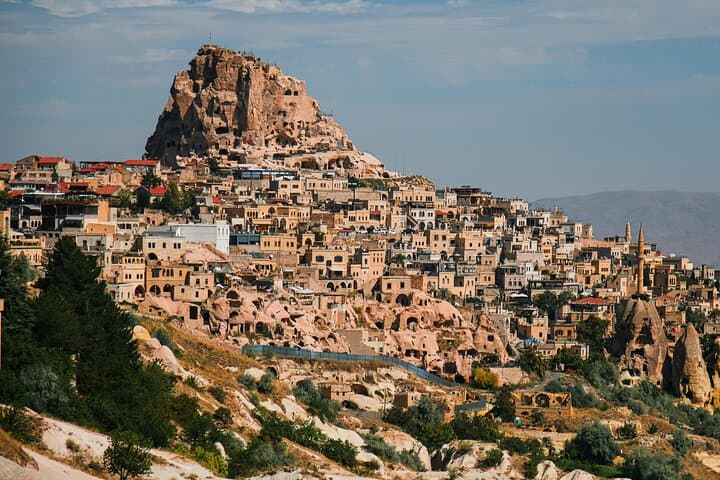
Geology here is readable. Between 2 and 10 million years ago, eruptions from the Erciyes and Hasan massifs plastered the region in volcanic tuff; wind and winter rain carved the rest. Humans followed, hollowing the soft rock to build dwellings, churches and storerooms. Byzantine monks left chapels with faded frescoes; later villagers carved pigeon houses to harvest fertilizer. The Red Tour strings these chapters together—Çavuşin’s old village, the mushroom caps of Paşabağ, Devrent’s animal-shaped outcrops, a hands-on pottery stop in Avanos, and a relaxed lunch near Uçhisar Castle before a sweeping finale at Göreme Panorama.
Culturally the day mixes craft and cuisine. Avanos has been a pottery center for millennia—local clay, wheel-thrown cups, and the steady hands of workshop owners who’ll let you try the wheel. Lunch typically features testi kebabı (meat slow-cooked in a sealed clay pot), manti and gözleme—simple, starchy dishes that feel right after hours of walking on dusty trails.
Practical guide: the tour runs about 8 hours with hotel pickup roughly 30 minutes before departure. Expect a mix of short, interpreted walks—Paşabağ offers roughly 1–1.5 km on uneven dirt and compacted tuff with minimal elevation gain; Devrent is a 30–45 minute loop over loose gravel; Pigeon Valley includes a gentle 2 km stroll with 50–100 m of ups and downs. Surfaces are often dusty, occasionally steep steps, and narrow cave entries are not always wheelchair-accessible. Group size caps around 18; admission fees and lunch are included.
Timing matters: spring and fall deliver moderate temperatures and softer light; summer brings strong sun and dust; winter can be windy and cold. Bring sturdy shoes, a sun hat, at least 1.5–2 liters of water, and a camera with a wide-angle lens. If you want photos with fewer people, ask for early pickup times or plan the tour early in your trip and return to favorite spots at dawn.
The Red Tour is part geology primer, part cultural sampler—efficient, grounded, and designed to leave you with a clearer sense of how this extraordinary landscape shaped the lives of the people who lived in it.
moderate.
8 hours.
Suitable for travelers who can walk 1–3 km on uneven ground and manage short stair sections; not strenuous but long.
The tour lasts approximately 8 hours; pickup is typically about 30 minutes before the stated departure and exact pickup time is confirmed the day before.
Yes—this tour includes all listed entrance fees and a traditional lunch near Uçhisar.
This itinerary visits Uçhisar from the base and provides views; climbing to the summit is usually not included to keep timing consistent.
The route is family-friendly, but uneven ground and some steps mean it’s not ideal for travelers with significant mobility limitations.
Yes—most workshops include a demonstration and let visitors try the wheel; you can also buy finished pieces.
Spring and fall offer mild weather and softer light; summer can be hot and dusty, while winter is cold and occasionally snowy.
Cappadocia’s cave homes and churches were carved from volcanic tuff by early Christian and Byzantine communities; monastic settlements and pigeon houses reflect centuries of human adaptation to soft stone.
Heavy foot traffic accelerates erosion of fragile tuff—stay on marked paths and support local conservation-minded guides and shops to help preserve sites for future visitors.
Lotus Cappadocia Travel Agency operates guided outdoor trips and adventures with an emphasis on safety, stewardship, and memorable experiences.
You step out of the minivan into a low, dry wind and the land seems to insist on a second look—rock pillars that could pass for a ruined city, ridgelines that glow ochre in the late morning sun. On this full-day Red Tour around Cappadocia, the landscape does the talking: fairy chimneys loom like eroded towers, pigeon holes score the soft stone, and narrow lanes in Avanos carry the smell of wet clay and baking bread.
You step out of the minivan into a low, dry wind and the land seems to insist on a second look—rock pillars that could pass for a ruined city, ridgelines that glow ochre in the late morning sun. On this full-day Red Tour around Cappadocia, the landscape does the talking: fairy chimneys loom like eroded towers, pigeon holes score the soft stone, and narrow lanes in Avanos carry the smell of wet clay and baking bread.
Geology here is readable. Between 2 and 10 million years ago, eruptions from the Erciyes and Hasan massifs plastered the region in volcanic tuff; wind and winter rain carved the rest. Humans followed, hollowing the soft rock to build dwellings, churches and storerooms. Byzantine monks left chapels with faded frescoes; later villagers carved pigeon houses to harvest fertilizer. The Red Tour strings these chapters together—Çavuşin’s old village, the mushroom caps of Paşabağ, Devrent’s animal-shaped outcrops, a hands-on pottery stop in Avanos, and a relaxed lunch near Uçhisar Castle before a sweeping finale at Göreme Panorama.
Culturally the day mixes craft and cuisine. Avanos has been a pottery center for millennia—local clay, wheel-thrown cups, and the steady hands of workshop owners who’ll let you try the wheel. Lunch typically features testi kebabı (meat slow-cooked in a sealed clay pot), manti and gözleme—simple, starchy dishes that feel right after hours of walking on dusty trails.
Practical guide: the tour runs about 8 hours with hotel pickup roughly 30 minutes before departure. Expect a mix of short, interpreted walks—Paşabağ offers roughly 1–1.5 km on uneven dirt and compacted tuff with minimal elevation gain; Devrent is a 30–45 minute loop over loose gravel; Pigeon Valley includes a gentle 2 km stroll with 50–100 m of ups and downs. Surfaces are often dusty, occasionally steep steps, and narrow cave entries are not always wheelchair-accessible. Group size caps around 18; admission fees and lunch are included.
Timing matters: spring and fall deliver moderate temperatures and softer light; summer brings strong sun and dust; winter can be windy and cold. Bring sturdy shoes, a sun hat, at least 1.5–2 liters of water, and a camera with a wide-angle lens. If you want photos with fewer people, ask for early pickup times or plan the tour early in your trip and return to favorite spots at dawn.
The Red Tour is part geology primer, part cultural sampler—efficient, grounded, and designed to leave you with a clearer sense of how this extraordinary landscape shaped the lives of the people who lived in it.