THE ADVENTURE COLLECTIVE® · Independent discovery and booking for outdoor travel

A one-day, small-group circuit through Cappadocia’s most photographable valleys and heritage sites—Goreme Open Air Museum, Uchisar Castle, Pasabag and Avanos—paired with lunch and a pottery demo. Ideal for travelers who want an efficient, interpretive introduction to the region’s geology, history and living craft.
A one-day, small-group circuit through Cappadocia’s most photographable valleys and heritage sites—Goreme Open Air Museum, Uchisar Castle, Pasabag and Avanos—paired with lunch and a pottery demo. Ideal for travelers who want an efficient, interpretive introduction to the region’s geology, history and living craft.
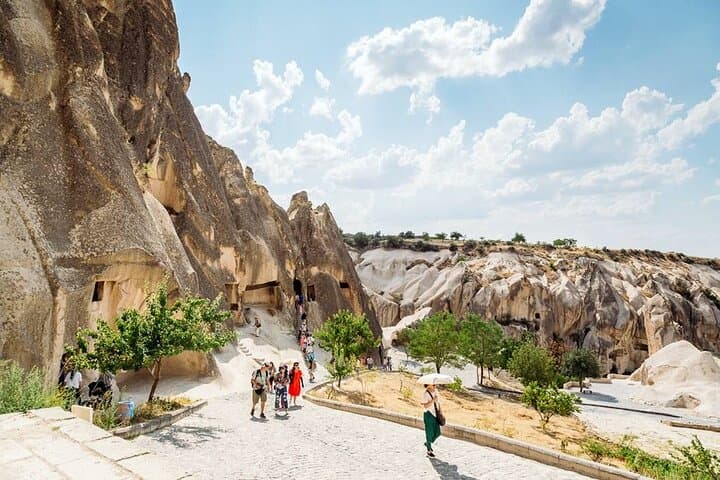
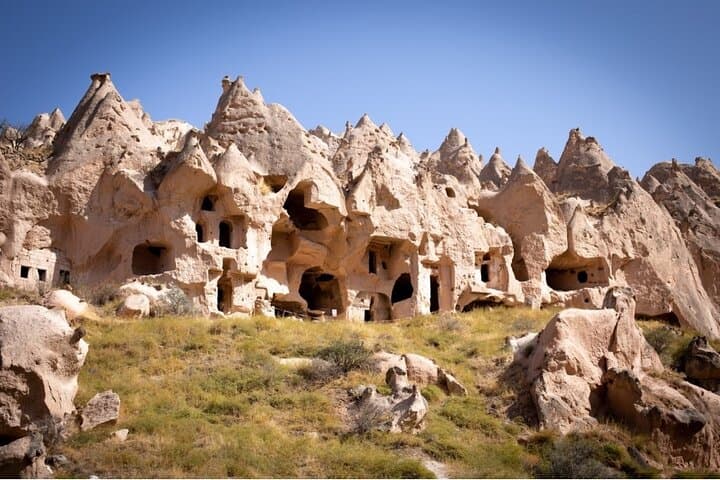
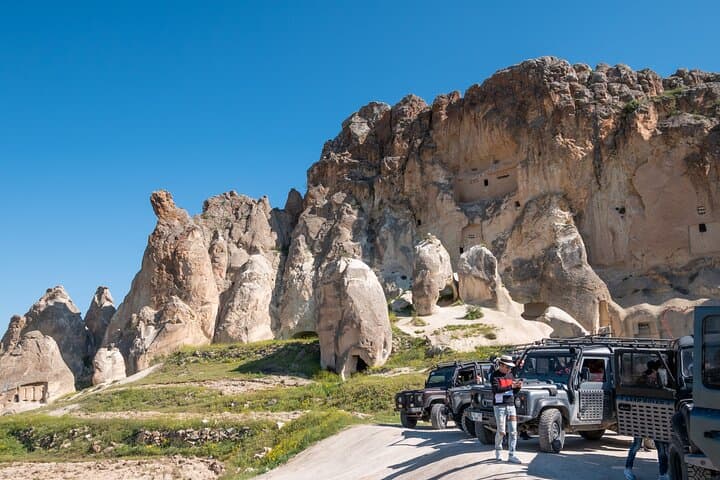
You step out of the minivan and the landscape simply shifts—valleys of pale stone folding away under a wide Anatolian sky, chimneys and cones like an architecture invented by erosion. The guide points to a ridge and the morning light picks out the graffiti of time: ancient cave doors, church facades scored with frescoes, and pathways trod for centuries. This is the Red Tour of Cappadocia, a roughly seven-hour loop that threads Goreme Open Air Museum, Uchisar Castle, Love Valley viewpoints, Pasabag (Monk’s Valley), Devrent Valley and finishes with lunch and a pottery demo in Avanos.
Verified experiences and guided adventures in the surrounding area.
Operated by We Go Turkiye Travel · Goreme, Nevsehir
You step out of the minivan and the landscape simply shifts—valleys of pale stone folding away under a wide Anatolian sky, chimneys and cones like an architecture invented by erosion. The guide points to a ridge and the morning light picks out the graffiti of time: ancient cave doors, church facades scored with frescoes, and pathways trod for centuries. This is the Red Tour of Cappadocia, a roughly seven-hour loop that threads Goreme Open Air Museum, Uchisar Castle, Love Valley viewpoints, Pasabag (Monk’s Valley), Devrent Valley and finishes with lunch and a pottery demo in Avanos.
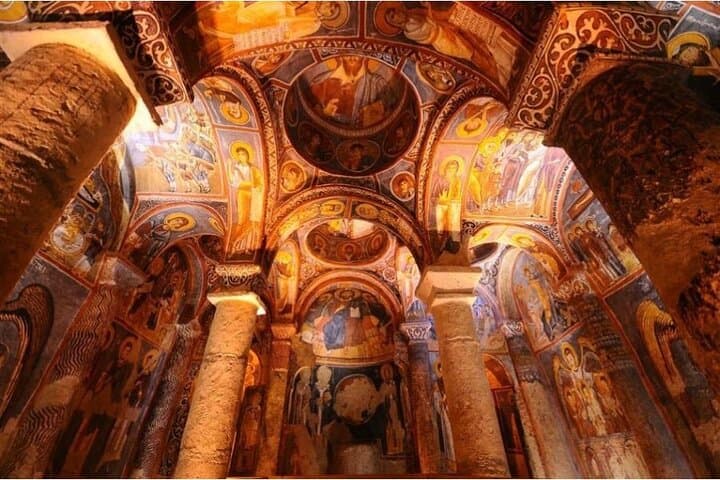
Cappadocia’s geology is blunt and honest—soft tuff laid down by volcanic ash and then carved by wind and water into fairy chimneys and labyrinthine valleys. Human hands answered nature’s invitation: early Christians hollowed churches into the rock here, decorating interiors with Byzantine frescoes that survive in the dry air. Göreme’s Open Air Museum remains the clearest window into that past—cave sanctuaries where light filters through small apertures and paint has held its color for nearly a millennium.
Culturally, the region is a working landscape. Avanos on the Kızılırmak River still mines reddish clay used in pottery for 4,000 years; watching a potter at a kick-wheel is to see a steady marriage of material and muscle. Uchisar Castle, the highest natural viewpoint in central Cappadocia, has been both lookout and refuge; its carved stairways and pigeon holes speak to a time when vertical villages were the safest option.
Practicalities are simple but important. The tour runs about 9:30–17:00 with hotel pickup across Cappadocia and a maximum of 15 people—small enough for questions, large enough for conversation. Expect several short walks (total on-foot distance roughly 3–5 km), uneven dirt trails, short stone steps and some steep viewpoints; overall elevation sits around 1,000–1,300 meters, with modest gains at Uchisar.
Bring sturdy walking shoes, sun protection and a refillable water bottle—the plateaus are exposed and dry. Photography is a primary payoff: aim for late morning to mid-afternoon for balanced light in the valleys, but sunrise and sunset cast the most dramatic shadows if you plan independent photo stops. The tour includes entrance to major sites, lunch at a traditional restaurant in Avanos and a live pottery demonstration—perfect for combining geology, history and craft in a single day.
For travelers, the Red Tour is an efficient primer to Cappadocia’s visual grammar: volcanic stone that wants to be sculpture, villages carved into cliffs, and local craft that makes sense of the land beneath your hands. It’s paced for exploration—enough structure to show the highlights, with free time to let the terrain speak for itself.
moderate.
7 hours.
Moderate fitness: able to walk several short hikes (3–5 km total) over uneven terrain and climb stone steps.
Yes—this tour includes entrance fees for the Goreme Open Air Museum and other listed attractions.
Pickup is typically between 09:30 and 10:00 from hotels across Cappadocia; you’ll be returned around 17:00.
Yes—infants and small children can ride in strollers and infant seats are available, but expect uneven surfaces at sites.
Lunch at a traditional restaurant in Avanos is included in the tour price.
Photography is generally allowed in the Open Air Museum, but avoid flash to protect ancient frescoes and follow guide instructions.
Many sites have uneven paths and steps; while some areas are accessible, overall mobility limitations may restrict access to key viewpoints.
Cappadocia’s cave churches and underground cities grew from early Christian communities who used the soft tuff to carve sanctuaries and refuges from persecution and climate.
The region manages high tourist volumes through controlled access at major sites; stick to marked paths to protect fragile rock and ancient frescoes.
We Go Turkiye Travel operates guided outdoor trips and adventures with an emphasis on safety, stewardship, and memorable experiences.
You step out of the minivan and the landscape simply shifts—valleys of pale stone folding away under a wide Anatolian sky, chimneys and cones like an architecture invented by erosion. The guide points to a ridge and the morning light picks out the graffiti of time: ancient cave doors, church facades scored with frescoes, and pathways trod for centuries. This is the Red Tour of Cappadocia, a roughly seven-hour loop that threads Goreme Open Air Museum, Uchisar Castle, Love Valley viewpoints, Pasabag (Monk’s Valley), Devrent Valley and finishes with lunch and a pottery demo in Avanos.
You step out of the minivan and the landscape simply shifts—valleys of pale stone folding away under a wide Anatolian sky, chimneys and cones like an architecture invented by erosion. The guide points to a ridge and the morning light picks out the graffiti of time: ancient cave doors, church facades scored with frescoes, and pathways trod for centuries. This is the Red Tour of Cappadocia, a roughly seven-hour loop that threads Goreme Open Air Museum, Uchisar Castle, Love Valley viewpoints, Pasabag (Monk’s Valley), Devrent Valley and finishes with lunch and a pottery demo in Avanos.
Cappadocia’s geology is blunt and honest—soft tuff laid down by volcanic ash and then carved by wind and water into fairy chimneys and labyrinthine valleys. Human hands answered nature’s invitation: early Christians hollowed churches into the rock here, decorating interiors with Byzantine frescoes that survive in the dry air. Göreme’s Open Air Museum remains the clearest window into that past—cave sanctuaries where light filters through small apertures and paint has held its color for nearly a millennium.
Culturally, the region is a working landscape. Avanos on the Kızılırmak River still mines reddish clay used in pottery for 4,000 years; watching a potter at a kick-wheel is to see a steady marriage of material and muscle. Uchisar Castle, the highest natural viewpoint in central Cappadocia, has been both lookout and refuge; its carved stairways and pigeon holes speak to a time when vertical villages were the safest option.
Practicalities are simple but important. The tour runs about 9:30–17:00 with hotel pickup across Cappadocia and a maximum of 15 people—small enough for questions, large enough for conversation. Expect several short walks (total on-foot distance roughly 3–5 km), uneven dirt trails, short stone steps and some steep viewpoints; overall elevation sits around 1,000–1,300 meters, with modest gains at Uchisar.
Bring sturdy walking shoes, sun protection and a refillable water bottle—the plateaus are exposed and dry. Photography is a primary payoff: aim for late morning to mid-afternoon for balanced light in the valleys, but sunrise and sunset cast the most dramatic shadows if you plan independent photo stops. The tour includes entrance to major sites, lunch at a traditional restaurant in Avanos and a live pottery demonstration—perfect for combining geology, history and craft in a single day.
For travelers, the Red Tour is an efficient primer to Cappadocia’s visual grammar: volcanic stone that wants to be sculpture, villages carved into cliffs, and local craft that makes sense of the land beneath your hands. It’s paced for exploration—enough structure to show the highlights, with free time to let the terrain speak for itself.