THE ADVENTURE COLLECTIVE® · Independent discovery and booking for outdoor travel

Spend a day where volcanoes, wind and human hands have written Cappadocia’s story across rock. The Red Tour covers Göreme Open-Air Museum, Paşabağ, Devrent and Avanos with guided stops and lunch—ideal for first-time visitors who want geology, history and local craft in one efficient loop.
Spend a day where volcanoes, wind and human hands have written Cappadocia’s story across rock. The Red Tour covers Göreme Open-Air Museum, Paşabağ, Devrent and Avanos with guided stops and lunch—ideal for first-time visitors who want geology, history and local craft in one efficient loop.
You step off the minibus into a wind that seems to be shaping the landscape as much as history has—cool and insistent, carrying dust from ancient trails. In the morning light, the Göreme Open-Air Museum looks like a small carved city: domes, chapels and frescoed interiors hollowed from the pale tuff. The guide’s voice folds into that hollow, pointing out faded saints whose painted eyes still follow the valley.
Verified experiences and guided adventures in the surrounding area.
Operated by FABULOUS TRAVEL · Goreme, Nevşehir
You step off the minibus into a wind that seems to be shaping the landscape as much as history has—cool and insistent, carrying dust from ancient trails. In the morning light, the Göreme Open-Air Museum looks like a small carved city: domes, chapels and frescoed interiors hollowed from the pale tuff. The guide’s voice folds into that hollow, pointing out faded saints whose painted eyes still follow the valley.
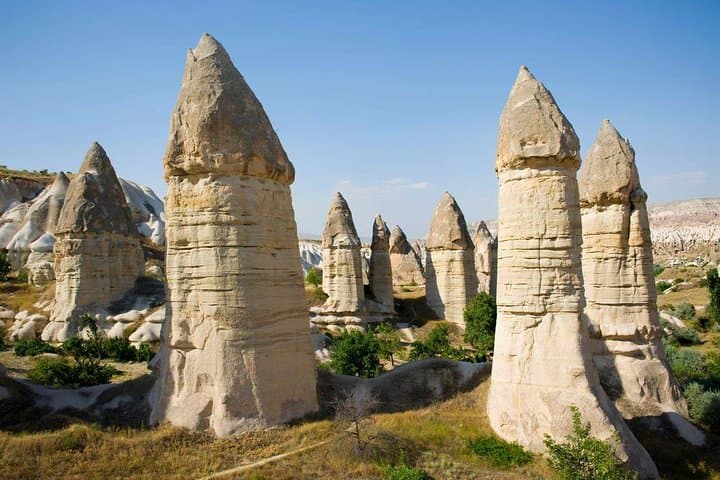
This full-day Red Tour threads through Cappadocia’s most elemental features: Göreme’s cave churches, the mushroom-capped pillars of Paşabağ (Monks Valley), Devrent’s lunar sculptures and the centuries-old pottery town of Avanos along the Kızılırmak (Red River). Geology is the protagonist here—the soft volcanic tuff deposited by long-vanished eruptions, then eroded by wind and water into the fairy chimneys that dare you to invent a story for each silhouette.
Culturally the route maps a long arc. Hittite kilns and Byzantine monks left different signatures: pottery techniques still used in Avanos reach back to the Hittites, while the cave churches preserve Byzantine iconography and monastic layouts. Cavuşin’s cliffside ruins and Ürgüp’s wine cellars hint at lives that adapted to living inside rock and on scarce soil.
As an experience it balances walking and explanation with easy transport: expect paved paths and short uneven climbs rather than long hikes. The practical rhythm is simple—arrive, explore for 30–60 minutes at each stop, photograph a formation, cross a valley, and move on to the next natural oddity and human touchpoint. Food is straightforward: the included lunch introduces regional staples—fresh bread, grilled vegetables and gently seasoned meat—that anchor a day of standing, walking and looking.
For planning: wear sturdy shoes with good grip for dusty trails and steps carved into tuff; bring sun protection and water—summer sun and reflection off pale rock are surprisingly tiring. Mornings and late afternoons deliver the best colors for photos; midday tends to flatten contrasts but reveals interior details in cave churches. Respect the sites: frescoes are fragile, so follow signage and the guide’s instructions.
Beyond the guidebook stops, allow extra time in Avanos to watch a potter’s wheel or in Cavuşin to climb toward the old basilica for a quieter panorama. The Red Tour is an efficient primer on why Cappadocia reads like a geological and human field study—immediate in its spectacle, patient in its stories.
easy.
6–8 hours.
Suitable for most fitness levels; requires mobility for short uneven walks and a few modest climbs
The tour runs about 8 hours and includes guided transportation, site admissions listed by the operator, lunch and hotel pickup in Goreme/Avanos/Ürgüp areas.
Yes—this is rated easy with short walks; however some sites have uneven ground and steps, so those with limited mobility should contact the operator in advance about accessibility and pickup details.
Admission to main museum sites on this Red Tour is listed as included. Confirm on booking for any recent fee changes.
Pickup is offered from most hotels across Göreme, Avanos and Ürgüp; if you’re farther away, contact the supplier to arrange a pickup point.
Photography is usually permitted but flash may be restricted to protect frescoes—follow signage and your guide’s instructions.
The lunch is regional and usually flexible; indicate dietary needs when booking so alternatives can be arranged.
Cappadocia’s landscape formed from volcanic ash and ignimbrite; local communities—from Hittites to Byzantine monks—carved dwellings and churches into that soft stone.
The tuff and frescoes are fragile—stay on marked paths, avoid touching painted surfaces and support local guides and businesses to fund preservation.
FABULOUS TRAVEL operates guided outdoor trips and adventures with an emphasis on safety, stewardship, and memorable experiences.
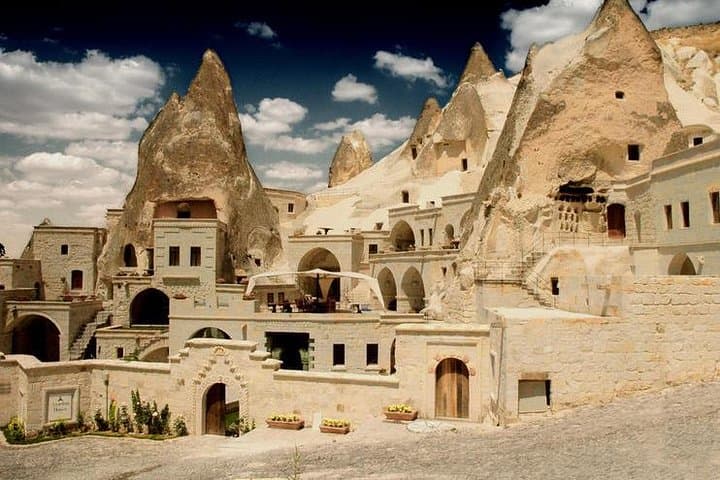
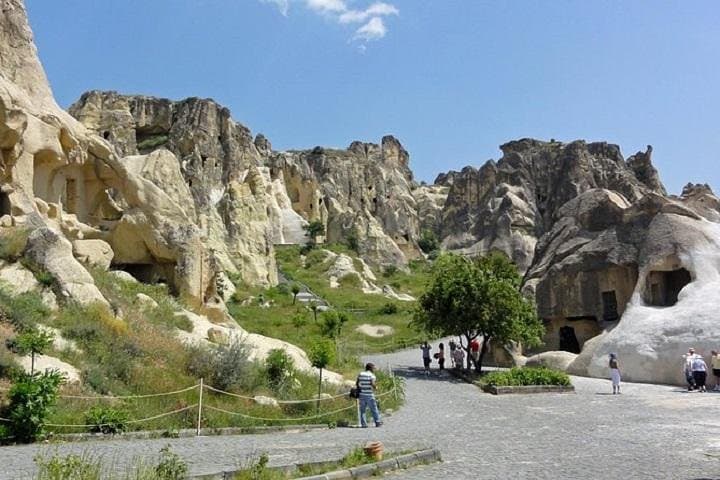
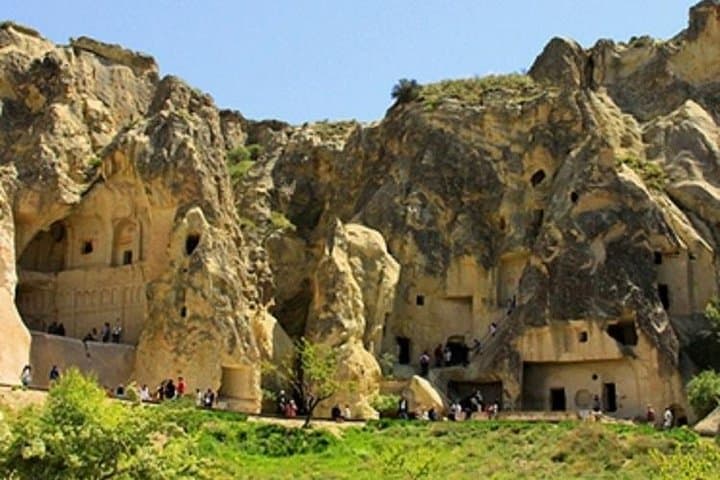
You step off the minibus into a wind that seems to be shaping the landscape as much as history has—cool and insistent, carrying dust from ancient trails. In the morning light, the Göreme Open-Air Museum looks like a small carved city: domes, chapels and frescoed interiors hollowed from the pale tuff. The guide’s voice folds into that hollow, pointing out faded saints whose painted eyes still follow the valley.
You step off the minibus into a wind that seems to be shaping the landscape as much as history has—cool and insistent, carrying dust from ancient trails. In the morning light, the Göreme Open-Air Museum looks like a small carved city: domes, chapels and frescoed interiors hollowed from the pale tuff. The guide’s voice folds into that hollow, pointing out faded saints whose painted eyes still follow the valley.
This full-day Red Tour threads through Cappadocia’s most elemental features: Göreme’s cave churches, the mushroom-capped pillars of Paşabağ (Monks Valley), Devrent’s lunar sculptures and the centuries-old pottery town of Avanos along the Kızılırmak (Red River). Geology is the protagonist here—the soft volcanic tuff deposited by long-vanished eruptions, then eroded by wind and water into the fairy chimneys that dare you to invent a story for each silhouette.
Culturally the route maps a long arc. Hittite kilns and Byzantine monks left different signatures: pottery techniques still used in Avanos reach back to the Hittites, while the cave churches preserve Byzantine iconography and monastic layouts. Cavuşin’s cliffside ruins and Ürgüp’s wine cellars hint at lives that adapted to living inside rock and on scarce soil.
As an experience it balances walking and explanation with easy transport: expect paved paths and short uneven climbs rather than long hikes. The practical rhythm is simple—arrive, explore for 30–60 minutes at each stop, photograph a formation, cross a valley, and move on to the next natural oddity and human touchpoint. Food is straightforward: the included lunch introduces regional staples—fresh bread, grilled vegetables and gently seasoned meat—that anchor a day of standing, walking and looking.
For planning: wear sturdy shoes with good grip for dusty trails and steps carved into tuff; bring sun protection and water—summer sun and reflection off pale rock are surprisingly tiring. Mornings and late afternoons deliver the best colors for photos; midday tends to flatten contrasts but reveals interior details in cave churches. Respect the sites: frescoes are fragile, so follow signage and the guide’s instructions.
Beyond the guidebook stops, allow extra time in Avanos to watch a potter’s wheel or in Cavuşin to climb toward the old basilica for a quieter panorama. The Red Tour is an efficient primer on why Cappadocia reads like a geological and human field study—immediate in its spectacle, patient in its stories.