THE ADVENTURE COLLECTIVE® · Independent discovery and booking for outdoor travel

A four-to-six-hour small-group loop through northern Cappadocia that pairs panoramic viewpoints, a UNESCO cave-church complex, pottery in Avanos and the fairy chimneys of Pasabag and Devrent. Ideal for travelers who want a concentrated primer on the region’s geology and living traditions.
A four-to-six-hour small-group loop through northern Cappadocia that pairs panoramic viewpoints, a UNESCO cave-church complex, pottery in Avanos and the fairy chimneys of Pasabag and Devrent. Ideal for travelers who want a concentrated primer on the region’s geology and living traditions.
You step out of a small minivan and the landscape opens like a page in a geology book. Towers of pale rock rise around you—stacks, cones and the odd mushroom cap that locals call fairy chimneys—each surface pocked and carved by a million rains. The guide points to Uchisar Castle first, a honeycombed ridge worn into watchful crevices; from its rim the valleys unfold, slopes of ochre and cream that glow when the sun leans west.
Verified experiences and guided adventures in the surrounding area.
Operated by Bien Cappadocia Travel · Göreme, Nevşehir
You step out of a small minivan and the landscape opens like a page in a geology book. Towers of pale rock rise around you—stacks, cones and the odd mushroom cap that locals call fairy chimneys—each surface pocked and carved by a million rains. The guide points to Uchisar Castle first, a honeycombed ridge worn into watchful crevices; from its rim the valleys unfold, slopes of ochre and cream that glow when the sun leans west.
This is the Red Tour: a compact, four-to-six-hour loop through northern Cappadocia that stitches together the region’s most enduring threads—Byzantine frescoes, millennia of volcanic geology and a living pottery tradition on the banks of the Kızılırmak.
Geology here is obvious. Between 9 and 3 million years ago eruptions from Mount Erciyes and Hasan spilled thick layers of tuff across the Anatolian plateau. Wind and water sculpted that soft rock into chimneys, cones and hollows; humans then tuned those hollows into homes, churches and monastic cells. The Goreme Open Air Museum, a UNESCO site, is the clearest example: walk its alleys and you’ll read frescoes painted in tempera, scenes of saints and narratives brightened by iron-rich pigments that have endured despite centuries of exposure.
Culture is tactile in Avanos. The lunch stop here is both a palate reset and a hands-on introduction to craft—after tasting gözleme and slow-cooked stews, you’ll visit a kick-wheel pottery workshop where local clay, drawn from the Kızılırmak, remembers every thumbprint.
Pasabag (Monks Valley) and Devrent Valley offer two different kinds of imagination: Pasabag’s pillars hold hermit cells and narrow prayer niches, while Devrent asks you to see animals and faces in abstract rock—bring a sense of play and a patient eye.
Practical guidance: the tour runs 4–6 hours with hotel pickup included; walking at sites is short but often on uneven, rocky ground (plan on 1–3 miles of walking total, with some steps). Wear sturdy shoes with traction, sun protection and a light layer system—temperatures swing quickly between shade and exposure. Museum admissions and lunch are included, and small-group sizes mean quicker movement between photo stops.
Plan to arrive in Göreme the night before to maximize morning light at Uchisar. If you want balloon silhouettes in your photos, rise earlier for a separate balloon-viewing rather than expecting the Red Tour to include a flight. Finally, tread lightly: these rock churches are fragile; follow paths and avoid touching frescoes so the next visitor sees the same colors you did.
easy.
4–6 hours.
Suitable for most fitness levels; expect short, uneven walks and some stairs at museum sites.
The Red Tour lasts about 4–6 hours with hotel pickup typically in the morning (around 9:30); exact pickup time is confirmed after booking.
Goreme Open Air Museum admission is included with this tour; other charges are covered per the booking details—confirm at checkout.
Yes—traditional Turkish lunch in Avanos is included and accommodates common dietary needs if notified in advance.
The tour is rated easy, but sites include uneven ground and steps; contact the operator if you require assistance or have limited mobility.
You’ll likely see balloons in the sky near sunrise, but balloon flights are separate experiences and not part of the Red Tour itinerary.
Groups are capped around 14 travelers to keep the experience personal and flexible at photo stops.
Cappadocia’s cave churches date to Byzantine monastic communities; many frescoes preserve liturgical scenes painted between the 9th and 13th centuries.
Erosion is natural but visitor impact accelerates wear—stay on marked paths and adhere to site rules to protect fragile rock-cut architecture.
Bien Cappadocia Travel operates guided outdoor trips and adventures with an emphasis on safety, stewardship, and memorable experiences.
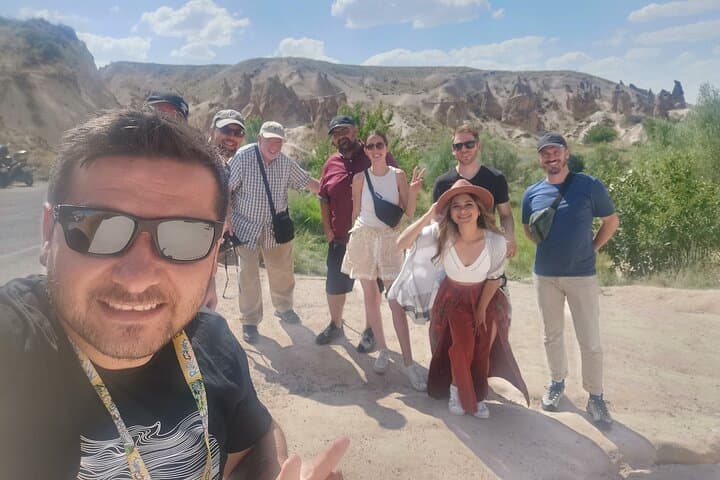
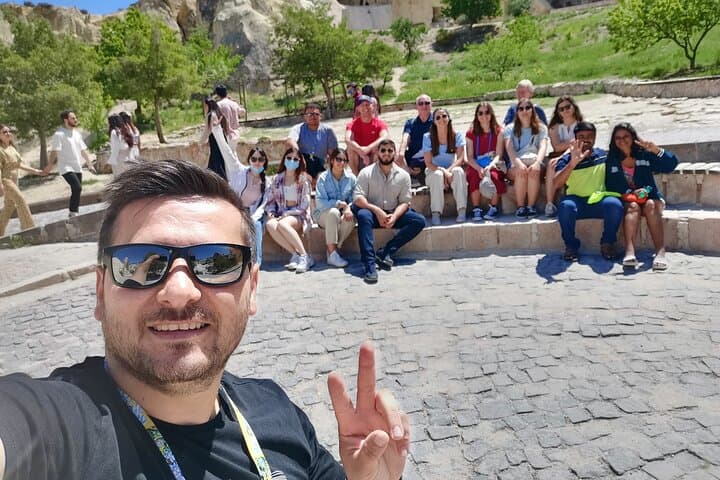
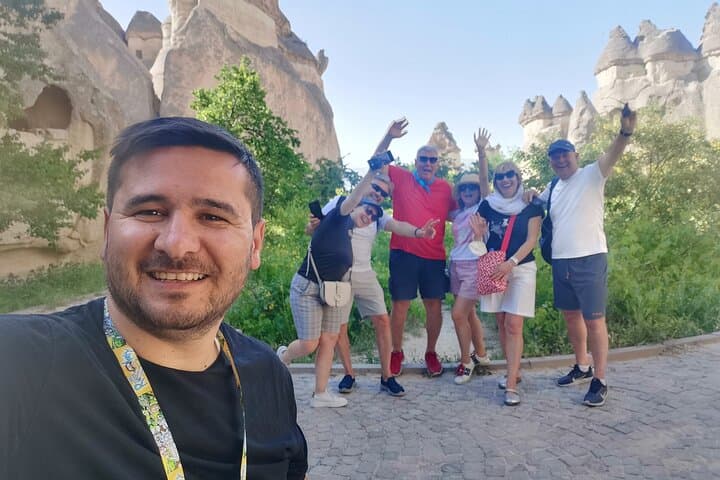
You step out of a small minivan and the landscape opens like a page in a geology book. Towers of pale rock rise around you—stacks, cones and the odd mushroom cap that locals call fairy chimneys—each surface pocked and carved by a million rains. The guide points to Uchisar Castle first, a honeycombed ridge worn into watchful crevices; from its rim the valleys unfold, slopes of ochre and cream that glow when the sun leans west.
You step out of a small minivan and the landscape opens like a page in a geology book. Towers of pale rock rise around you—stacks, cones and the odd mushroom cap that locals call fairy chimneys—each surface pocked and carved by a million rains. The guide points to Uchisar Castle first, a honeycombed ridge worn into watchful crevices; from its rim the valleys unfold, slopes of ochre and cream that glow when the sun leans west.
This is the Red Tour: a compact, four-to-six-hour loop through northern Cappadocia that stitches together the region’s most enduring threads—Byzantine frescoes, millennia of volcanic geology and a living pottery tradition on the banks of the Kızılırmak.
Geology here is obvious. Between 9 and 3 million years ago eruptions from Mount Erciyes and Hasan spilled thick layers of tuff across the Anatolian plateau. Wind and water sculpted that soft rock into chimneys, cones and hollows; humans then tuned those hollows into homes, churches and monastic cells. The Goreme Open Air Museum, a UNESCO site, is the clearest example: walk its alleys and you’ll read frescoes painted in tempera, scenes of saints and narratives brightened by iron-rich pigments that have endured despite centuries of exposure.
Culture is tactile in Avanos. The lunch stop here is both a palate reset and a hands-on introduction to craft—after tasting gözleme and slow-cooked stews, you’ll visit a kick-wheel pottery workshop where local clay, drawn from the Kızılırmak, remembers every thumbprint.
Pasabag (Monks Valley) and Devrent Valley offer two different kinds of imagination: Pasabag’s pillars hold hermit cells and narrow prayer niches, while Devrent asks you to see animals and faces in abstract rock—bring a sense of play and a patient eye.
Practical guidance: the tour runs 4–6 hours with hotel pickup included; walking at sites is short but often on uneven, rocky ground (plan on 1–3 miles of walking total, with some steps). Wear sturdy shoes with traction, sun protection and a light layer system—temperatures swing quickly between shade and exposure. Museum admissions and lunch are included, and small-group sizes mean quicker movement between photo stops.
Plan to arrive in Göreme the night before to maximize morning light at Uchisar. If you want balloon silhouettes in your photos, rise earlier for a separate balloon-viewing rather than expecting the Red Tour to include a flight. Finally, tread lightly: these rock churches are fragile; follow paths and avoid touching frescoes so the next visitor sees the same colors you did.