THE ADVENTURE COLLECTIVE® · Independent discovery and booking for outdoor travel

An efficient, full-day introduction to Cappadocia’s signature sites — Uçhisar Castle, Devrent Valley, Özkonak Underground City, Avanos and panoramic viewpoints. Small groups and a licensed local guide make this an ideal first-day itinerary for new visitors.
An efficient, full-day introduction to Cappadocia’s signature sites — Uçhisar Castle, Devrent Valley, Özkonak Underground City, Avanos and panoramic viewpoints. Small groups and a licensed local guide make this an ideal first-day itinerary for new visitors.
You lift off from the hotel doorstep before the town awakes and, within an hour, the minivan drops the group at Uçhisar. The castle's honey-colored basalt and tuff rise like a weathered wake; wind and time have carved stairways into rock faces and pigeon holes into the slopes. For eight hours the Red tour moves like a curated map through Cappadocia's most recognizable landscapes — high ridgelines, narrow underground passages and villages that keep their old crafts alive.
Verified experiences and guided adventures in the surrounding area.
Operated by Golden Grape Travel · Göreme, Nevşehir
You lift off from the hotel doorstep before the town awakes and, within an hour, the minivan drops the group at Uçhisar. The castle's honey-colored basalt and tuff rise like a weathered wake; wind and time have carved stairways into rock faces and pigeon holes into the slopes. For eight hours the Red tour moves like a curated map through Cappadocia's most recognizable landscapes — high ridgelines, narrow underground passages and villages that keep their old crafts alive.
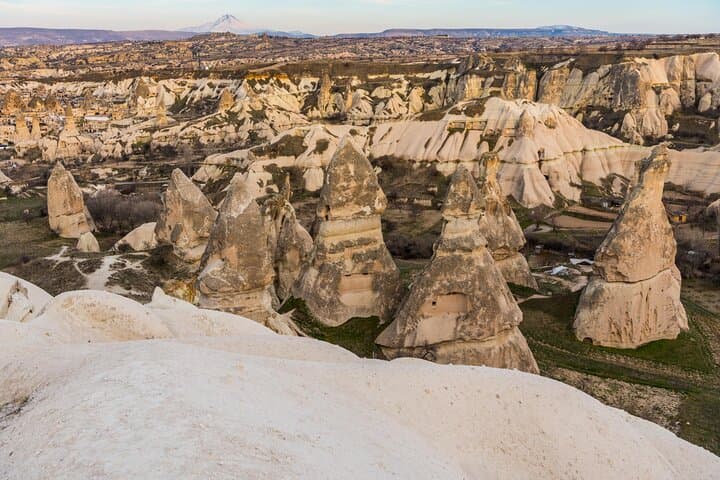
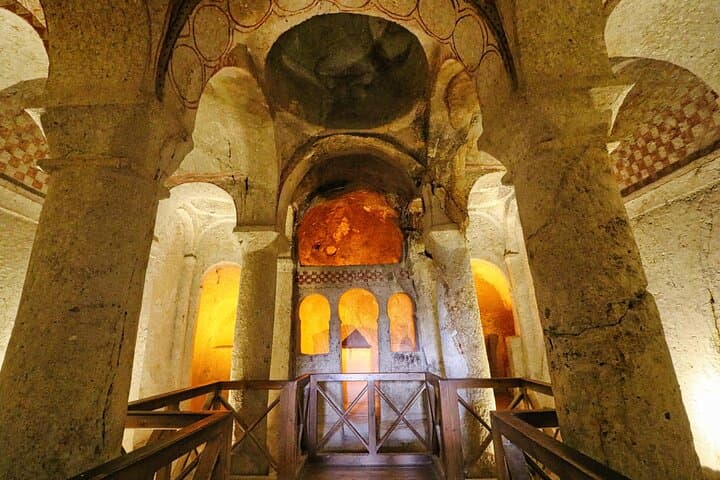
The geology here reads like a slow-motion eruption: volcanic ash compacted into soft tuff, then stripped away by wind and rain into the fairy chimneys and hoodoos that define the region. Human history has made use of that softness — dwellings, dovecotes, churches and entire underground cities were hewn directly into the rock. At Göreme's open-air sites, Byzantine frescoes still peek out from church interiors, while Özkonak's subterranean tunnels reveal stables, kitchens and narrow ventilation shafts designed to support long-term refuge.
Culture threads through the day. Avanos, on the Kızılırmak's banks, has spun pottery for millennia; a hands-on demonstration proves the wheel hasn't lost its magic. Later a carpet-weaving visit explains symbolism woven into tribal patterns and why Cappadocia became a carpet heartland. Guides for this tour are licensed locals; they stitch geological explanation to cultural context in a way a guidebook rarely does.
The practical side: the itinerary is paced for first-time visitors. Expect about 8 hours total with roughly 40–60 km of driving between stops and short walks at viewpoints — two marked observation trails measure 170 m and 250 m, respectively. Walking surfaces are uneven: packed dirt, stone steps and low-ceiling tunnels in the underground city where stooping and careful foot placement are required. Altitude on the Cappadocia plateau averages around 1,000–1,200 m, which may slightly increase exertion for visitors coming from sea level.
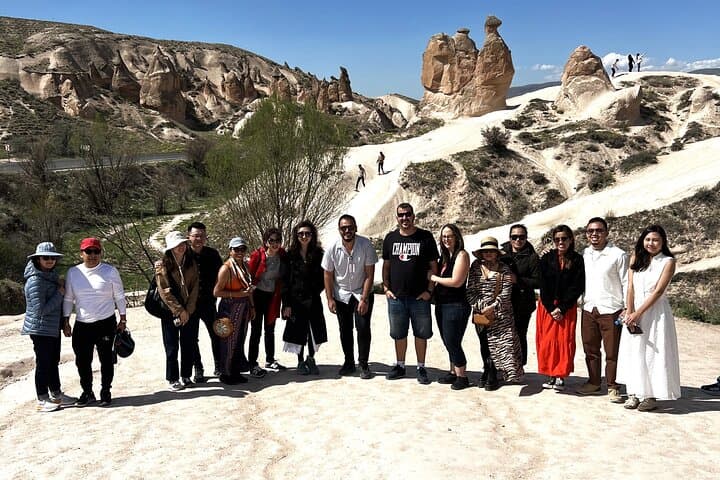
Timing is important. Mornings are cooler and less crowded at panoramic viewpoints; lunch is provided mid-day. Small-group size (maximum 15) keeps the pace brisk but personal. Photo opportunities are constant — bring a charged battery and a sensible pair of shoes.
Who this is for: travelers who want a comprehensive, single-day orientation to Cappadocia’s highlights without the logistics hassle. It balances storytelling — the whys of the landscape and craft — with sensible guidance on terrain and timing, so visitors leave with context as well as a memory of chiselled rock and red-hued valleys.
moderate.
8 hours.
Light to moderate fitness; able to walk short uneven trails and navigate stairs and low-ceiling tunnels.
Yes — the tour includes hotel pickup and an air-conditioned vehicle for all scheduled transfers.
Some sites include guided stops and explanation; specific museum or site admission may not be included — check the booking details or ask the operator in advance.
The tour lists stroller access and allows infants (often required to sit on a lap), but underground passages may be tight for very young children; confirm suitability when booking.
Expect multiple short walks at each stop (observation trails of about 170–250 m), plus stairs and uneven ground; overall walking is moderate and paced for groups.
Yes — Avanos pottery is a hands-on demonstration and the tour includes a carpet-weaving demonstration; opportunities to buy locally are common.
Spring and fall offer pleasant temperatures and fewer crowds; summers are hot and winters can be cold with occasional snow, which changes walking conditions.
Cappadocia’s soft tuff was formed by successive volcanic eruptions and later carved into homes, churches and underground refuges used from Hittite through Byzantine eras.
Visitor pressure can erode fragile tuff formations; stick to marked trails and support local craftspeople to encourage sustainable tourism.
Golden Grape Travel operates guided outdoor trips and adventures with an emphasis on safety, stewardship, and memorable experiences.
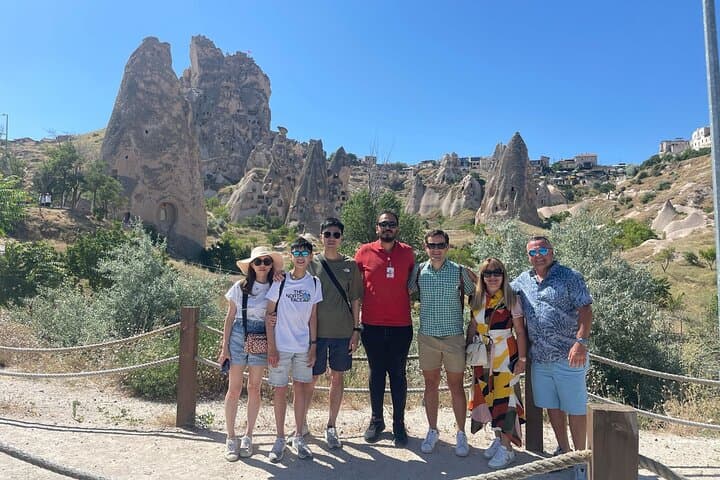
You lift off from the hotel doorstep before the town awakes and, within an hour, the minivan drops the group at Uçhisar. The castle's honey-colored basalt and tuff rise like a weathered wake; wind and time have carved stairways into rock faces and pigeon holes into the slopes. For eight hours the Red tour moves like a curated map through Cappadocia's most recognizable landscapes — high ridgelines, narrow underground passages and villages that keep their old crafts alive.
You lift off from the hotel doorstep before the town awakes and, within an hour, the minivan drops the group at Uçhisar. The castle's honey-colored basalt and tuff rise like a weathered wake; wind and time have carved stairways into rock faces and pigeon holes into the slopes. For eight hours the Red tour moves like a curated map through Cappadocia's most recognizable landscapes — high ridgelines, narrow underground passages and villages that keep their old crafts alive.
The geology here reads like a slow-motion eruption: volcanic ash compacted into soft tuff, then stripped away by wind and rain into the fairy chimneys and hoodoos that define the region. Human history has made use of that softness — dwellings, dovecotes, churches and entire underground cities were hewn directly into the rock. At Göreme's open-air sites, Byzantine frescoes still peek out from church interiors, while Özkonak's subterranean tunnels reveal stables, kitchens and narrow ventilation shafts designed to support long-term refuge.
Culture threads through the day. Avanos, on the Kızılırmak's banks, has spun pottery for millennia; a hands-on demonstration proves the wheel hasn't lost its magic. Later a carpet-weaving visit explains symbolism woven into tribal patterns and why Cappadocia became a carpet heartland. Guides for this tour are licensed locals; they stitch geological explanation to cultural context in a way a guidebook rarely does.
The practical side: the itinerary is paced for first-time visitors. Expect about 8 hours total with roughly 40–60 km of driving between stops and short walks at viewpoints — two marked observation trails measure 170 m and 250 m, respectively. Walking surfaces are uneven: packed dirt, stone steps and low-ceiling tunnels in the underground city where stooping and careful foot placement are required. Altitude on the Cappadocia plateau averages around 1,000–1,200 m, which may slightly increase exertion for visitors coming from sea level.
Timing is important. Mornings are cooler and less crowded at panoramic viewpoints; lunch is provided mid-day. Small-group size (maximum 15) keeps the pace brisk but personal. Photo opportunities are constant — bring a charged battery and a sensible pair of shoes.
Who this is for: travelers who want a comprehensive, single-day orientation to Cappadocia’s highlights without the logistics hassle. It balances storytelling — the whys of the landscape and craft — with sensible guidance on terrain and timing, so visitors leave with context as well as a memory of chiselled rock and red-hued valleys.