THE ADVENTURE COLLECTIVE® · Independent discovery and booking for outdoor travel

Spend a day tracing Cappadocia’s past and geology: Uçhisar’s castle views, Göreme’s cave churches, Pasabag’s fairy chimneys and Avanos’ pottery quarter. This practical guide covers what to expect on the North Tour, plus timing, fees and packing tips.
Spend a day tracing Cappadocia’s past and geology: Uçhisar’s castle views, Göreme’s cave churches, Pasabag’s fairy chimneys and Avanos’ pottery quarter. This practical guide covers what to expect on the North Tour, plus timing, fees and packing tips.
Dawn in Cappadocia arrives like a slow exhale: the valley floors glow, cliff faces slide from steel gray to warm ochre and a line of balloons drifts like punctuation across the sky. By midmorning the minivan eases away from Göreme, and you step into a landscape that reads like a human archive—houses hewn from soft tuff, fairy chimneys standing like weathered columns, and narrow valleys where frescoed churches hide in plain sight.
Verified experiences and guided adventures in the surrounding area.
Operated by cappadocia ucasar premium travel · Göreme, Nevşehir
Dawn in Cappadocia arrives like a slow exhale: the valley floors glow, cliff faces slide from steel gray to warm ochre and a line of balloons drifts like punctuation across the sky. By midmorning the minivan eases away from Göreme, and you step into a landscape that reads like a human archive—houses hewn from soft tuff, fairy chimneys standing like weathered columns, and narrow valleys where frescoed churches hide in plain sight.
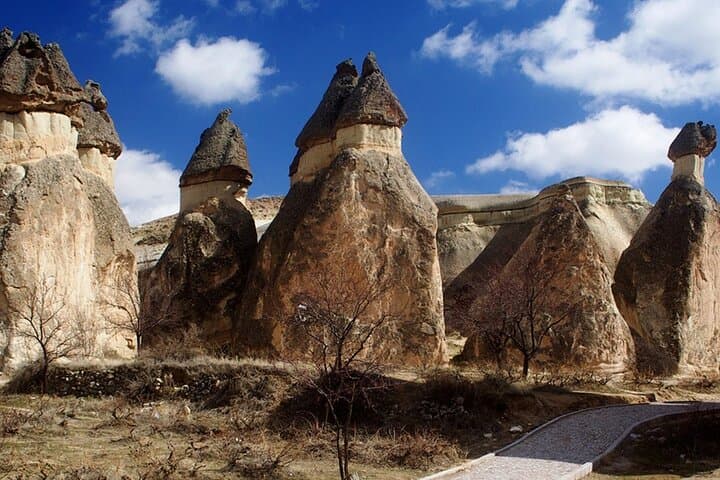
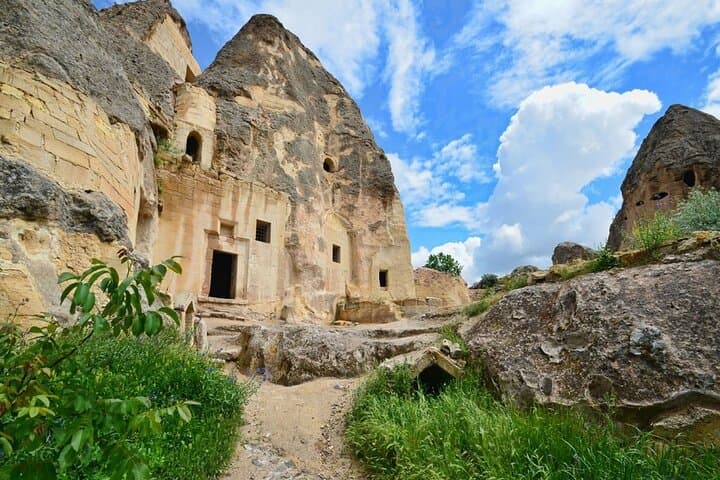
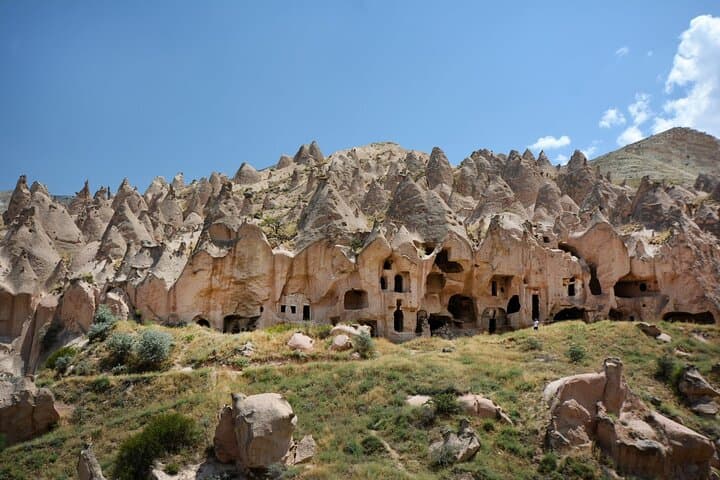
The North Tour stitches together the region’s high-visibility scenes: Uçhisar Castle’s rooftop vantage, the compact cave churches of the Göreme Open Air Museum, the mushroom-shaped chimneys of Pasabag (Monks Valley), the whimsical lunar forms in Devrent (Imagination Valley), and pottery-lined Avanos on the Kızılırmak River. Geologically, these forms began as volcanic ash—tuff—laid down millions of years ago and sculpted by wind and water into the cones and pillars you hike around today. Culturally, the human hand follows the same pattern: Hittites, Romans, Byzantines, Seljuks and Ottomans each left carved rooms, chapels and inscriptions. The Göreme churches still hold faded frescoes that map the spread of early Christianity under Roman rule.
The day’s rhythm is equal parts short walks and vehicle transfers. Most stops require 20–60 minute strolls across uneven stone paths and shallow scrambles; the total walking is modest but the terrain rewards steady footing. Expect sunlight to be an active element—the plateaus and ridgelines offer little shade—and wind to pick up in the afternoons, polishing the rock surfaces.
Practical notes: the tour lasts about 6½ hours, includes lunch and bottled water, and typically departs with hotel pickup. Museum entrance fees (Göreme Open Air Museum and select churches) are often extra—carry local currency. Wear sturdy walking shoes with a grippy sole; a light layer for morning chill, sun protection, and a small daypack for water, camera and souvenirs. If you want fewer crowds at the Göreme sites, ask for an earlier pickup; late arrivals find tour buses more concentrated at the midday stops.
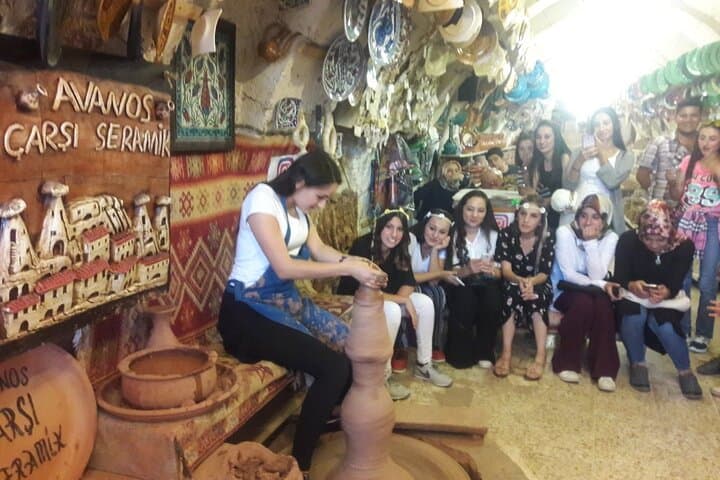
For photographers and curious travelers, this route is efficient: viewpoints at Uçhisar and the Pasabag clearings offer the most expansive panoramas, while Avanos gives close cultural texture—pottery workshops where potters shape red clay from the Kızılırmak with a rhythm that’s remained unchanged for centuries. Respect the fragile interiors: flash photography and touching frescoes are prohibited in many chapels. Above all, move deliberately—the landscape will ask you to slow down, point, and listen to the history etched into stone.
easy.
6–7 hours.
Suitable for travelers in average physical shape; involves several short walks (20–60 minutes each) over uneven ground.
The tour runs about 6.5 hours (approximately 390 minutes) including vehicle transfers, site visits and lunch.
Lunch and bottled water are included; museum entrance fees (Müze Giriş Ücretleri) are typically not included—bring cash.
Yes—infants and small children can ride in strollers for parts of the day, but expect stairs and uneven ground at some sites.
Balloons are a dawn activity not part of the daytime North Tour, but you’ll often see balloons over the valleys if you’re up early.
Walking is generally easy—short hikes over rocky trails and valley floors; basic mobility is sufficient.
Yes—Avanos has active workshops where you can watch demonstrations and purchase handmade ceramics; bargaining is common and polite.
Cappadocia’s carved dwellings and churches date back through Roman and Byzantine eras, with later Seljuk and Ottoman layers; the Göreme churches preserve frescoes from early Christian communities.
The tuff rock is fragile—stay on marked trails, avoid touching frescoes, and support local guides who follow conservation rules to limit erosion and wear.
cappadocia ucasar premium travel operates guided outdoor trips and adventures with an emphasis on safety, stewardship, and memorable experiences.
Dawn in Cappadocia arrives like a slow exhale: the valley floors glow, cliff faces slide from steel gray to warm ochre and a line of balloons drifts like punctuation across the sky. By midmorning the minivan eases away from Göreme, and you step into a landscape that reads like a human archive—houses hewn from soft tuff, fairy chimneys standing like weathered columns, and narrow valleys where frescoed churches hide in plain sight.
Dawn in Cappadocia arrives like a slow exhale: the valley floors glow, cliff faces slide from steel gray to warm ochre and a line of balloons drifts like punctuation across the sky. By midmorning the minivan eases away from Göreme, and you step into a landscape that reads like a human archive—houses hewn from soft tuff, fairy chimneys standing like weathered columns, and narrow valleys where frescoed churches hide in plain sight.
The North Tour stitches together the region’s high-visibility scenes: Uçhisar Castle’s rooftop vantage, the compact cave churches of the Göreme Open Air Museum, the mushroom-shaped chimneys of Pasabag (Monks Valley), the whimsical lunar forms in Devrent (Imagination Valley), and pottery-lined Avanos on the Kızılırmak River. Geologically, these forms began as volcanic ash—tuff—laid down millions of years ago and sculpted by wind and water into the cones and pillars you hike around today. Culturally, the human hand follows the same pattern: Hittites, Romans, Byzantines, Seljuks and Ottomans each left carved rooms, chapels and inscriptions. The Göreme churches still hold faded frescoes that map the spread of early Christianity under Roman rule.
The day’s rhythm is equal parts short walks and vehicle transfers. Most stops require 20–60 minute strolls across uneven stone paths and shallow scrambles; the total walking is modest but the terrain rewards steady footing. Expect sunlight to be an active element—the plateaus and ridgelines offer little shade—and wind to pick up in the afternoons, polishing the rock surfaces.
Practical notes: the tour lasts about 6½ hours, includes lunch and bottled water, and typically departs with hotel pickup. Museum entrance fees (Göreme Open Air Museum and select churches) are often extra—carry local currency. Wear sturdy walking shoes with a grippy sole; a light layer for morning chill, sun protection, and a small daypack for water, camera and souvenirs. If you want fewer crowds at the Göreme sites, ask for an earlier pickup; late arrivals find tour buses more concentrated at the midday stops.
For photographers and curious travelers, this route is efficient: viewpoints at Uçhisar and the Pasabag clearings offer the most expansive panoramas, while Avanos gives close cultural texture—pottery workshops where potters shape red clay from the Kızılırmak with a rhythm that’s remained unchanged for centuries. Respect the fragile interiors: flash photography and touching frescoes are prohibited in many chapels. Above all, move deliberately—the landscape will ask you to slow down, point, and listen to the history etched into stone.