THE ADVENTURE COLLECTIVE® · Independent discovery and booking for outdoor travel

Walk moonscapes and monastery-turned-chapels on Cappadocia’s classic North loop. From the animal-shaped rocks of Devrent to Paşabağı’s three-headed chimneys and Avanos pottery, this six-hour tour packs geology, Byzantine frescoes and hands-on craft into one day.
Walk moonscapes and monastery-turned-chapels on Cappadocia’s classic North loop. From the animal-shaped rocks of Devrent to Paşabağı’s three-headed chimneys and Avanos pottery, this six-hour tour packs geology, Byzantine frescoes and hands-on craft into one day.
You step out of the minivan onto a moonscape where rock has been coaxed into improbably tall columns and rounded caps. Early light slices across Devrent Valley and the formations—already nicknamed for animals and faces by visitors—take on sculptural clarity; the land feels as if a potter has tried their hand at architecture and then walked away.
Verified experiences and guided adventures in the surrounding area.
Operated by Guide of Ephesus · Göreme, Nevşehir Province
You step out of the minivan onto a moonscape where rock has been coaxed into improbably tall columns and rounded caps. Early light slices across Devrent Valley and the formations—already nicknamed for animals and faces by visitors—take on sculptural clarity; the land feels as if a potter has tried their hand at architecture and then walked away.
This is the Red Tour’s opening act: a half-hour wander through Devrent’s imagination-stoked ridges, followed by Paşabağı (Monks Valley), where three-headed fairy chimneys wear the grooves of centuries of wind and rain. The day folds into Avanos, a riverside village on the Kızılırmak where kick-wheel potters shape red-clay bowls the same way their grandfathers did, and culminates with the Göreme Open-Air Museum—Byzantine cave churches painted with icons and narrative frescoes that survived iconoclasm and Seljuk rule.
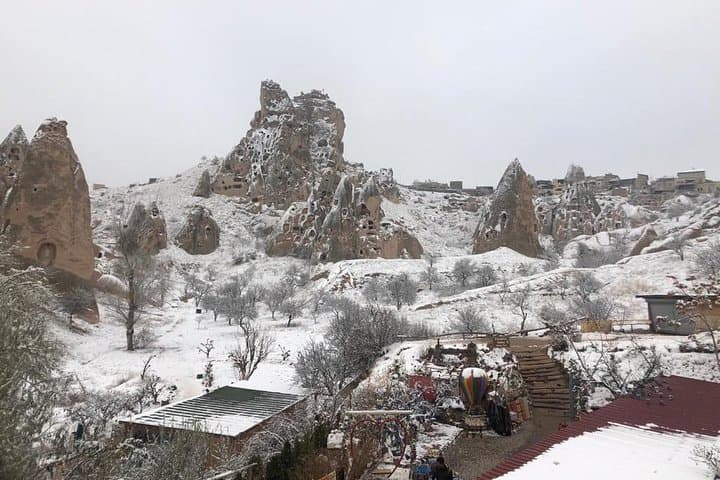
Geology and history meet here. Cappadocia’s signature hoodoos are tuff—consolidated volcanic ash deposited by eruptions from nearby peaks such as Erciyes and Hasandağ millions of years ago—sculpted by erosion into columns and caves that people repurposed as homes, dovecotes and sanctuaries from late antiquity onward. Monastic communities carved complex chapels and living quarters from the soft stone from the 3rd century, leaving an archaeological record of daily life and devotional art.
Culture is tactile on this route: Avanos’s pottery workshops connect to the region’s clay-rich riverbanks, while the dovecotes in Pigeon Valley reflect rural practices of fertilizer collection and pigeon-keeping that sustained local agriculture.
Practical notes: the full tour runs about six hours with hotel pickup across the Göreme–Ürgüp corridor; transport is air-conditioned. Expect short, uneven walks—stone steps and soft tuff that can be slippery after rain—and a handful of low cave openings inside the churches. Admission for Göreme Open-Air Museum is typically paid on-site; lunch at a local restaurant is included on the tour.
Timing matters for photos and crowds: morning light in Devrent and Paşabağı is clean and reduces harsh shadows; mid-afternoon can be busier at Göreme. Wear sturdy shoes with a good tread, sun protection and a refillable water bottle—the region sits around 1,000 meters elevation, where sun and dry air can sneak up on you. Ask your guide about local pottery studios that allow hands-on demonstrations; it’s an easy way to take home a crafted memory while supporting community artisans.
This north loop reads like a compact primer on Cappadocia—raw volcanic rock, lived-in caves, and small-town craft—delivered with the efficiency of a single, well-paced day.
moderate.
6 hours.
Should be comfortable walking 1–3 miles of uneven terrain, climbing short stairways and standing during guided explanations.
Lunch is included but entrance to Göreme Open-Air Museum is typically paid on-site—bring cash or card depending on the operator.
Infant seats are available and strollers can be used in flatter areas, but cave interiors and stairs limit accessibility for young children and prams.
Balloon flights launch at sunrise and are visible from many viewpoints, but balloon rides are separate activities that must be booked in advance.
Expect several short walks of 15–30 minutes at each site over the six-hour day; terrain is uneven but not highly strenuous.
Not fully—many cave churches have low thresholds and steps; those with severe mobility limitations should discuss specifics with the supplier.
Yes—many workshops offer demonstrations and short hands-on sessions for an additional fee or small purchase.
Monastic communities carved cave churches and frescoed chapels here from the 3rd century onward; the Göreme complex preserves iconography spanning the Iconoclastic period to Seljuk influence.
Soft tuff erodes quickly—stay on marked paths and avoid touching painted frescoes; support local conservation fees where required.
Guide of Ephesus operates guided outdoor trips and adventures with an emphasis on safety, stewardship, and memorable experiences.
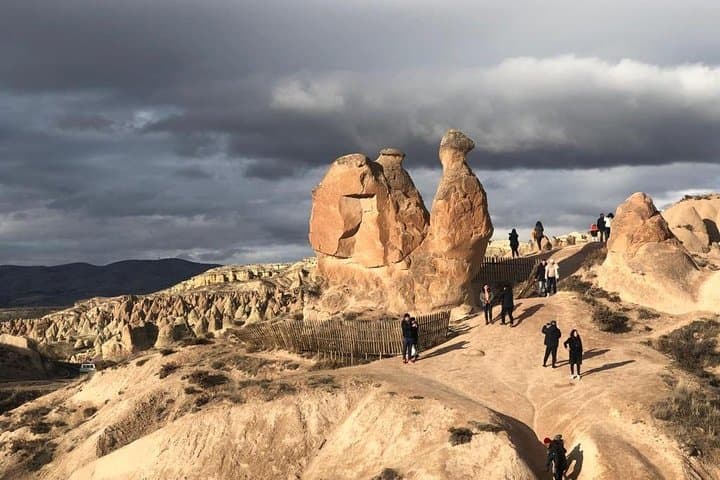
You step out of the minivan onto a moonscape where rock has been coaxed into improbably tall columns and rounded caps. Early light slices across Devrent Valley and the formations—already nicknamed for animals and faces by visitors—take on sculptural clarity; the land feels as if a potter has tried their hand at architecture and then walked away.
You step out of the minivan onto a moonscape where rock has been coaxed into improbably tall columns and rounded caps. Early light slices across Devrent Valley and the formations—already nicknamed for animals and faces by visitors—take on sculptural clarity; the land feels as if a potter has tried their hand at architecture and then walked away.
This is the Red Tour’s opening act: a half-hour wander through Devrent’s imagination-stoked ridges, followed by Paşabağı (Monks Valley), where three-headed fairy chimneys wear the grooves of centuries of wind and rain. The day folds into Avanos, a riverside village on the Kızılırmak where kick-wheel potters shape red-clay bowls the same way their grandfathers did, and culminates with the Göreme Open-Air Museum—Byzantine cave churches painted with icons and narrative frescoes that survived iconoclasm and Seljuk rule.
Geology and history meet here. Cappadocia’s signature hoodoos are tuff—consolidated volcanic ash deposited by eruptions from nearby peaks such as Erciyes and Hasandağ millions of years ago—sculpted by erosion into columns and caves that people repurposed as homes, dovecotes and sanctuaries from late antiquity onward. Monastic communities carved complex chapels and living quarters from the soft stone from the 3rd century, leaving an archaeological record of daily life and devotional art.
Culture is tactile on this route: Avanos’s pottery workshops connect to the region’s clay-rich riverbanks, while the dovecotes in Pigeon Valley reflect rural practices of fertilizer collection and pigeon-keeping that sustained local agriculture.
Practical notes: the full tour runs about six hours with hotel pickup across the Göreme–Ürgüp corridor; transport is air-conditioned. Expect short, uneven walks—stone steps and soft tuff that can be slippery after rain—and a handful of low cave openings inside the churches. Admission for Göreme Open-Air Museum is typically paid on-site; lunch at a local restaurant is included on the tour.
Timing matters for photos and crowds: morning light in Devrent and Paşabağı is clean and reduces harsh shadows; mid-afternoon can be busier at Göreme. Wear sturdy shoes with a good tread, sun protection and a refillable water bottle—the region sits around 1,000 meters elevation, where sun and dry air can sneak up on you. Ask your guide about local pottery studios that allow hands-on demonstrations; it’s an easy way to take home a crafted memory while supporting community artisans.
This north loop reads like a compact primer on Cappadocia—raw volcanic rock, lived-in caves, and small-town craft—delivered with the efficiency of a single, well-paced day.