THE ADVENTURE COLLECTIVE® · Independent discovery and booking for outdoor travel

Float above fairy chimneys at sunrise, ride camels through sculpted valleys, and trace millennia of history from hot springs to marble streets. This short but immersive itinerary strings together Cappadocia’s cinematic landscapes with nearby ancient sites for a compact Anatolian adventure.
Float above fairy chimneys at sunrise, ride camels through sculpted valleys, and trace millennia of history from hot springs to marble streets. This short but immersive itinerary strings together Cappadocia’s cinematic landscapes with nearby ancient sites for a compact Anatolian adventure.
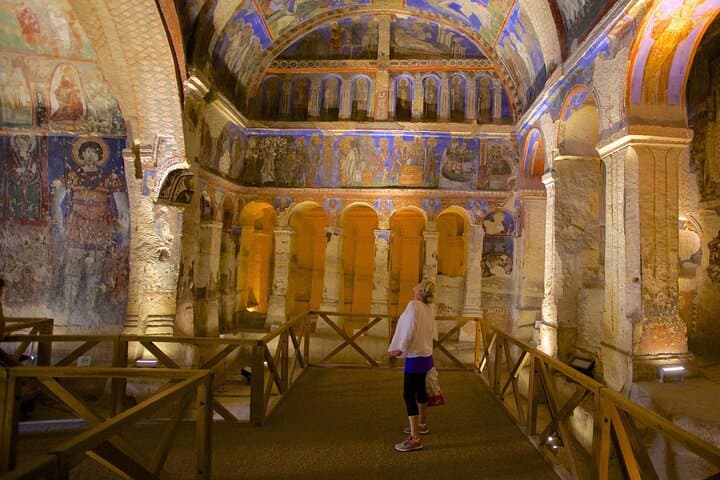
Before dawn the valley breathes out a cool, mineral-scented mist and a line of balloons dots the horizon like pale lanterns. You stand on the rim of a folded plateau—wind restless, burners snapping—while the pilot counts down. The balloon lifts and Cappadocia rearranges itself: fairy chimneys sharpen into sentinels, hidden valleys open like pages, and the Kızılırmak River glints in a distant ribbon. Below, stone-cut churches and honeycombed cave houses sit in the tuff as if grown from the ground.
Verified experiences and guided adventures in the surrounding area.
Operated by Turkey Experiences · Göreme, Nevşehir
Before dawn the valley breathes out a cool, mineral-scented mist and a line of balloons dots the horizon like pale lanterns. You stand on the rim of a folded plateau—wind restless, burners snapping—while the pilot counts down. The balloon lifts and Cappadocia rearranges itself: fairy chimneys sharpen into sentinels, hidden valleys open like pages, and the Kızılırmak River glints in a distant ribbon. Below, stone-cut churches and honeycombed cave houses sit in the tuff as if grown from the ground.
This package strings that sunrise into a broader Anatolian story: thermal terraces at Pamukkale, the Roman streets of Hierapolis, the grand theatre of Ephesus, and finally the carved valleys of Göreme. Geology and human history collide here. Cappadocia’s chimneys began as volcanic ash and ignimbrite—soft tuff that centuries of wind and water carved into cones, pillars and caves. At Pamukkale, hot springs deposit calcium carbonate into gleaming travertine terraces that have drawn bathers since antiquity. Cities like Ephesus and Miletus were once ports and cultural hubs of Ionia; their marble streets and libraries narrate the arc from Hellenistic prosperity to Roman and Byzantine faith.
Local craft and cuisine make this a tactile trip: Avanos still throws pottery from red river clay, and you’ll taste testi kebab simmered in a sealed clay pot. Cave hotels use the thermal inertia of tuff to stay cool in summer and warm in winter—sleeping in carved rooms feels like staying inside the landscape itself.
Practical guide: the balloon flight typically climbs to about 700–1,000 meters above ground and lasts ~60 minutes; expect a 3-hour early-morning block from pickup to return. The Cappadocia plateau sits around 1,000–1,200 m elevation—mornings are chilly even in summer. Walking surfaces are uneven volcanic rock, dusty trails, and archaeological steps; plan for moderate activity and some stair-climbing in ancient sites.
Tips for planning: book balloon seats well in advance and request an experienced operator; check medical advisories—hot-air rides and antique pools may not be suitable if you have spinal or heart conditions. Bring layered clothing, good trekking shoes, sunscreen and a compact tripod for dawn exposures. Carry some Turkish lira for small vendors and optional extras like the Cleopatra (Antique) Pool.
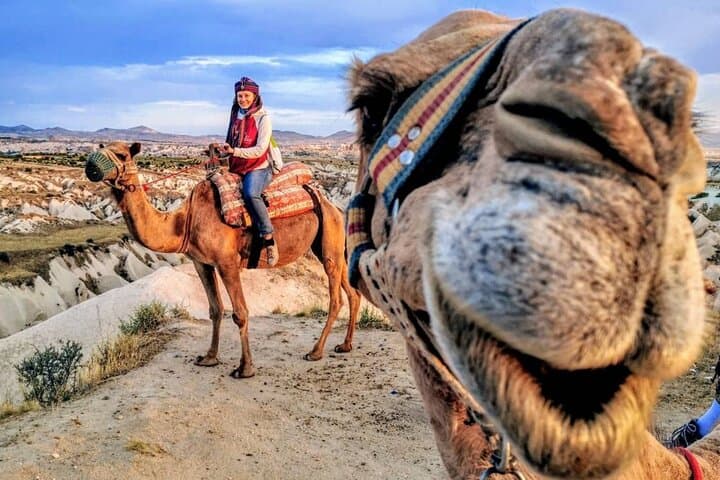
Ultimately the trip balances spectacle and context: burners and camels deliver the thrill, while potters, ruins, and thermal waters give you reasons to linger.
moderate.
4–5 days.
Moderate fitness: you should be comfortable walking uneven terrain and climbing stairs for up to a few hours at a stretch.
The flight itself is about 60 minutes, with the full early-morning experience (transfer, setup, flight, celebration, and return) taking roughly three hours.
The itinerary lists a camel ride as an included option on some packages; confirm at booking whether it’s part of your chosen variant or an add-on.
Yes—modern cave hotels are fitted with heating, plumbing and comfortable beds; they use natural rock insulation to regulate temperature.
Passengers must be in reasonable health; balloon companies typically restrict people with serious heart or spinal conditions and pregnant travelers should not fly.
Access to the travertines is generally included, but swimming in the Antique (Cleopatra) Pool usually requires an extra fee handled on-site.
Turkish lira is widely used for small purchases; Turkish is the local language, though guides and tourism staff commonly speak English.
Cappadocia’s cave dwellings and churches reflect centuries of habitation from Hittite and Persian periods through Roman and Byzantine eras; nearby Ephesus was a major Greco-Roman port and religious center.
The region is sensitive: paths of tuff erode easily and travertine pools at Pamukkale are protected—stick to marked trails, avoid stepping on fragile terraces, and follow local guidance to minimize impact.
Turkey Experiences operates guided outdoor trips and adventures with an emphasis on safety, stewardship, and memorable experiences.
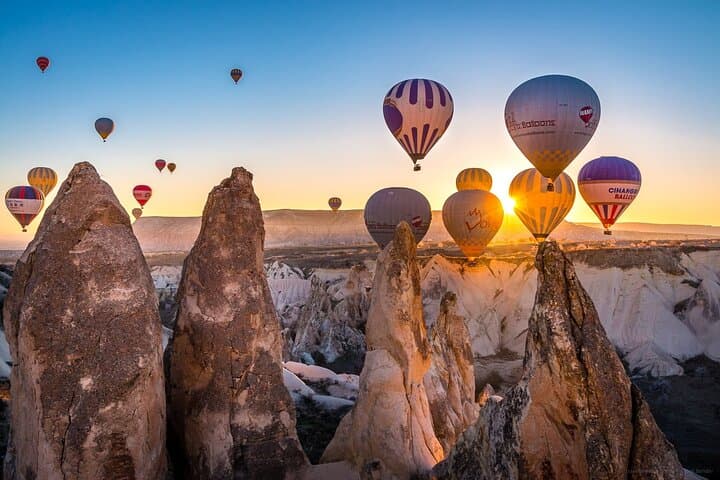
Before dawn the valley breathes out a cool, mineral-scented mist and a line of balloons dots the horizon like pale lanterns. You stand on the rim of a folded plateau—wind restless, burners snapping—while the pilot counts down. The balloon lifts and Cappadocia rearranges itself: fairy chimneys sharpen into sentinels, hidden valleys open like pages, and the Kızılırmak River glints in a distant ribbon. Below, stone-cut churches and honeycombed cave houses sit in the tuff as if grown from the ground.
Before dawn the valley breathes out a cool, mineral-scented mist and a line of balloons dots the horizon like pale lanterns. You stand on the rim of a folded plateau—wind restless, burners snapping—while the pilot counts down. The balloon lifts and Cappadocia rearranges itself: fairy chimneys sharpen into sentinels, hidden valleys open like pages, and the Kızılırmak River glints in a distant ribbon. Below, stone-cut churches and honeycombed cave houses sit in the tuff as if grown from the ground.
This package strings that sunrise into a broader Anatolian story: thermal terraces at Pamukkale, the Roman streets of Hierapolis, the grand theatre of Ephesus, and finally the carved valleys of Göreme. Geology and human history collide here. Cappadocia’s chimneys began as volcanic ash and ignimbrite—soft tuff that centuries of wind and water carved into cones, pillars and caves. At Pamukkale, hot springs deposit calcium carbonate into gleaming travertine terraces that have drawn bathers since antiquity. Cities like Ephesus and Miletus were once ports and cultural hubs of Ionia; their marble streets and libraries narrate the arc from Hellenistic prosperity to Roman and Byzantine faith.
Local craft and cuisine make this a tactile trip: Avanos still throws pottery from red river clay, and you’ll taste testi kebab simmered in a sealed clay pot. Cave hotels use the thermal inertia of tuff to stay cool in summer and warm in winter—sleeping in carved rooms feels like staying inside the landscape itself.
Practical guide: the balloon flight typically climbs to about 700–1,000 meters above ground and lasts ~60 minutes; expect a 3-hour early-morning block from pickup to return. The Cappadocia plateau sits around 1,000–1,200 m elevation—mornings are chilly even in summer. Walking surfaces are uneven volcanic rock, dusty trails, and archaeological steps; plan for moderate activity and some stair-climbing in ancient sites.
Tips for planning: book balloon seats well in advance and request an experienced operator; check medical advisories—hot-air rides and antique pools may not be suitable if you have spinal or heart conditions. Bring layered clothing, good trekking shoes, sunscreen and a compact tripod for dawn exposures. Carry some Turkish lira for small vendors and optional extras like the Cleopatra (Antique) Pool.
Ultimately the trip balances spectacle and context: burners and camels deliver the thrill, while potters, ruins, and thermal waters give you reasons to linger.