THE ADVENTURE COLLECTIVE® · Independent discovery and booking for outdoor travel

Step off the road into Cappadocia’s sculpted valleys for a day that pairs geology with Byzantine art and centuries-old pottery. This guided loop through Devrent, Pasabag, Avanos, Göreme Open Air Museum, Uçhisar and an underground city condenses the region’s highlights into a practical, photo-ready day tour.
Step off the road into Cappadocia’s sculpted valleys for a day that pairs geology with Byzantine art and centuries-old pottery. This guided loop through Devrent, Pasabag, Avanos, Göreme Open Air Museum, Uçhisar and an underground city condenses the region’s highlights into a practical, photo-ready day tour.
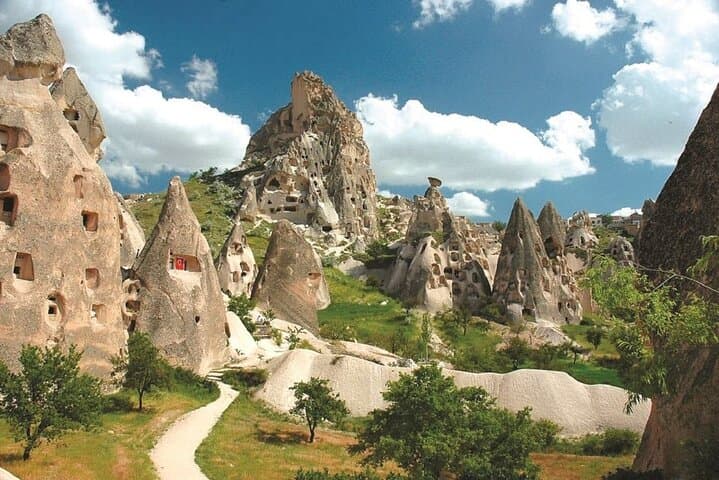
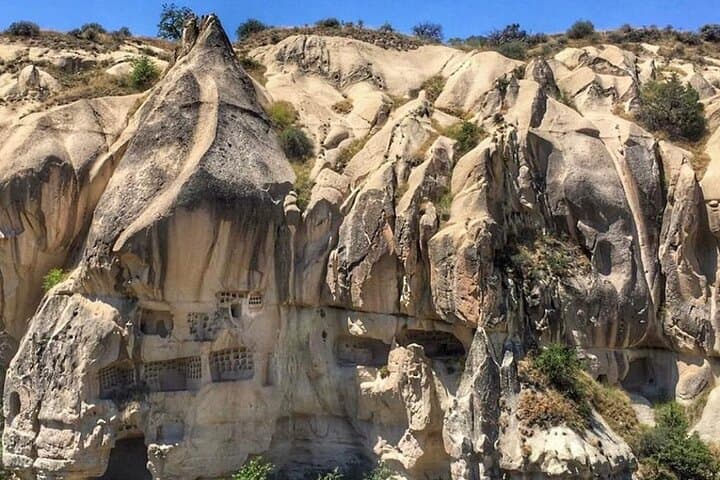
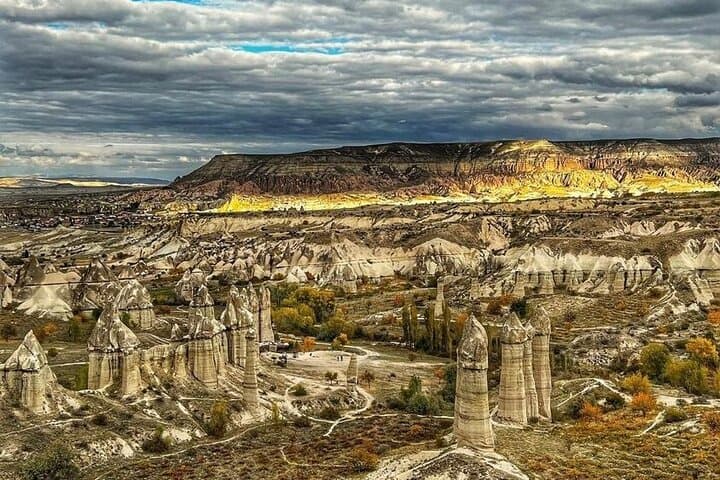
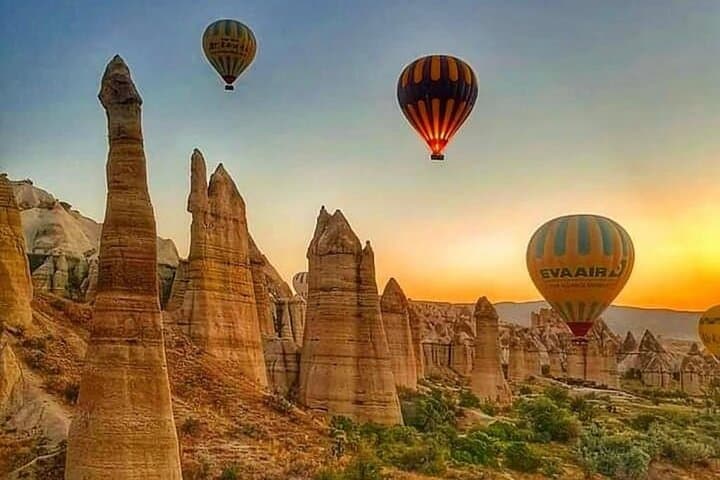
A wind-scoured valley opens like a stage. The guide leads the minivan off a narrow road and the group steps into a landscape that reads like geology in motion: squat cones, mushroom-capped pinnacles and soft tuff carved into rooms and chapels. Morning light catches the pale ochres of Devrent Valley and the first coffee cups go quiet as the lunar forms assert themselves.
Verified experiences and guided adventures in the surrounding area.
Operated by Emre Kızmaz · Göreme, Nevşehir Province
A wind-scoured valley opens like a stage. The guide leads the minivan off a narrow road and the group steps into a landscape that reads like geology in motion: squat cones, mushroom-capped pinnacles and soft tuff carved into rooms and chapels. Morning light catches the pale ochres of Devrent Valley and the first coffee cups go quiet as the lunar forms assert themselves.
The day that follows moves at a pragmatic pace—an hour at Pasabag to study the best-known 'fairy chimneys', a pottery demonstration in Avanos, a long look through the Göreme Open Air Museum’s cave churches, and a descent into an underground city where passageways narrow and history becomes intimate. Cappadocia is both a natural archive and a cultural palimpsest: volcanic ash compacted over millions of years, then human hands hollowing, painting and fortifying those rocks from Byzantine iconographers to villagers hiding from raids.
Geology here is conspicuous. Layers of tuff and basalt create the soft-but-resilient medium that wind and water sculpt into chimneys and castles. The human story is written across those layers—Uçhisar Castle is a high point both literally and historically, a watchtower carved into the tallest rock in the valley. Avanos, on the Kızılırmak river, carries millennia of ceramics tradition; clay from the river remains the same raw ingredient used for 3,000 years.
Culturally, the trip balances spectacle and context. Guides point out frescoes dated to the 10th–13th centuries, explain the subterranean cities' use as refuge, and demonstrate pottery techniques in workshops that still throw vessels on foot-powered wheels.
Practical guidance: the tour runs about 6–7 hours with hotel pickup around 10:00–10:15 and returns in the evening. Expect 1–2 hours of walking separated into short segments rather than a single long hike; surfaces range from packed dirt to uneven stone and carved stairs. The underground city has low, narrow corridors—travelers with limited mobility should note accessible areas are limited despite shuttle accessibility.
Pack sturdy shoes and a sun hat; water and sunscreen are essential in summer, and layers matter in spring and fall when mornings are cool. Cameras will reward patience—Esentepe offers a wide-angle panorama of Göreme, and late afternoon light sharpens the chimneys’ texture.
Logistics covered by the operator include museum tickets, lunch in Avanos, an air-conditioned vehicle and professional guide. Bring curiosity and a steady pace: Cappadocia reveals itself in short, intense encounters rather than continuous vistas, and the underground city asks visitors to move deliberately through narrow chapters of human history.
moderate.
6–7 hours.
Moderate fitness; ability to handle short walks, stairs and uneven ground is recommended
The tour lasts about 6–7 hours and pickup begins around 10:00–10:15 from hotels in the Göreme area.
Yes; museum tickets and a lunch in Avanos are included in the tour price.
Children can enter but sections have low ceilings and narrow stairways; mobility-limited visitors may be unable to access lower levels.
Photography is generally allowed but avoid flash and any contact with frescoes—follow the guide's instructions to protect delicate pigments.
The itinerary includes a pottery demonstration and a short visit in Avanos where you can buy ceramics and observe artisans at work.
Wear sturdy shoes for uneven terrain, bring sun protection and a light layer for cooler mornings and underground coolness.
Cappadocia’s cave churches contain Byzantine frescoes from roughly the 10th–13th centuries, while underground cities were expanded through the medieval period as hidden refuges.
Erosion and visitor pressure threaten fragile rock faces and frescoes; stick to marked paths, avoid touching painted surfaces and support local conservation-minded guides.
Emre Kızmaz operates guided outdoor trips and adventures with an emphasis on safety, stewardship, and memorable experiences.
A wind-scoured valley opens like a stage. The guide leads the minivan off a narrow road and the group steps into a landscape that reads like geology in motion: squat cones, mushroom-capped pinnacles and soft tuff carved into rooms and chapels. Morning light catches the pale ochres of Devrent Valley and the first coffee cups go quiet as the lunar forms assert themselves.
A wind-scoured valley opens like a stage. The guide leads the minivan off a narrow road and the group steps into a landscape that reads like geology in motion: squat cones, mushroom-capped pinnacles and soft tuff carved into rooms and chapels. Morning light catches the pale ochres of Devrent Valley and the first coffee cups go quiet as the lunar forms assert themselves.
The day that follows moves at a pragmatic pace—an hour at Pasabag to study the best-known 'fairy chimneys', a pottery demonstration in Avanos, a long look through the Göreme Open Air Museum’s cave churches, and a descent into an underground city where passageways narrow and history becomes intimate. Cappadocia is both a natural archive and a cultural palimpsest: volcanic ash compacted over millions of years, then human hands hollowing, painting and fortifying those rocks from Byzantine iconographers to villagers hiding from raids.
Geology here is conspicuous. Layers of tuff and basalt create the soft-but-resilient medium that wind and water sculpt into chimneys and castles. The human story is written across those layers—Uçhisar Castle is a high point both literally and historically, a watchtower carved into the tallest rock in the valley. Avanos, on the Kızılırmak river, carries millennia of ceramics tradition; clay from the river remains the same raw ingredient used for 3,000 years.
Culturally, the trip balances spectacle and context. Guides point out frescoes dated to the 10th–13th centuries, explain the subterranean cities' use as refuge, and demonstrate pottery techniques in workshops that still throw vessels on foot-powered wheels.
Practical guidance: the tour runs about 6–7 hours with hotel pickup around 10:00–10:15 and returns in the evening. Expect 1–2 hours of walking separated into short segments rather than a single long hike; surfaces range from packed dirt to uneven stone and carved stairs. The underground city has low, narrow corridors—travelers with limited mobility should note accessible areas are limited despite shuttle accessibility.
Pack sturdy shoes and a sun hat; water and sunscreen are essential in summer, and layers matter in spring and fall when mornings are cool. Cameras will reward patience—Esentepe offers a wide-angle panorama of Göreme, and late afternoon light sharpens the chimneys’ texture.
Logistics covered by the operator include museum tickets, lunch in Avanos, an air-conditioned vehicle and professional guide. Bring curiosity and a steady pace: Cappadocia reveals itself in short, intense encounters rather than continuous vistas, and the underground city asks visitors to move deliberately through narrow chapters of human history.