THE ADVENTURE COLLECTIVE® · Independent discovery and booking for outdoor travel

Learn basic capoeira moves and rhythms at the first school associated with Mestre Bimba in Salvador. This 60‑minute beginner class blends music, movement and cultural history in the heart of Bahia.
Learn basic capoeira moves and rhythms at the first school associated with Mestre Bimba in Salvador. This 60‑minute beginner class blends music, movement and cultural history in the heart of Bahia.
The training room hums with berimbau and clapping; you step into a cool tile studio while the bay’s salt air presses against Salvador’s low cliffs outside. Instructors call rhythms, and beginners learn to move — a roll, a kick, a ginga — that fold music, history and motion into the next heartbeat.
Verified experiences and guided adventures in the surrounding area.
Operated by Associação de Capoeira Mestre Bimba · Salvador, Bahia
The training room hums with berimbau and clapping; you step into a cool tile studio while the bay’s salt air presses against Salvador’s low cliffs outside. Instructors call rhythms, and beginners learn to move — a roll, a kick, a ginga — that fold music, history and motion into the next heartbeat.
Salvador sits on the Bay of All Saints, a coastal city whose streets reflect centuries of African and Portuguese exchange. Capoeira in Salvador is not just a physical practice: Mestre Bimba formalized Capoeira Regional here in the 1930s, bringing combative technique and structured teaching into the public eye. The school’s floor holds echoes of that history; the bay and the city’s rocky escarpments offer the geographic context for a culture shaped by migration and maritime trade.
Expect a beginner-friendly, 60‑minute session focused on basic attacks, defenses, acrobatics and the music that shapes them. Movements are taught step-by-step, alternating practice drills with roda-style circles where music guides tempo. Classes emphasize rhythm, balance and spatial awareness more than brute strength, making them accessible to many fitness levels.
Practical notes: wear breathable, flexible clothing and bring water. Arrive 10–15 minutes early to meet instructors and receive any cultural context or etiquette — bowing to the lead, respecting the roda order. Classes are often taught in Portuguese with translation; a willingness to learn turns language into part of the experience. Leave time after class to walk Salvador’s historic center, where street life continues the conversation started in the studio.
easy.
1 hour.
Suitable for most people; some basic coordination and light cardio fitness helps.
No — the class is designed for beginners and starts with basic ginga, simple attacks and defenses.
Instruction is commonly in Portuguese; instructors typically provide basic translation or demonstrations so non‑Portuguese speakers can follow.
Many schools welcome teens and older children, but check age limits with the operator; the class pace is adjustable for different ages.
The activity is described as suitable for all fitness levels, but contact the provider if you have mobility limitations so they can adapt exercises or offer alternatives.
Mestre Bimba developed Capoeira Regional in Salvador in the 1930s and opened one of the first formal schools, systematizing techniques and integrating music into training.
Support authentic local schools and instructors to help sustain cultural heritage; avoid tours that turn rituals into superficial spectacles.
Associação de Capoeira Mestre Bimba operates guided outdoor trips and adventures with an emphasis on safety, stewardship, and memorable experiences.
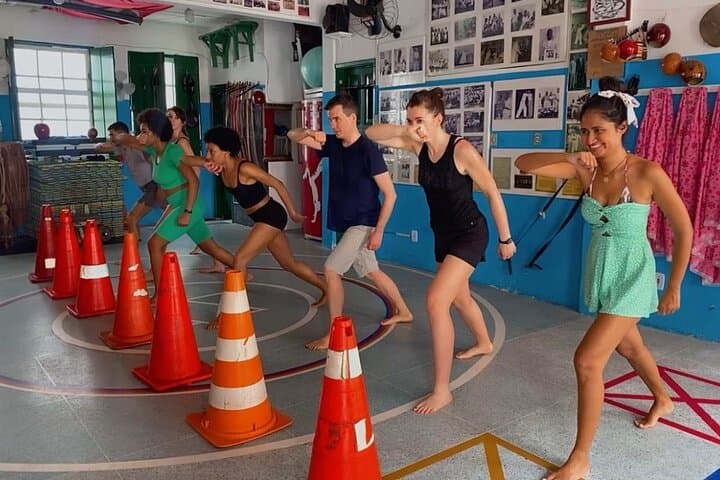
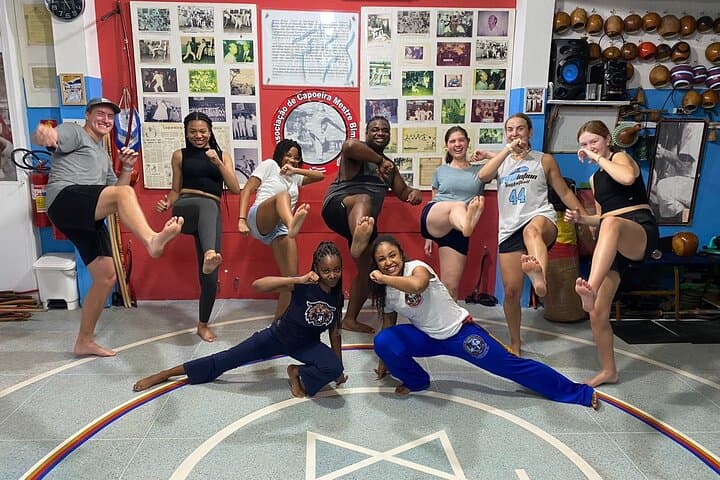


The training room hums with berimbau and clapping; you step into a cool tile studio while the bay’s salt air presses against Salvador’s low cliffs outside. Instructors call rhythms, and beginners learn to move — a roll, a kick, a ginga — that fold music, history and motion into the next heartbeat.
The training room hums with berimbau and clapping; you step into a cool tile studio while the bay’s salt air presses against Salvador’s low cliffs outside. Instructors call rhythms, and beginners learn to move — a roll, a kick, a ginga — that fold music, history and motion into the next heartbeat.
Salvador sits on the Bay of All Saints, a coastal city whose streets reflect centuries of African and Portuguese exchange. Capoeira in Salvador is not just a physical practice: Mestre Bimba formalized Capoeira Regional here in the 1930s, bringing combative technique and structured teaching into the public eye. The school’s floor holds echoes of that history; the bay and the city’s rocky escarpments offer the geographic context for a culture shaped by migration and maritime trade.
Expect a beginner-friendly, 60‑minute session focused on basic attacks, defenses, acrobatics and the music that shapes them. Movements are taught step-by-step, alternating practice drills with roda-style circles where music guides tempo. Classes emphasize rhythm, balance and spatial awareness more than brute strength, making them accessible to many fitness levels.
Practical notes: wear breathable, flexible clothing and bring water. Arrive 10–15 minutes early to meet instructors and receive any cultural context or etiquette — bowing to the lead, respecting the roda order. Classes are often taught in Portuguese with translation; a willingness to learn turns language into part of the experience. Leave time after class to walk Salvador’s historic center, where street life continues the conversation started in the studio.