THE ADVENTURE COLLECTIVE® · Independent discovery and booking for outdoor travel

Experience Gugulethu beyond a window — walk its streets with local guides, share a traditional braai, and learn the township’s recent history and community projects. This five-hour tour pairs cultural insight with practical, respectful engagement.
Experience Gugulethu beyond a window — walk its streets with local guides, share a traditional braai, and learn the township’s recent history and community projects. This five-hour tour pairs cultural insight with practical, respectful engagement.
You step off the air-conditioned vehicle into a street where voices carry a mix of Xhosa, Afrikaans and English; the scent of wood smoke and grilled meat threads between houses. Gugulethu greets you as a living neighborhood rather than a staged attraction — children race past, vendors call, and a local restaurant opens its doors for a communal braai.
Verified experiences and guided adventures in the surrounding area.
Operated by Cape Falls Tours · Gugulethu, Western Cape
You step off the air-conditioned vehicle into a street where voices carry a mix of Xhosa, Afrikaans and English; the scent of wood smoke and grilled meat threads between houses. Gugulethu greets you as a living neighborhood rather than a staged attraction — children race past, vendors call, and a local restaurant opens its doors for a communal braai.
The township system in South Africa is rooted in 20th-century segregation and mass removals; places like Gugulethu grew rapidly during the apartheid era and now contain layers of history, art and resilience. Geologically, Cape Town sits where Table Mountain’s sandstone shoulders fall toward False Bay; in townships the landscape is urban fabric more than rock outcrop, but you can still see distant mountain outlines and the Atlantic’s line on the horizon.
This tour centers on community exchange: a guided walk through residential streets, stops at local projects, and a sit-down meal featuring traditional dishes and a braai — beef, chicken and often locally sourced sides. Guides are usually residents who share personal history and cultural context, explaining everyday life, work, and the social initiatives that shape the neighborhood.
Practical guidance: allow about five hours round-trip from central Cape Town, bring cash for small purchases, wear closed-toe shoes for uneven sidewalks, and keep modest, respectful photography etiquette. The best time to visit is morning to late afternoon when community life is most active. This is an accessible, immersive cultural experience aimed at learning and respectful interaction rather than sightseeing alone.
easy.
5 hours.
Suitable for most fitness levels; involves walking on city streets for up to two hours with short stops
Most departures are from central Cape Town pickup points or a hotel pickup; confirm your meeting point at booking and expect a return to the same area.
Yes—the tour includes a traditional meal and braai; dietary requests can usually be accommodated with advance notice when booking.
This operator lists the tour as stroller- and wheelchair-accessible, but check pickup logistics and advise of mobility needs when booking.
Be respectful: follow the guide, ask before taking photos, avoid entering private homes unless invited, and support local businesses and projects when possible.
Gugulethu was established during apartheid-era forced relocations and has since become a focal point for community activism, arts and cultural resilience.
Visitors are encouraged to minimize waste, use refillable bottles, and support locally run enterprises to ensure tourism benefits the community directly.
Cape Falls Tours operates guided outdoor trips and adventures with an emphasis on safety, stewardship, and memorable experiences.



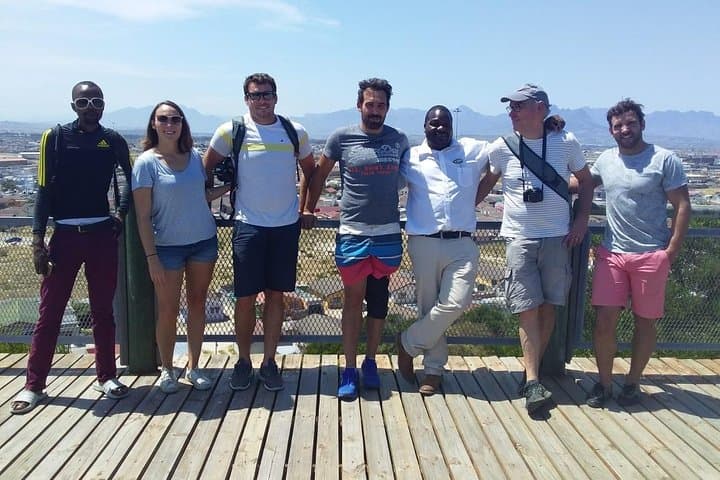
You step off the air-conditioned vehicle into a street where voices carry a mix of Xhosa, Afrikaans and English; the scent of wood smoke and grilled meat threads between houses. Gugulethu greets you as a living neighborhood rather than a staged attraction — children race past, vendors call, and a local restaurant opens its doors for a communal braai.
You step off the air-conditioned vehicle into a street where voices carry a mix of Xhosa, Afrikaans and English; the scent of wood smoke and grilled meat threads between houses. Gugulethu greets you as a living neighborhood rather than a staged attraction — children race past, vendors call, and a local restaurant opens its doors for a communal braai.
The township system in South Africa is rooted in 20th-century segregation and mass removals; places like Gugulethu grew rapidly during the apartheid era and now contain layers of history, art and resilience. Geologically, Cape Town sits where Table Mountain’s sandstone shoulders fall toward False Bay; in townships the landscape is urban fabric more than rock outcrop, but you can still see distant mountain outlines and the Atlantic’s line on the horizon.
This tour centers on community exchange: a guided walk through residential streets, stops at local projects, and a sit-down meal featuring traditional dishes and a braai — beef, chicken and often locally sourced sides. Guides are usually residents who share personal history and cultural context, explaining everyday life, work, and the social initiatives that shape the neighborhood.
Practical guidance: allow about five hours round-trip from central Cape Town, bring cash for small purchases, wear closed-toe shoes for uneven sidewalks, and keep modest, respectful photography etiquette. The best time to visit is morning to late afternoon when community life is most active. This is an accessible, immersive cultural experience aimed at learning and respectful interaction rather than sightseeing alone.