THE ADVENTURE COLLECTIVE® · Independent discovery and booking for outdoor travel

A private full‑day transfer from Cape Town to Cape Agulhas that takes you across the Overberg’s agricultural plains to the southernmost tip of Africa. Expect dramatic coastal views, a mid‑19th‑century lighthouse, and the symbolic meeting place of two oceans.
A private full‑day transfer from Cape Town to Cape Agulhas that takes you across the Overberg’s agricultural plains to the southernmost tip of Africa. Expect dramatic coastal views, a mid‑19th‑century lighthouse, and the symbolic meeting place of two oceans.
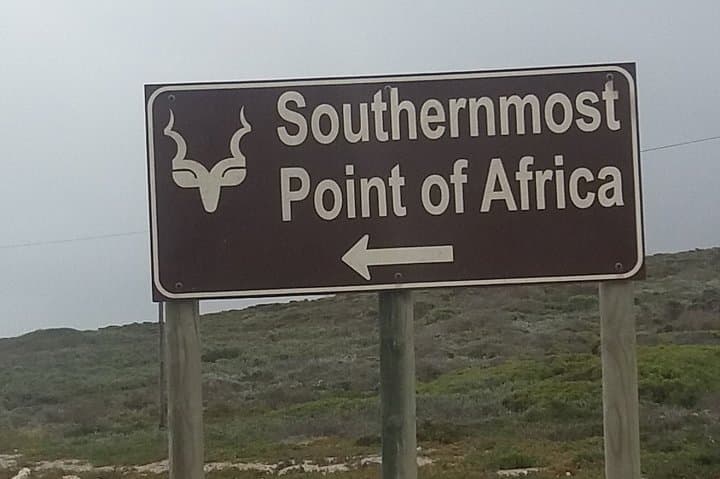
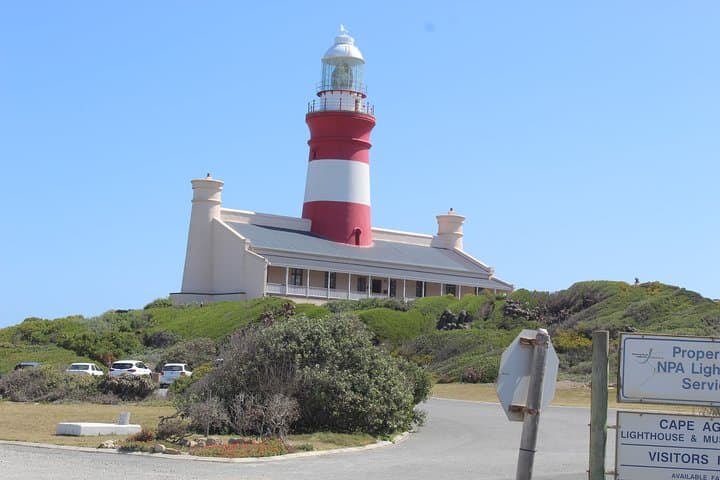
Morning light lifts off Table Mountain and you settle into an air‑conditioned vehicle, the N2 unfurling south and east toward a coastline that changes mood every mile. The road slips through suburban Somerset West, over low mountain passes and into the wide agricultural bowls of the Overberg—yellow canola, orchards, and woolly sheep giving way to scrubby fynbos. By midday the lighthouse at Cape Agulhas appears: a stubby sentinel marking the southernmost point of Africa.
Verified experiences and guided adventures in the surrounding area.
Operated by Remigeous Tsuro · Cape Agulhas, Western Cape
Morning light lifts off Table Mountain and you settle into an air‑conditioned vehicle, the N2 unfurling south and east toward a coastline that changes mood every mile. The road slips through suburban Somerset West, over low mountain passes and into the wide agricultural bowls of the Overberg—yellow canola, orchards, and woolly sheep giving way to scrubby fynbos. By midday the lighthouse at Cape Agulhas appears: a stubby sentinel marking the southernmost point of Africa.
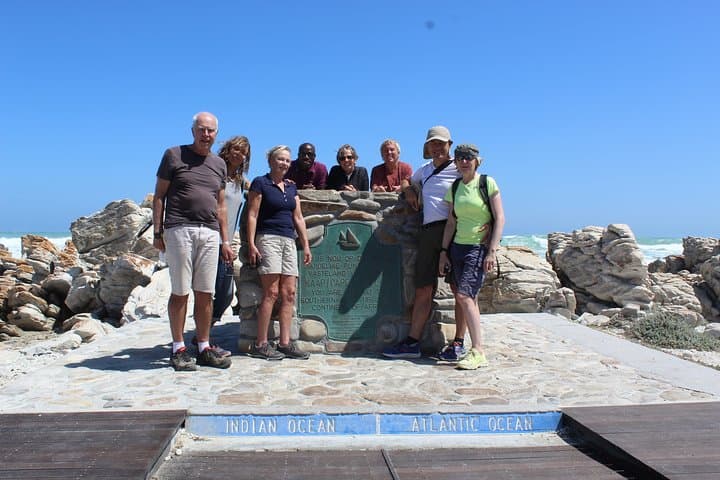
This route is as much about geology and maritime history as it is distance. Cape Agulhas is where the International Hydrographic Organization draws the line between the Atlantic and Indian Oceans; currents here — the cold Benguela and the warm Agulhas — circle and clash offshore. The shoreline bears the scars of that meeting: shipwrecks, a 19th‑century lighthouse, and a community shaped by fishing and farming.
Culturally, the Overberg blends Afrikaner farming heritage with small coastal villages: Bredasdorp’s Shipwreck Museum and the fishing boats of Struisbaai are quiet stops that reveal local life. Botanically, the fynbos you pass is part of one of the world’s richest plant kingdoms—leave it intact.
Practicalities: this full‑day private transfer runs about eight hours round trip from Cape Town, with driving one‑way around 220 km (3 hours) depending on stops and traffic. Bring layered clothing, a windproof shell for the coastline, binoculars, and a camera with extra battery. Start early to catch softer light, respect posted signs around the shoreline and tidal zones, and pack snacks if you prefer flexible stop times. The trip is low‑effort physically but high on scenery and photo ops—ideal for anyone who wants to tick an iconic geographic point off their list without navigating the logistics themselves.
easy.
8 hours.
Suitable for all fitness levels; minimal walking required beyond short stretches at viewpoints
One‑way driving is roughly 3 hours (~220 km) depending on traffic and stops; the full tour is planned as an approximately 8‑hour round trip.
The historic lighthouse and adjacent museum are typically open to visitors but hours and entry fees vary—check locally or ask your driver for current access details.
Swimming at the exact meeting point is not recommended due to strong currents and unpredictable sea conditions; use designated beaches and heed safety signage.
Meals are not generally included; bottled water may be provided—bring snacks or plan a stop at a local café or farm stall along the route.
Cape Agulhas has been a landmark for sailors for centuries; the region’s lighthouse and numerous shipwrecks reflect its role in global maritime navigation since the 19th century.
The Overberg’s fynbos is a biodiversity hotspot—stick to paths, avoid picking plants, and support local businesses that follow sustainable practices.
Remigeous Tsuro operates guided outdoor trips and adventures with an emphasis on safety, stewardship, and memorable experiences.
Morning light lifts off Table Mountain and you settle into an air‑conditioned vehicle, the N2 unfurling south and east toward a coastline that changes mood every mile. The road slips through suburban Somerset West, over low mountain passes and into the wide agricultural bowls of the Overberg—yellow canola, orchards, and woolly sheep giving way to scrubby fynbos. By midday the lighthouse at Cape Agulhas appears: a stubby sentinel marking the southernmost point of Africa.
Morning light lifts off Table Mountain and you settle into an air‑conditioned vehicle, the N2 unfurling south and east toward a coastline that changes mood every mile. The road slips through suburban Somerset West, over low mountain passes and into the wide agricultural bowls of the Overberg—yellow canola, orchards, and woolly sheep giving way to scrubby fynbos. By midday the lighthouse at Cape Agulhas appears: a stubby sentinel marking the southernmost point of Africa.
This route is as much about geology and maritime history as it is distance. Cape Agulhas is where the International Hydrographic Organization draws the line between the Atlantic and Indian Oceans; currents here — the cold Benguela and the warm Agulhas — circle and clash offshore. The shoreline bears the scars of that meeting: shipwrecks, a 19th‑century lighthouse, and a community shaped by fishing and farming.
Culturally, the Overberg blends Afrikaner farming heritage with small coastal villages: Bredasdorp’s Shipwreck Museum and the fishing boats of Struisbaai are quiet stops that reveal local life. Botanically, the fynbos you pass is part of one of the world’s richest plant kingdoms—leave it intact.
Practicalities: this full‑day private transfer runs about eight hours round trip from Cape Town, with driving one‑way around 220 km (3 hours) depending on stops and traffic. Bring layered clothing, a windproof shell for the coastline, binoculars, and a camera with extra battery. Start early to catch softer light, respect posted signs around the shoreline and tidal zones, and pack snacks if you prefer flexible stop times. The trip is low‑effort physically but high on scenery and photo ops—ideal for anyone who wants to tick an iconic geographic point off their list without navigating the logistics themselves.