THE ADVENTURE COLLECTIVE® · Independent discovery and booking for outdoor travel

A private five-day tour that threads Table Mountain, the V&A Waterfront and the Cape Winelands into a compact, customizable introduction to Cape Town. Expect cableway panoramas, oak‑lined estates and flexible downtime for independent exploration.
A private five-day tour that threads Table Mountain, the V&A Waterfront and the Cape Winelands into a compact, customizable introduction to Cape Town. Expect cableway panoramas, oak‑lined estates and flexible downtime for independent exploration.
You step out of Cape Town International and the city greets you with a wind that has an agenda — the local ‘Cape Doctor’ already sorting the clouds over Table Mountain. On arrival the private transfer slips through suburbs of jacaranda and palm, delivering you to the V&A Waterfront where the harbor breathes salt and ferry horns punctuate the skyline. This is the opening chapter of the Cape Town Explorer, a five-day private tour that turns the city into a series of short, revealing journeys: the flat-topped drama of Table Mountain, the oak-shaded lanes of the Winelands, and the low-slung fishing villages along False Bay.
Verified experiences and guided adventures in the surrounding area.
Operated by Timeline Travel · Cape Town, Western Cape
You step out of Cape Town International and the city greets you with a wind that has an agenda — the local ‘Cape Doctor’ already sorting the clouds over Table Mountain. On arrival the private transfer slips through suburbs of jacaranda and palm, delivering you to the V&A Waterfront where the harbor breathes salt and ferry horns punctuate the skyline. This is the opening chapter of the Cape Town Explorer, a five-day private tour that turns the city into a series of short, revealing journeys: the flat-topped drama of Table Mountain, the oak-shaded lanes of the Winelands, and the low-slung fishing villages along False Bay.
Table Mountain dominates the first full morning. Weather permitting, a cableway ride (tickets not included) rotates you above fynbos the color of dried thyme; at 1,085 meters the summit gives a wide, ocean-framed perspective — Robben Island a pale smudge offshore, Clifton’s beaches strung like beads below. Later, the city tour threads through Bo-Kaap’s painted houses and the Company’s Garden, a colonial-era green stitched into a modern metropolis.
Mid-trip, the landscape shifts. Drive 45–60 minutes inland and the air softens; vineyards replace concrete, oak avenues cool the afternoon, and estates open cellar doors to crisp Chenin Blancs and robust Pinotage. Franschhoek and Stellenbosch are both within easy reach, each village a study in Cape Dutch architecture and slow, deliberate hospitality.
Afternoons are for choice: linger at a tasting room, stroll a harbor boardwalk, or take a coastal detour to Boulders Beach to watch African penguins waddle in the surf. The itinerary leaves pockets of free time intentionally — the best discoveries are often unplanned walks, a market stall, a sudden sea view.
Practical edge: pickups from the airport and hotels are included with a 30-minute pre-departure window. The tour is wheelchair accessible and suited to a wide range of fitness levels, but weather dictates certain highlights (Table Mountain cableway runs on a day-by-day basis). Bring layers for wind and quick showers, and book Winelands tastings and the cableway in advance for peak season.
Culturally, the route touches key chapters of South Africa’s story — from Cape Town’s maritime trading past to Huguenot influences in the Winelands — while the region’s fynbos ecology quietly demands respect: stick to trails, avoid removing plant material, and choose operators who support invasive-species clearing.
For travelers who want an efficient, private overview of the Cape’s contrasts — sea cliffs to vineyards, buzzing waterfront to quiet estates — this Explorer provides a balanced itinerary that feels curated without being rushed. It’s a practical, scenic primer on why Cape Town remains both an urban harbor and a wild, weather-routing coastline.
moderate.
5 days.
Suitable for travelers with average fitness—short walks and light stairs are common; no mountaineering required.
No — the cableway is weather dependent and tickets are purchased separately; book online ahead for busiest days.
Yes — the private tour allows additional days and activities; confirm any changes with the operator before booking.
Yes — transportation and surfaces are wheelchair accessible, but note that some viewpoints and paths may have limited access.
Guides typically speak English; request additional languages when booking and the operator will advise availability.
Tipping is customary but discretionary—10–15% for guides and a few dollars (or local equivalent) per person for drivers is standard if service was good.
South African rand is used locally; most urban venues accept cards, but bring cash for small vendors and rural tastings.
Cape Town grew as a refreshment station for Dutch East India Company ships; the Winelands bear Huguenot and Dutch colonial architectural influence dating to the 17th–18th centuries.
The Cape Floristic Region is a global biodiversity hotspot—stay on trails, avoid taking plant cuttings, and support operators involved in invasive species removal and sustainable viticulture.
Timeline Travel operates guided outdoor trips and adventures with an emphasis on safety, stewardship, and memorable experiences.
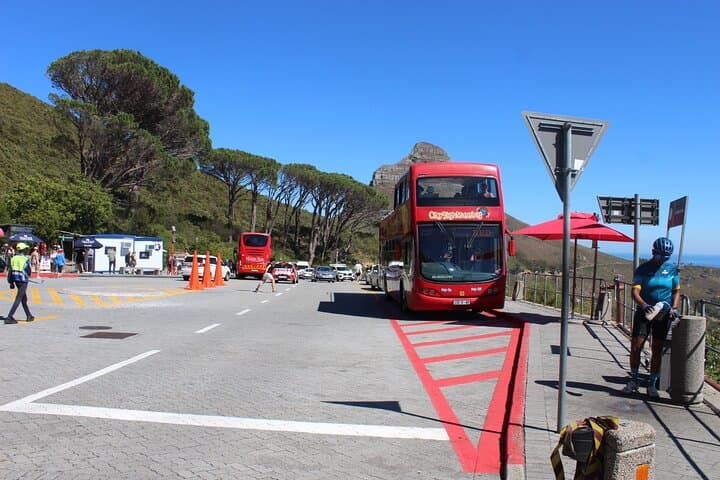
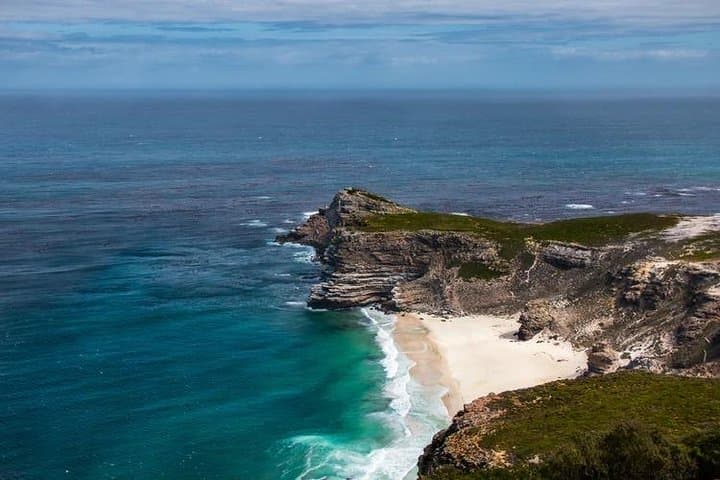


You step out of Cape Town International and the city greets you with a wind that has an agenda — the local ‘Cape Doctor’ already sorting the clouds over Table Mountain. On arrival the private transfer slips through suburbs of jacaranda and palm, delivering you to the V&A Waterfront where the harbor breathes salt and ferry horns punctuate the skyline. This is the opening chapter of the Cape Town Explorer, a five-day private tour that turns the city into a series of short, revealing journeys: the flat-topped drama of Table Mountain, the oak-shaded lanes of the Winelands, and the low-slung fishing villages along False Bay.
You step out of Cape Town International and the city greets you with a wind that has an agenda — the local ‘Cape Doctor’ already sorting the clouds over Table Mountain. On arrival the private transfer slips through suburbs of jacaranda and palm, delivering you to the V&A Waterfront where the harbor breathes salt and ferry horns punctuate the skyline. This is the opening chapter of the Cape Town Explorer, a five-day private tour that turns the city into a series of short, revealing journeys: the flat-topped drama of Table Mountain, the oak-shaded lanes of the Winelands, and the low-slung fishing villages along False Bay.
Table Mountain dominates the first full morning. Weather permitting, a cableway ride (tickets not included) rotates you above fynbos the color of dried thyme; at 1,085 meters the summit gives a wide, ocean-framed perspective — Robben Island a pale smudge offshore, Clifton’s beaches strung like beads below. Later, the city tour threads through Bo-Kaap’s painted houses and the Company’s Garden, a colonial-era green stitched into a modern metropolis.
Mid-trip, the landscape shifts. Drive 45–60 minutes inland and the air softens; vineyards replace concrete, oak avenues cool the afternoon, and estates open cellar doors to crisp Chenin Blancs and robust Pinotage. Franschhoek and Stellenbosch are both within easy reach, each village a study in Cape Dutch architecture and slow, deliberate hospitality.
Afternoons are for choice: linger at a tasting room, stroll a harbor boardwalk, or take a coastal detour to Boulders Beach to watch African penguins waddle in the surf. The itinerary leaves pockets of free time intentionally — the best discoveries are often unplanned walks, a market stall, a sudden sea view.
Practical edge: pickups from the airport and hotels are included with a 30-minute pre-departure window. The tour is wheelchair accessible and suited to a wide range of fitness levels, but weather dictates certain highlights (Table Mountain cableway runs on a day-by-day basis). Bring layers for wind and quick showers, and book Winelands tastings and the cableway in advance for peak season.
Culturally, the route touches key chapters of South Africa’s story — from Cape Town’s maritime trading past to Huguenot influences in the Winelands — while the region’s fynbos ecology quietly demands respect: stick to trails, avoid removing plant material, and choose operators who support invasive-species clearing.
For travelers who want an efficient, private overview of the Cape’s contrasts — sea cliffs to vineyards, buzzing waterfront to quiet estates — this Explorer provides a balanced itinerary that feels curated without being rushed. It’s a practical, scenic primer on why Cape Town remains both an urban harbor and a wild, weather-routing coastline.