THE ADVENTURE COLLECTIVE® · Independent discovery and booking for outdoor travel

Spend a full day driving into the Karoo from Cape Town to track the Big Five in a 4,500-hectare reserve. Long drives reward with concentrated wildlife viewing, wetland birdlife, and local conservation initiatives.
Spend a full day driving into the Karoo from Cape Town to track the Big Five in a 4,500-hectare reserve. Long drives reward with concentrated wildlife viewing, wetland birdlife, and local conservation initiatives.
You step out of an air-conditioned minibus onto a red-dusted track and the Karoo opens around you — broad skies, low scrub, and a line of distant mountains that push the horizon into focus.
Verified experiences and guided adventures in the surrounding area.
Operated by ILIOS Travel · Touws River, Western Cape
You step out of an air-conditioned minibus onto a red-dusted track and the Karoo opens around you — broad skies, low scrub, and a line of distant mountains that push the horizon into focus.
A short breakfast at the veld-side restaurant puts you on the reserve’s schedule: a two- to three-hour open-vehicle game drive across roughly 4,500 hectares of protected Karoo terrain. Geology here is blunt and ancient: folded sedimentary valleys that funnel water into natural wetlands, which in turn make this patch of semi-arid country surprisingly rich in wildlife.
Human history in this region runs from Khoikhoi and early settler routes to the modern economic role of game reserves and community projects. The nearby Eco-Synergy Centre links conservation with local employment, offering a view into contemporary cultural and economic life around Touws River.
On drives you’ll watch herds of buffalo and elephant shape the horizon, spot grazing giraffe and Burchell’s zebra, and scan for black rhino and lions that favor the shade near water. Birdlife concentrates at the wetland — look for black eagles and waterbirds.
Practicalities: departures from Cape Town involve a roughly 2.5-hour transfer each way, so expect a long day (about 10–12 hours door-to-door). Wear layered clothing, bring sun protection and binoculars, and carry water and a charged camera battery. Follow guide instructions on distance from animals and keep voices low for better sightings. The drive is accessible to most fitness levels but involves some uneven ground if you leave the vehicle at hides or viewpoints.
easy.
10–12 hours (door-to-door).
Basic mobility required; able to board and exit an open safari vehicle and walk short distances on uneven ground.
Expect approximately 2.5 hours each way depending on traffic and pickup location; the full experience is a long day (about 10–12 hours).
Yes — the reserve operates in a malaria-free region of the Western Cape, making it suitable for families and travelers avoiding anti-malarial medication.
Children are typically allowed, and infant seats can be arranged, but check age restrictions with the operator and follow safety guidance for seats and animal distance.
Bring a telephoto lens or good optical zoom, spare batteries or a power bank, and a dust cover—open vehicles can kick up dust during drives.
The reserve sits in Karoo country where pastoralism and 19th-century transport routes shaped settlement; modern private reserves now combine conservation with tourism and local employment.
The reserve runs reintroduction and anti-poaching programs and supports community employment initiatives; visitors help by obeying viewing rules and minimizing waste.
ILIOS Travel operates guided outdoor trips and adventures with an emphasis on safety, stewardship, and memorable experiences.


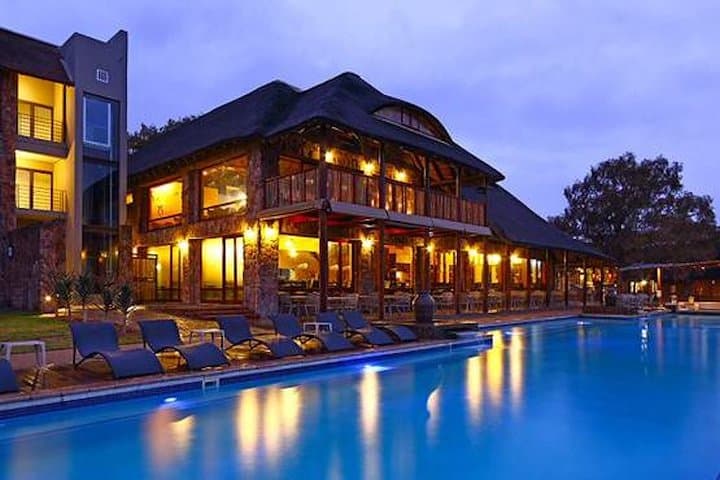

You step out of an air-conditioned minibus onto a red-dusted track and the Karoo opens around you — broad skies, low scrub, and a line of distant mountains that push the horizon into focus.
You step out of an air-conditioned minibus onto a red-dusted track and the Karoo opens around you — broad skies, low scrub, and a line of distant mountains that push the horizon into focus.
A short breakfast at the veld-side restaurant puts you on the reserve’s schedule: a two- to three-hour open-vehicle game drive across roughly 4,500 hectares of protected Karoo terrain. Geology here is blunt and ancient: folded sedimentary valleys that funnel water into natural wetlands, which in turn make this patch of semi-arid country surprisingly rich in wildlife.
Human history in this region runs from Khoikhoi and early settler routes to the modern economic role of game reserves and community projects. The nearby Eco-Synergy Centre links conservation with local employment, offering a view into contemporary cultural and economic life around Touws River.
On drives you’ll watch herds of buffalo and elephant shape the horizon, spot grazing giraffe and Burchell’s zebra, and scan for black rhino and lions that favor the shade near water. Birdlife concentrates at the wetland — look for black eagles and waterbirds.
Practicalities: departures from Cape Town involve a roughly 2.5-hour transfer each way, so expect a long day (about 10–12 hours door-to-door). Wear layered clothing, bring sun protection and binoculars, and carry water and a charged camera battery. Follow guide instructions on distance from animals and keep voices low for better sightings. The drive is accessible to most fitness levels but involves some uneven ground if you leave the vehicle at hides or viewpoints.