THE ADVENTURE COLLECTIVE® · Independent discovery and booking for outdoor travel

Ride fat‑tyre e‑bikes into Cape Point Nature Reserve, where cliff-top lighthouse views, rare fynbos and close wildlife encounters meet guided cultural stops. This 3–6 hour tour mixes cycling, short walks and museum visits into a single accessible adventure.
Ride fat‑tyre e‑bikes into Cape Point Nature Reserve, where cliff-top lighthouse views, rare fynbos and close wildlife encounters meet guided cultural stops. This 3–6 hour tour mixes cycling, short walks and museum visits into a single accessible adventure.
Salt air pushes across the ridge as you roll away from the Cape Point Farm Stall, fat-tyre e-bike humming beneath you and the ocean daring you to look further. Low scrub and protea thickets slide past; a pair of ostriches blur on the shoulder of the road. In less than an hour you’ll be cycling viewpoints that once guided wooden hulls and modern ferries alike toward safer water.
Verified experiences and guided adventures in the surrounding area.
Operated by Cape Point E-Bike Tours · Cape Town, Western Cape
Salt air pushes across the ridge as you roll away from the Cape Point Farm Stall, fat-tyre e-bike humming beneath you and the ocean daring you to look further. Low scrub and protea thickets slide past; a pair of ostriches blur on the shoulder of the road. In less than an hour you’ll be cycling viewpoints that once guided wooden hulls and modern ferries alike toward safer water.
The peninsula is geological theatre — folded sandstone cliffs dropping into the Southern Atlantic — and a corner of the Cape Floral Kingdom, the planet’s most plant-diverse biome. European navigation history threads here too: lighthouses built in the 19th century keep watch where explorers first charted the Atlantic approach.
Culturally, the route taps human stories at the Mother Africa exhibition and the old lighthouse path, while local farm stalls offer roasted coffee and homemade breads before you head into the reserve.
Practically, the tour blends riding and short walks: expect 3–6 hours total with guided stops at the Flying Dutchman funicular, the lighthouse, and cliffside lookouts. Helmets and bottled water are supplied; basic bike handling is required. Watch for baboons at trail edges and respect fenced habitats. Timing matters — mornings are calmer and late-afternoon light is spectacular, but the southeaster wind can be strong in summer.
Plan for layers, closed-toe shoes, sunscreen and a refillable bottle. The experience is both accessible and active: it lets the landscape push you forward without asking you to race it.
moderate.
3–6 hours.
Suitable for most fitness levels but you should be comfortable mounting a bike and doing short standing walks (up to 30–50 minutes total).
Yes — entrance to Cape Point Nature Reserve is included in the tour price as listed.
Children under 15 and anyone under 1.3m tall cannot ride and must ride as a passenger in a child seat; infant seats are available.
Tours can be cancelled for bad weather; the operator’s policy allows full refunds if cancelled at least 24 hours prior or when weather prevents safe operation.
Basic bicycle competence is essential — guides provide orientation and helmets, but riders should be comfortable balancing, shifting and braking on gravel and short climbs.
The cliffs and lighthouse mark centuries of maritime navigation; the current old lighthouse and funicular reflect 19th-century efforts to improve safety for ships rounding the peninsula.
The reserve protects a portion of the Cape Floral Kingdom; visitors are asked to stay on paths, avoid feeding wildlife and follow guide rules — entrance fees support conservation and local management.
Cape Point E-Bike Tours operates guided outdoor trips and adventures with an emphasis on safety, stewardship, and memorable experiences.
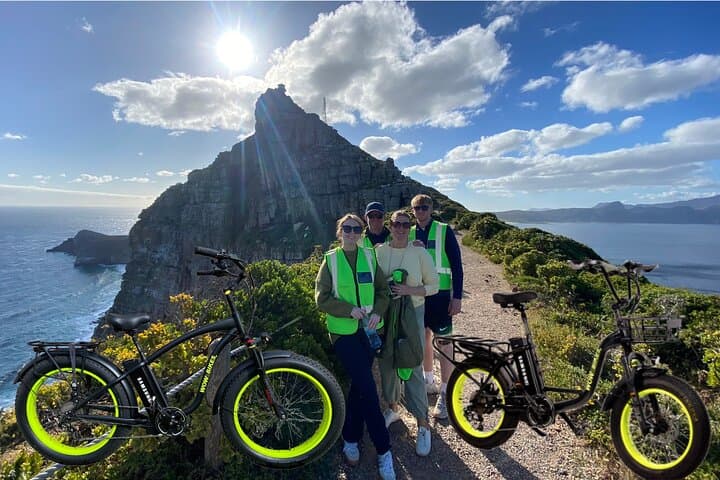
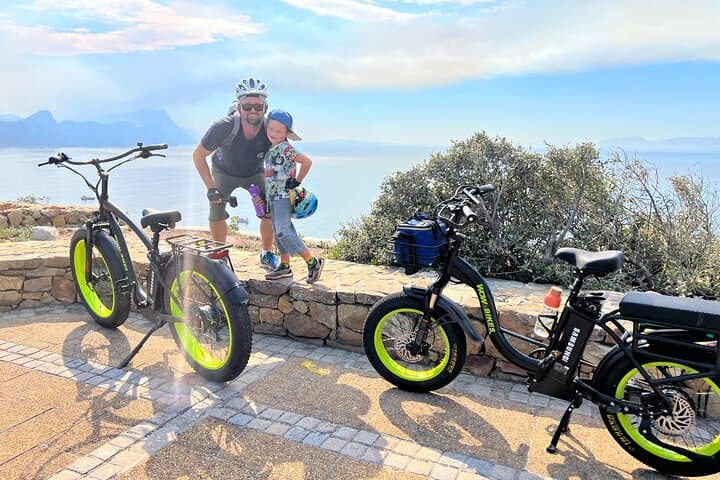
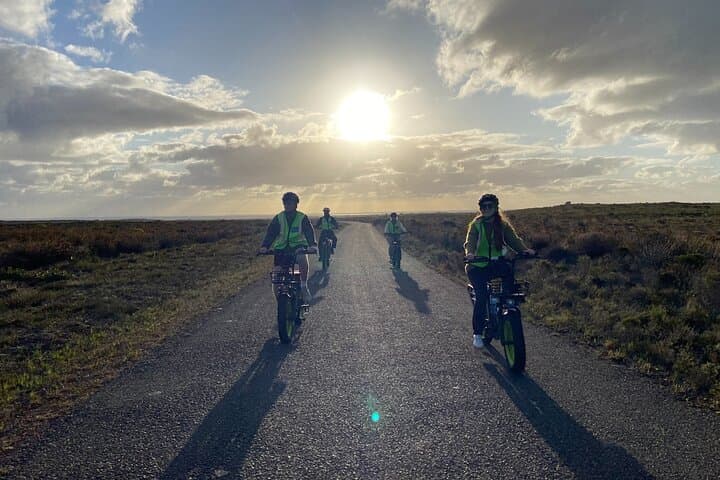
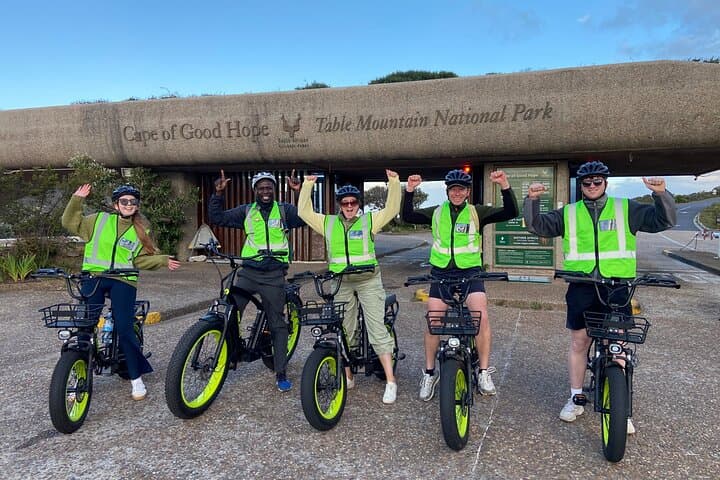
Salt air pushes across the ridge as you roll away from the Cape Point Farm Stall, fat-tyre e-bike humming beneath you and the ocean daring you to look further. Low scrub and protea thickets slide past; a pair of ostriches blur on the shoulder of the road. In less than an hour you’ll be cycling viewpoints that once guided wooden hulls and modern ferries alike toward safer water.
Salt air pushes across the ridge as you roll away from the Cape Point Farm Stall, fat-tyre e-bike humming beneath you and the ocean daring you to look further. Low scrub and protea thickets slide past; a pair of ostriches blur on the shoulder of the road. In less than an hour you’ll be cycling viewpoints that once guided wooden hulls and modern ferries alike toward safer water.
The peninsula is geological theatre — folded sandstone cliffs dropping into the Southern Atlantic — and a corner of the Cape Floral Kingdom, the planet’s most plant-diverse biome. European navigation history threads here too: lighthouses built in the 19th century keep watch where explorers first charted the Atlantic approach.
Culturally, the route taps human stories at the Mother Africa exhibition and the old lighthouse path, while local farm stalls offer roasted coffee and homemade breads before you head into the reserve.
Practically, the tour blends riding and short walks: expect 3–6 hours total with guided stops at the Flying Dutchman funicular, the lighthouse, and cliffside lookouts. Helmets and bottled water are supplied; basic bike handling is required. Watch for baboons at trail edges and respect fenced habitats. Timing matters — mornings are calmer and late-afternoon light is spectacular, but the southeaster wind can be strong in summer.
Plan for layers, closed-toe shoes, sunscreen and a refillable bottle. The experience is both accessible and active: it lets the landscape push you forward without asking you to race it.