THE ADVENTURE COLLECTIVE® · Independent discovery and booking for outdoor travel

Drive the Cape Peninsula from Cape Town to the dramatic promontory of Cape Point, then stroll the boardwalks at Boulders Beach where endangered African penguins lounge on granite boulders. This 5–6 hour day trip blends coastal geology, maritime history and close-up wildlife viewing.
Drive the Cape Peninsula from Cape Town to the dramatic promontory of Cape Point, then stroll the boardwalks at Boulders Beach where endangered African penguins lounge on granite boulders. This 5–6 hour day trip blends coastal geology, maritime history and close-up wildlife viewing.
The wind on the Cape Peninsula arrives without invitation: cool, ocean-scented and insistent, pushing you toward the cliff edge where the sea folds into itself. Drive south from Cape Town and the city’s glass and traffic fall away; past Muizenberg’s surfing surfboards and through low fynbos that smells of resin and sun, the road threads along the coast until a sign points to the Cape of Good Hope. Here the rocks are blunt and old, their exposed faces splitting light into slabs of gold and gray, and the landscape seems to dare you to keep looking.
Verified experiences and guided adventures in the surrounding area.
Operated by Explore Africa Tours (Pty) Ltd · Cape Town, Western Cape
The wind on the Cape Peninsula arrives without invitation: cool, ocean-scented and insistent, pushing you toward the cliff edge where the sea folds into itself. Drive south from Cape Town and the city’s glass and traffic fall away; past Muizenberg’s surfing surfboards and through low fynbos that smells of resin and sun, the road threads along the coast until a sign points to the Cape of Good Hope. Here the rocks are blunt and old, their exposed faces splitting light into slabs of gold and gray, and the landscape seems to dare you to keep looking.
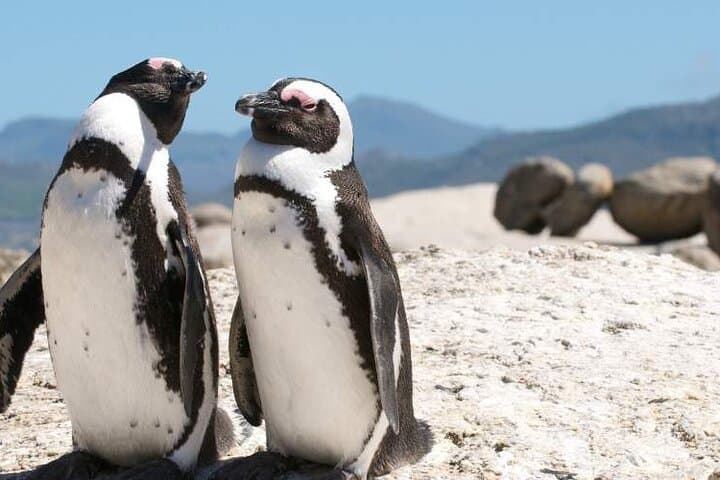
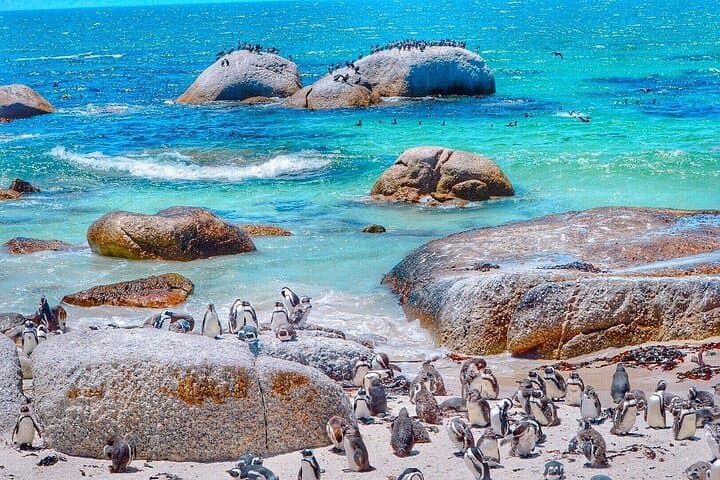
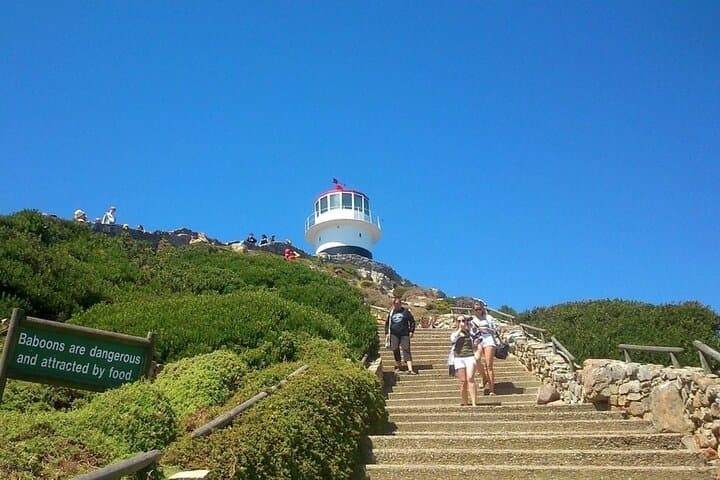
At Boulders Beach a different scene holds: squat granite islands protect a small bay where African penguins wobble between salt-scrub and surf. Boardwalks keep viewers at a respectful distance, but the birds are not shy—some will preen within arm’s reach. A short hour’s drive further south, Cape Point’s lighthouse perches above a wild coastline where the Atlantic and Indian Oceans roughhouse at the rocks. Paths wind up to viewpoints, and on clear days you can see the sweep of the peninsula curving back toward Cape Town.
The route you travel is steeped in maritime history. Portuguese navigators rounded the peninsula in the late 15th century; for centuries, these rocks meant both passage and peril for ships bound to the east. Geologically, the peninsula is where Table Mountain’s hard sandstone meets older granite and schist, producing dramatic cliffs, sheltered coves and a distinct Cape fynbos that flowers in winter and spring.
Locally, the area is shaped by small fishing villages—Simon's Town retains a naval history and a relaxed harbor culture—and by conservation efforts focused on the endangered African penguin. Rangers maintain boardwalks and viewing points to minimize disturbance, and many visitors leave the reserve with a clearer sense of how fragile this coastline is.
Practically speaking, the day trip is accessible: expect 5–6 hours for a guided tour that combines scenic drives, short walks and time at the penguin colony and Cape Point. Trails range from easy boardwalks to steeper steps up to viewpoints with a ~100–200 meter elevation change in places; most stops involve 15–90 minutes on foot. Bring sturdy shoes for rocky paths, a windproof layer and water—the southern wind can be fierce and sudden. Entrance fees to Cape Point Nature Reserve are standard; confirm whether they’re included on your booking. Keep distance from wildlife, stow snacks and secure loose items—baboons are opportunists.
Timing matters: go early to catch softer light and fewer crowds at Boulders and the lighthouse, or late afternoon for dramatic skies. Follow signage, respect closures, and you’ll come away with a day of dramatic seascapes, curious penguins and the particular hush that falls when you stand at one of Africa’s great capes.
easy.
5–6 hours.
Suitable for most fitness levels; involves short walks and some stair-steep viewpoints
The guided tour typically runs 5–6 hours, including stops at Boulders Beach and Cape Point with short walks at each site.
Some tours include the Cape Point Nature Reserve entrance fee—check your booking details; if not, bring payment for park entry.
Swimming near the penguin colony is not permitted; the boardwalks provide safe, respectful viewing without entering their habitat.
Yes—most pathways are easy and accessible, though some viewpoints require climbing stairs; assess mobility for steeper sections.
Boulders Beach boardwalks offer close but controlled views; penguins often come near the path, but maintain distance to avoid stress.
Baboons can be bold and take food or belongings—do not feed them, keep car doors closed and store food securely.
The Cape Peninsula was first rounded by Portuguese explorers in the late 15th century and later became a key waypoint on trade routes; shipwrecks and lighthouses mark its maritime past.
Cape penguin populations are vulnerable; stay on boardwalks, avoid feeding wildlife and support local conservation fees that fund habitat protection.
Explore Africa Tours (Pty) Ltd operates guided outdoor trips and adventures with an emphasis on safety, stewardship, and memorable experiences.
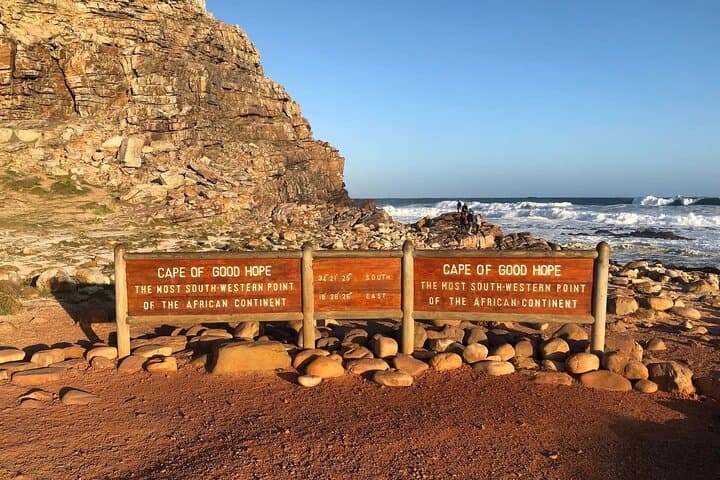
The wind on the Cape Peninsula arrives without invitation: cool, ocean-scented and insistent, pushing you toward the cliff edge where the sea folds into itself. Drive south from Cape Town and the city’s glass and traffic fall away; past Muizenberg’s surfing surfboards and through low fynbos that smells of resin and sun, the road threads along the coast until a sign points to the Cape of Good Hope. Here the rocks are blunt and old, their exposed faces splitting light into slabs of gold and gray, and the landscape seems to dare you to keep looking.
The wind on the Cape Peninsula arrives without invitation: cool, ocean-scented and insistent, pushing you toward the cliff edge where the sea folds into itself. Drive south from Cape Town and the city’s glass and traffic fall away; past Muizenberg’s surfing surfboards and through low fynbos that smells of resin and sun, the road threads along the coast until a sign points to the Cape of Good Hope. Here the rocks are blunt and old, their exposed faces splitting light into slabs of gold and gray, and the landscape seems to dare you to keep looking.
At Boulders Beach a different scene holds: squat granite islands protect a small bay where African penguins wobble between salt-scrub and surf. Boardwalks keep viewers at a respectful distance, but the birds are not shy—some will preen within arm’s reach. A short hour’s drive further south, Cape Point’s lighthouse perches above a wild coastline where the Atlantic and Indian Oceans roughhouse at the rocks. Paths wind up to viewpoints, and on clear days you can see the sweep of the peninsula curving back toward Cape Town.
The route you travel is steeped in maritime history. Portuguese navigators rounded the peninsula in the late 15th century; for centuries, these rocks meant both passage and peril for ships bound to the east. Geologically, the peninsula is where Table Mountain’s hard sandstone meets older granite and schist, producing dramatic cliffs, sheltered coves and a distinct Cape fynbos that flowers in winter and spring.
Locally, the area is shaped by small fishing villages—Simon's Town retains a naval history and a relaxed harbor culture—and by conservation efforts focused on the endangered African penguin. Rangers maintain boardwalks and viewing points to minimize disturbance, and many visitors leave the reserve with a clearer sense of how fragile this coastline is.
Practically speaking, the day trip is accessible: expect 5–6 hours for a guided tour that combines scenic drives, short walks and time at the penguin colony and Cape Point. Trails range from easy boardwalks to steeper steps up to viewpoints with a ~100–200 meter elevation change in places; most stops involve 15–90 minutes on foot. Bring sturdy shoes for rocky paths, a windproof layer and water—the southern wind can be fierce and sudden. Entrance fees to Cape Point Nature Reserve are standard; confirm whether they’re included on your booking. Keep distance from wildlife, stow snacks and secure loose items—baboons are opportunists.
Timing matters: go early to catch softer light and fewer crowds at Boulders and the lighthouse, or late afternoon for dramatic skies. Follow signage, respect closures, and you’ll come away with a day of dramatic seascapes, curious penguins and the particular hush that falls when you stand at one of Africa’s great capes.