THE ADVENTURE COLLECTIVE® · Independent discovery and booking for outdoor travel

Drive Chapman's Peak, stand where cliffs meet the Atlantic at Cape Point, then watch African penguins fumble across pink sand at Boulders Beach. This guided full-day tour from Cape Town blends sweeping views, accessible trails, and wildlife viewing with conservation-minded interpretation.
Drive Chapman's Peak, stand where cliffs meet the Atlantic at Cape Point, then watch African penguins fumble across pink sand at Boulders Beach. This guided full-day tour from Cape Town blends sweeping views, accessible trails, and wildlife viewing with conservation-minded interpretation.
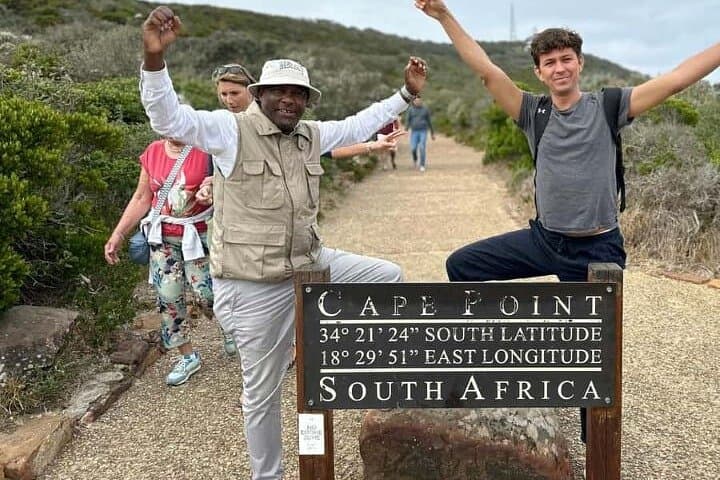
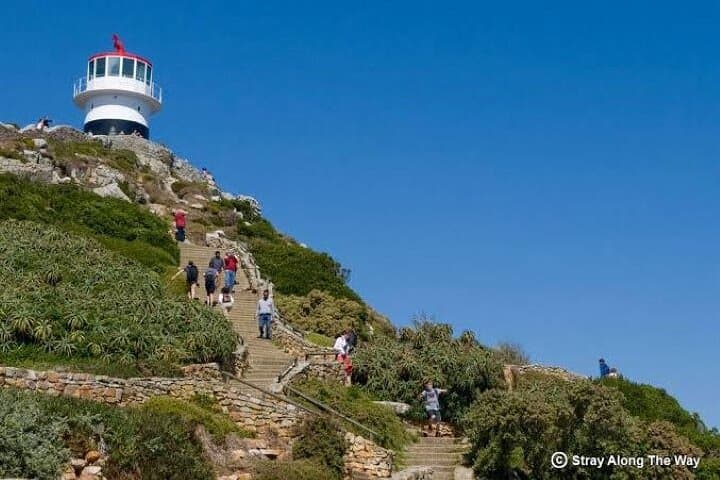
You step out of the minivan at the rim of the peninsula and the ocean takes the lead: a wind-scoured Atlantic that seems to push at the cliffs, forcing foam into the air like punctuation. The road to Cape Point slices through fynbos—low, aromatic scrub that smells of sage and sun—then opens to raw rock and sky. Your guide points to a lighthouse on the headland; beyond it, the ocean rolls away in every direction, daring you to imagine where the map ends.
Verified experiences and guided adventures in the surrounding area.
Operated by Karibusouth Tours · Cape Town, Western Cape
You step out of the minivan at the rim of the peninsula and the ocean takes the lead: a wind-scoured Atlantic that seems to push at the cliffs, forcing foam into the air like punctuation. The road to Cape Point slices through fynbos—low, aromatic scrub that smells of sage and sun—then opens to raw rock and sky. Your guide points to a lighthouse on the headland; beyond it, the ocean rolls away in every direction, daring you to imagine where the map ends.
This full-day loop stitches together two of South Africa’s most cinematic coastal experiences. Cape Point, where the Cape Peninsula drops into the Southern Atlantic, tells a geological story of ancient folds and erosion—granite and Table Mountain sandstone carved by wind and swell. It’s also a human story: Portuguese navigators in the 15th century, followed by centuries of shipwrecks, led to successive lighthouses and the ruggedito that made sailors wary. Chapman's Peak Drive, the ribbon of road between Noordhoek and Hout Bay, offers one of the region’s most dramatic vantage points and a sharp reminder of how road-building has shaped access to these wild places.
Later the van eases into Simon’s Town and the sheltered cove of Boulders Beach, where an odd little colony holds court. African penguins shuffle on pink feet between granite boulders and a human-built boardwalk, unconcerned by cameras but deserving of distance. The colony’s origin—a couple of breeding pairs in the 1980s—has grown into a must-see wildlife experience, yet it remains fragile; penguin numbers are down across the coast, and management efforts here aim to balance access with conservation.
Practicalities make this a doable day trip: expect a 5–6 hour window of guided exploration, with photo stops at Chapman's Peak and time to walk the Cape Point trails and the Boulders boardwalks. The terrain is a mix of paved viewpoints, short gravel paths, and low-gradient stairs—comfortable but slippery when wet. Bring layered clothing; the peninsula can flip from sun to spray in minutes. Sun, wind, and salt are the elements here—sunscreen, windproof shell, and a secure camera are essential.
For timing, morning departures maximize soft light at Chapman's Peak and reduce crowds at the penguin colony. Guides often include local context—shipwreck lore, the role of SANParks, and sand-induced microclimates—so ask about seasonal wildlife like whales offshore in winter. Respect signage at Boulders: the boardwalk protects nesting areas and keeps interactions safe. With a modest fitness level, a curiosity for coastal geology and wildlife, and basic day-hike gear, this curated tour is an efficient way to experience the peninsula’s dramatic cliffs, cultural footnotes, and up-close encounters with one of the world’s most charismatic seabirds.
easy.
5–6 hours.
Suitable for travelers with basic mobility; involves short walks on paved and gravel paths, and some steps.
The tour runs about 5–6 hours, usually departing in the morning to maximize light and reduce crowds; exact pickup times are confirmed after booking.
No—boardwalks and viewing platforms keep visitors at a safe distance to protect penguins and their nests while still offering excellent photographic opportunities.
Yes—infants must sit on an adult’s lap as stated in policies; most paths are family-friendly but supervise children near edges and water.
Dress in layers with a windproof outer layer and comfortable walking shoes; bring sun protection year-round and a waterproof layer in winter months.
Admission to Cape Point (SANParks) is typically included for the portion listed in the itinerary; check confirmation details for any site fees covered by the operator.
For a full refund cancel at least 24 hours before departure; cancellations within 24 hours are non-refundable per the operator’s policy.
The Cape Peninsula has maritime history dating to Bartolomeu Dias in 1488 and centuries of shipwrecks; the current Cape Point lighthouse marks that evolving relationship between sea and navigation.
African penguins are endangered; follow boardwalks, avoid feeding or touching wildlife, and support local conservation fees and SANParks initiatives to minimize visitor impact.
Karibusouth Tours operates guided outdoor trips and adventures with an emphasis on safety, stewardship, and memorable experiences.

You step out of the minivan at the rim of the peninsula and the ocean takes the lead: a wind-scoured Atlantic that seems to push at the cliffs, forcing foam into the air like punctuation. The road to Cape Point slices through fynbos—low, aromatic scrub that smells of sage and sun—then opens to raw rock and sky. Your guide points to a lighthouse on the headland; beyond it, the ocean rolls away in every direction, daring you to imagine where the map ends.
You step out of the minivan at the rim of the peninsula and the ocean takes the lead: a wind-scoured Atlantic that seems to push at the cliffs, forcing foam into the air like punctuation. The road to Cape Point slices through fynbos—low, aromatic scrub that smells of sage and sun—then opens to raw rock and sky. Your guide points to a lighthouse on the headland; beyond it, the ocean rolls away in every direction, daring you to imagine where the map ends.
This full-day loop stitches together two of South Africa’s most cinematic coastal experiences. Cape Point, where the Cape Peninsula drops into the Southern Atlantic, tells a geological story of ancient folds and erosion—granite and Table Mountain sandstone carved by wind and swell. It’s also a human story: Portuguese navigators in the 15th century, followed by centuries of shipwrecks, led to successive lighthouses and the ruggedito that made sailors wary. Chapman's Peak Drive, the ribbon of road between Noordhoek and Hout Bay, offers one of the region’s most dramatic vantage points and a sharp reminder of how road-building has shaped access to these wild places.
Later the van eases into Simon’s Town and the sheltered cove of Boulders Beach, where an odd little colony holds court. African penguins shuffle on pink feet between granite boulders and a human-built boardwalk, unconcerned by cameras but deserving of distance. The colony’s origin—a couple of breeding pairs in the 1980s—has grown into a must-see wildlife experience, yet it remains fragile; penguin numbers are down across the coast, and management efforts here aim to balance access with conservation.
Practicalities make this a doable day trip: expect a 5–6 hour window of guided exploration, with photo stops at Chapman's Peak and time to walk the Cape Point trails and the Boulders boardwalks. The terrain is a mix of paved viewpoints, short gravel paths, and low-gradient stairs—comfortable but slippery when wet. Bring layered clothing; the peninsula can flip from sun to spray in minutes. Sun, wind, and salt are the elements here—sunscreen, windproof shell, and a secure camera are essential.
For timing, morning departures maximize soft light at Chapman's Peak and reduce crowds at the penguin colony. Guides often include local context—shipwreck lore, the role of SANParks, and sand-induced microclimates—so ask about seasonal wildlife like whales offshore in winter. Respect signage at Boulders: the boardwalk protects nesting areas and keeps interactions safe. With a modest fitness level, a curiosity for coastal geology and wildlife, and basic day-hike gear, this curated tour is an efficient way to experience the peninsula’s dramatic cliffs, cultural footnotes, and up-close encounters with one of the world’s most charismatic seabirds.