THE ADVENTURE COLLECTIVE® · Independent discovery and booking for outdoor travel

Spend a day on the Cape Peninsula watching African penguins at Boulders Beach and standing on the windswept headlands of Cape Point. This full-day tour pairs wildlife viewing with a dose of maritime history and an optional coastal hike to the Cape of Good Hope.
Spend a day on the Cape Peninsula watching African penguins at Boulders Beach and standing on the windswept headlands of Cape Point. This full-day tour pairs wildlife viewing with a dose of maritime history and an optional coastal hike to the Cape of Good Hope.
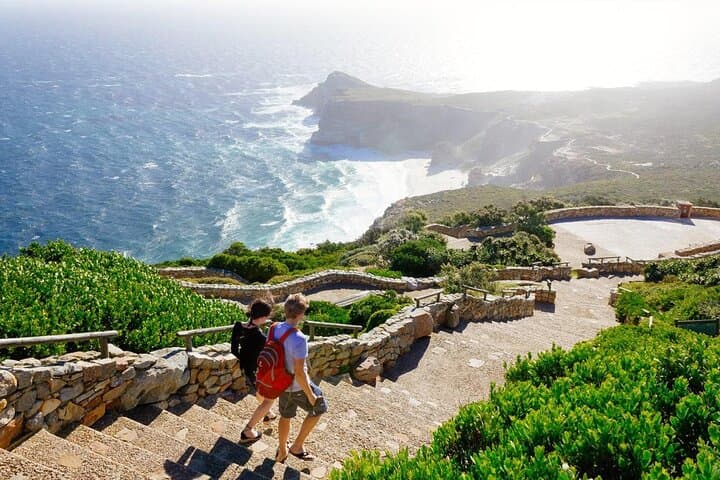
You step off the coach into wind that feels like it’s been practising its dramatic entrances for millennia. The air tastes of salt and stone; waves gouge at a shoreline where cliffs throw their shadows a mile out into the Atlantic. This is Cape Point — where tourist maps and local myth point to the romantic meeting of the Atlantic and Indian oceans — and later, a few hours down the road, you’ll watch tuxedoed figures bob among granite boulders at Boulders Beach.
Verified experiences and guided adventures in the surrounding area.
Operated by City Sightseeing South Africa · Cape Town, Western Cape
You step off the coach into wind that feels like it’s been practising its dramatic entrances for millennia. The air tastes of salt and stone; waves gouge at a shoreline where cliffs throw their shadows a mile out into the Atlantic. This is Cape Point — where tourist maps and local myth point to the romantic meeting of the Atlantic and Indian oceans — and later, a few hours down the road, you’ll watch tuxedoed figures bob among granite boulders at Boulders Beach.
The day blends two distinct Cape Peninsula stories. Boulders is recent on a geological timescale: rounded granite born of ancient magma, cracked and smoothed by Cape storms into the sheltered coves penguins favor. The African penguin colony here — discovered by residents in the early 1980s — has become a symbol of both resilience and fragility; these birds are endangered and the boardwalk routes exist to protect them while you watch.
Cape Point’s history is older and louder. Mariners once feared its fog and currents; the original 1860 lighthouse, built high above the headland, was later decommissioned when keepers realized its height left it lost in cloud during crucial moments. The new lighthouse sits lower, a practical response to the peninsula’s capricious weather. Walk the clifftop paths and you’re traversing granite ridgelines hewn by tectonic stresses and cut by ocean that never stops testing the shore.
Culturally, the route from Cape Town to Simon’s Town and on to Cape Point passes fishing villages and naval stations that speak to the region’s maritime identity. Drivers cross Ou Kaapse Weg — the mountain pass that opens a cinematic sweep back toward False Bay — and you’ll learn the local quips and shipwreck lore from an English-speaking guide who read these coasts like a map of stories.
Practicalities anchor the romance. The tour includes about an hour at the penguin viewing boardwalks and roughly two hours to explore Cape Point Nature Reserve, with an optional guided coastal hike to the Cape of Good Hope (about 40 minutes each way; medium fitness and good walking shoes required). Cape Point entrance is payable on the day unless you selected the option that covers the park fee; the funicular to the lighthouse is an extra cost. The coach offers USB charging and free Wi‑Fi for the drive back.
To make this day work: wear sturdy shoes, bring layered windproof clothing, sunscreen, and a refillable water bottle. Binoculars make penguin viewing more intimate without crossing the rope. Respect the boardwalk rules — don’t feed, touch, or crowd the birds — and plan for changing light and weather; the wind can turn gentle into bracing in under an hour. Finish the loop through Kommetjie and Scarborough and you’ll return to Cape Town with salt in your hair, a camera full of cliff shots, and the quieted satisfaction of having spent a day at one of the world’s most dramatic coastal edges.
moderate.
8 hours.
Moderate — you should be comfortable walking up to 2–3 miles with some elevation and uneven terrain for the optional hike.
Cape Point entry is payable on the day unless you selected the tour option that includes the park fee; South African and SADC citizens may have discounted rates with ID.
You’ll have about one hour at the Boulders Beach penguin colony, enough time for the boardwalks and photos while respecting the colony’s space.
Yes — the funicular is available at Cape Point but is an optional extra paid on site; you can also walk the paths to the old lighthouse.
The optional guided hike from Cape Point to the Cape of Good Hope takes roughly 40 minutes with uneven, sometimes sandy sections; medium fitness and proper shoes are recommended.
Yes — the reserve is home to species such as ostrich, bontebok or eland sightings occasionally, and diverse seabirds; sightings depend on season and luck.
There are restroom facilities and cafes at Cape Point and in nearby towns where you can purchase lunch and refreshments at your own expense.
The Cape Peninsula has long been a maritime crossroads; the area’s old lighthouse (commissioned in 1860) and numerous shipwrecks reflect centuries of seafaring challenge and navigation innovation.
Boulders Beach is managed with strict boardwalk routes and breeding protections because African penguin populations are endangered; visitors are asked to minimize disturbance and avoid feeding wildlife.
City Sightseeing South Africa operates guided outdoor trips and adventures with an emphasis on safety, stewardship, and memorable experiences.
You step off the coach into wind that feels like it’s been practising its dramatic entrances for millennia. The air tastes of salt and stone; waves gouge at a shoreline where cliffs throw their shadows a mile out into the Atlantic. This is Cape Point — where tourist maps and local myth point to the romantic meeting of the Atlantic and Indian oceans — and later, a few hours down the road, you’ll watch tuxedoed figures bob among granite boulders at Boulders Beach.
You step off the coach into wind that feels like it’s been practising its dramatic entrances for millennia. The air tastes of salt and stone; waves gouge at a shoreline where cliffs throw their shadows a mile out into the Atlantic. This is Cape Point — where tourist maps and local myth point to the romantic meeting of the Atlantic and Indian oceans — and later, a few hours down the road, you’ll watch tuxedoed figures bob among granite boulders at Boulders Beach.
The day blends two distinct Cape Peninsula stories. Boulders is recent on a geological timescale: rounded granite born of ancient magma, cracked and smoothed by Cape storms into the sheltered coves penguins favor. The African penguin colony here — discovered by residents in the early 1980s — has become a symbol of both resilience and fragility; these birds are endangered and the boardwalk routes exist to protect them while you watch.
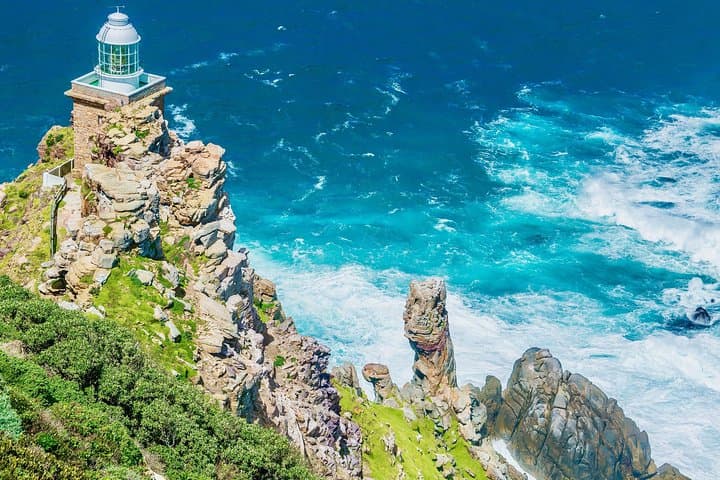
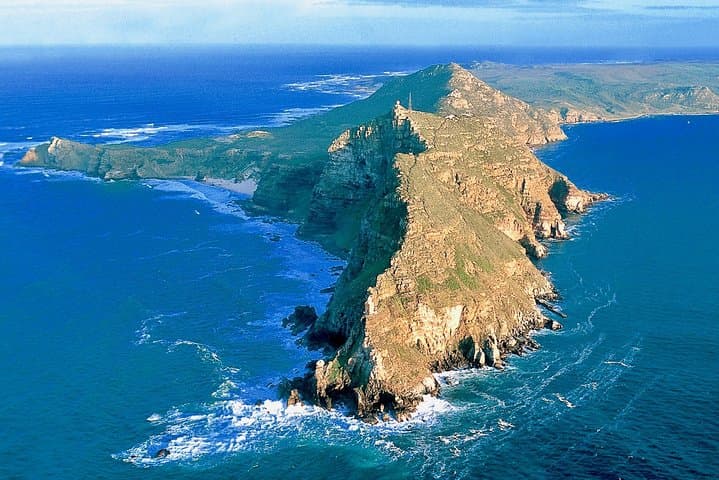
Cape Point’s history is older and louder. Mariners once feared its fog and currents; the original 1860 lighthouse, built high above the headland, was later decommissioned when keepers realized its height left it lost in cloud during crucial moments. The new lighthouse sits lower, a practical response to the peninsula’s capricious weather. Walk the clifftop paths and you’re traversing granite ridgelines hewn by tectonic stresses and cut by ocean that never stops testing the shore.
Culturally, the route from Cape Town to Simon’s Town and on to Cape Point passes fishing villages and naval stations that speak to the region’s maritime identity. Drivers cross Ou Kaapse Weg — the mountain pass that opens a cinematic sweep back toward False Bay — and you’ll learn the local quips and shipwreck lore from an English-speaking guide who read these coasts like a map of stories.
Practicalities anchor the romance. The tour includes about an hour at the penguin viewing boardwalks and roughly two hours to explore Cape Point Nature Reserve, with an optional guided coastal hike to the Cape of Good Hope (about 40 minutes each way; medium fitness and good walking shoes required). Cape Point entrance is payable on the day unless you selected the option that covers the park fee; the funicular to the lighthouse is an extra cost. The coach offers USB charging and free Wi‑Fi for the drive back.
To make this day work: wear sturdy shoes, bring layered windproof clothing, sunscreen, and a refillable water bottle. Binoculars make penguin viewing more intimate without crossing the rope. Respect the boardwalk rules — don’t feed, touch, or crowd the birds — and plan for changing light and weather; the wind can turn gentle into bracing in under an hour. Finish the loop through Kommetjie and Scarborough and you’ll return to Cape Town with salt in your hair, a camera full of cliff shots, and the quieted satisfaction of having spent a day at one of the world’s most dramatic coastal edges.