THE ADVENTURE COLLECTIVE® · Independent discovery and booking for outdoor travel

A private full-day tour that stitches Chapman's Peak, Cape Point and the penguin colony at Boulders Beach into one sweeping coastal day. Expect dramatic cliffs, easy hikes to the lighthouse and close-but-respectful penguin viewing—perfect for travelers who want the peninsula’s highlights without the logistics headache.
A private full-day tour that stitches Chapman's Peak, Cape Point and the penguin colony at Boulders Beach into one sweeping coastal day. Expect dramatic cliffs, easy hikes to the lighthouse and close-but-respectful penguin viewing—perfect for travelers who want the peninsula’s highlights without the logistics headache.
The minivan eases out of Cape Town before sunrise, headlights picking out the Atlantic’s dark margin as the city falls away. Conversation thins; windows frame a coastline that keeps changing its story—one minute blue and calm, the next wind-scoured and white with spray. By the time the road unfurls into Chapman's Peak Drive, the cliffs have taken on a granite umlaut, dropping to the sea with a deliberate, uncompromising edge. Here the ocean seems to dare the land to hold steady.
Verified experiences and guided adventures in the surrounding area.
Operated by Cape Prosperous Private Tours · Cape Town, Western Cape
The minivan eases out of Cape Town before sunrise, headlights picking out the Atlantic’s dark margin as the city falls away. Conversation thins; windows frame a coastline that keeps changing its story—one minute blue and calm, the next wind-scoured and white with spray. By the time the road unfurls into Chapman's Peak Drive, the cliffs have taken on a granite umlaut, dropping to the sea with a deliberate, uncompromising edge. Here the ocean seems to dare the land to hold steady.
This private full-day tour threads together the Cape Peninsula’s big moments: a quick pass through Bo-Kaap’s colorful streets, the glamour of Clifton and Camps Bay, and then the cinematic sweep of Hout Bay and Chapman's Peak. Geologically, the peninsula is an exposed block of Table Mountain Sandstone—hard, layered rock sculpted by wind and wave—so expect sheer faces, massive boulders and bays that feel hewn by patience.
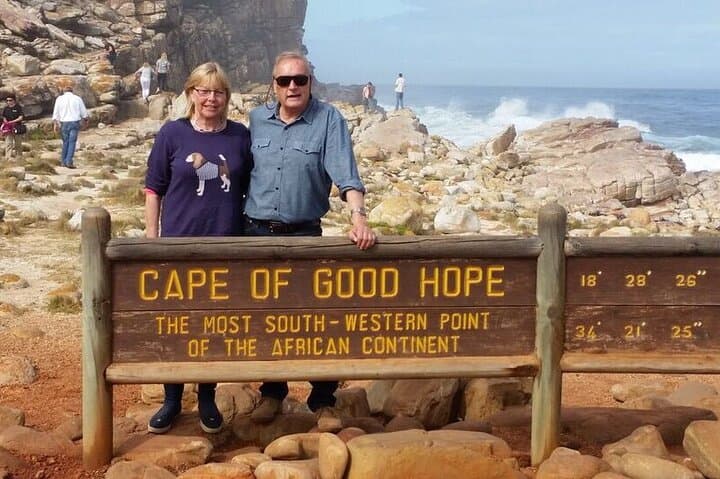
At Cape Point and the Cape of Good Hope, history sits beside geography. Portuguese sailors first rounded these capes in the 15th century; their charts turned what sailors called the Cape of Storms into a navigational milestone. The reserve also rests inside the Cape Floral Kingdom, an ecological pocket with unusually high plant diversity; fynbos shrubs stitch the slopes and feed a small, specialized fauna.
The day balances driving and short walks. From the Cape Point lower car park, the steep path to the old lighthouse is roughly 0.9 km with an elevation gain of about 80–100 meters—paved boardwalks and stone steps make it straightforward but brisk. Trails inside the reserve vary from flat sandy stretches to wind-exposed ridgelines. At Boulders Beach visitors walk boardwalks among a colony of African penguins—around 2,000 birds in the broader area—where etiquette and distance rules protect these endangered residents.
Practicalities matter: the tour runs 7–9 hours and includes vehicle pickup, bottled water and a local guide, but reserve admission, the funicular and boat trips to Duiker Island are optional extras. Wear sturdy shoes for uneven paths, layer for wind, and carry a refillable water bottle. Respect wildlife rules; penguins are curious but human contact harms them and can attract fines.
For photographers, Chapman's Peak and the lighthouse ridge offer sweeping angles; Boulders Beach rewards low shots at eye level with the birds. Timing helps—mornings and late afternoons reduce glare and wind, and midweek visits usually mean fewer people.
This route is both a coastal scenic drive and a hands-on nature day: it’s as much about the slow process of watching shorelines scare up cliffs as it is about ticking iconic sites off a list. For travelers wanting Cape drama with accessible walking and expert local context, it’s a compact, revealing introduction to the peninsula.
moderate.
7–9 hours.
Suitable for travelers with average fitness; there are short, steep walks and standing on boardwalks, but no technical climbs.
Entrance to Table Mountain National Park/Cape Point reserve is not included; your guide can advise current fees and payment options.
From the lower car park it’s about 0.9 km with roughly 80–100 meters of elevation gain on paved steps and boardwalks—expect 15–30 minutes each way depending on pace.
You can observe African penguins from boardwalks that keep a safe distance; touching or feeding the birds is prohibited to protect them.
Bottled water is included; lunch stops are typically at Hout Bay or the Cape Point visitor center and are at your own expense.
Yes—this tour notes stroller accessibility, but some trails have steps; infant seats are available on request.
Popular add-ons include the funicular at Cape Point, a boat trip to Duiker Island to see seal colonies, or souvenirs/seafood at Hout Bay—budget accordingly.
European sailors began rounding the Cape in the 15th century; the area’s capes became critical navigation markers on the route to the East Indies.
The Cape Floral Kingdom is globally significant and fragile; visitor fees and boardwalks help fund habitat protection and reduce disturbance to wildlife.
Cape Prosperous Private Tours operates guided outdoor trips and adventures with an emphasis on safety, stewardship, and memorable experiences.
The minivan eases out of Cape Town before sunrise, headlights picking out the Atlantic’s dark margin as the city falls away. Conversation thins; windows frame a coastline that keeps changing its story—one minute blue and calm, the next wind-scoured and white with spray. By the time the road unfurls into Chapman's Peak Drive, the cliffs have taken on a granite umlaut, dropping to the sea with a deliberate, uncompromising edge. Here the ocean seems to dare the land to hold steady.
The minivan eases out of Cape Town before sunrise, headlights picking out the Atlantic’s dark margin as the city falls away. Conversation thins; windows frame a coastline that keeps changing its story—one minute blue and calm, the next wind-scoured and white with spray. By the time the road unfurls into Chapman's Peak Drive, the cliffs have taken on a granite umlaut, dropping to the sea with a deliberate, uncompromising edge. Here the ocean seems to dare the land to hold steady.
This private full-day tour threads together the Cape Peninsula’s big moments: a quick pass through Bo-Kaap’s colorful streets, the glamour of Clifton and Camps Bay, and then the cinematic sweep of Hout Bay and Chapman's Peak. Geologically, the peninsula is an exposed block of Table Mountain Sandstone—hard, layered rock sculpted by wind and wave—so expect sheer faces, massive boulders and bays that feel hewn by patience.
At Cape Point and the Cape of Good Hope, history sits beside geography. Portuguese sailors first rounded these capes in the 15th century; their charts turned what sailors called the Cape of Storms into a navigational milestone. The reserve also rests inside the Cape Floral Kingdom, an ecological pocket with unusually high plant diversity; fynbos shrubs stitch the slopes and feed a small, specialized fauna.
The day balances driving and short walks. From the Cape Point lower car park, the steep path to the old lighthouse is roughly 0.9 km with an elevation gain of about 80–100 meters—paved boardwalks and stone steps make it straightforward but brisk. Trails inside the reserve vary from flat sandy stretches to wind-exposed ridgelines. At Boulders Beach visitors walk boardwalks among a colony of African penguins—around 2,000 birds in the broader area—where etiquette and distance rules protect these endangered residents.
Practicalities matter: the tour runs 7–9 hours and includes vehicle pickup, bottled water and a local guide, but reserve admission, the funicular and boat trips to Duiker Island are optional extras. Wear sturdy shoes for uneven paths, layer for wind, and carry a refillable water bottle. Respect wildlife rules; penguins are curious but human contact harms them and can attract fines.
For photographers, Chapman's Peak and the lighthouse ridge offer sweeping angles; Boulders Beach rewards low shots at eye level with the birds. Timing helps—mornings and late afternoons reduce glare and wind, and midweek visits usually mean fewer people.
This route is both a coastal scenic drive and a hands-on nature day: it’s as much about the slow process of watching shorelines scare up cliffs as it is about ticking iconic sites off a list. For travelers wanting Cape drama with accessible walking and expert local context, it’s a compact, revealing introduction to the peninsula.