THE ADVENTURE COLLECTIVE® · Independent discovery and booking for outdoor travel

Drive Chapman’s Peak, watch seals on Duiker Island, photograph African penguins at Boulders Beach and finish with a guided wine tasting in historic Constantia — all in a single, scenic day on the Cape Peninsula. Practical route notes, wildlife timing and what to pack for this 8–10 hour shared tour.
Drive Chapman’s Peak, watch seals on Duiker Island, photograph African penguins at Boulders Beach and finish with a guided wine tasting in historic Constantia — all in a single, scenic day on the Cape Peninsula. Practical route notes, wildlife timing and what to pack for this 8–10 hour shared tour.
The bus peels away from Cape Town and the Atlantic immediately presses against the window — a living, cold sheet that seems intent on testing anyone who thinks the sea is tame. The first stretch is Chapman’s Peak Drive, a carved ribbon of asphalt clinging to vertical rock; at about 9 km it twists through 114 curves and climbs toward 593 m above sea level, offering moments where the ocean reaches up and dares you to look away.
Verified experiences and guided adventures in the surrounding area.
Operated by african macaw dmc and Safaris · Cape Town, Western Cape
The bus peels away from Cape Town and the Atlantic immediately presses against the window — a living, cold sheet that seems intent on testing anyone who thinks the sea is tame. The first stretch is Chapman’s Peak Drive, a carved ribbon of asphalt clinging to vertical rock; at about 9 km it twists through 114 curves and climbs toward 593 m above sea level, offering moments where the ocean reaches up and dares you to look away.
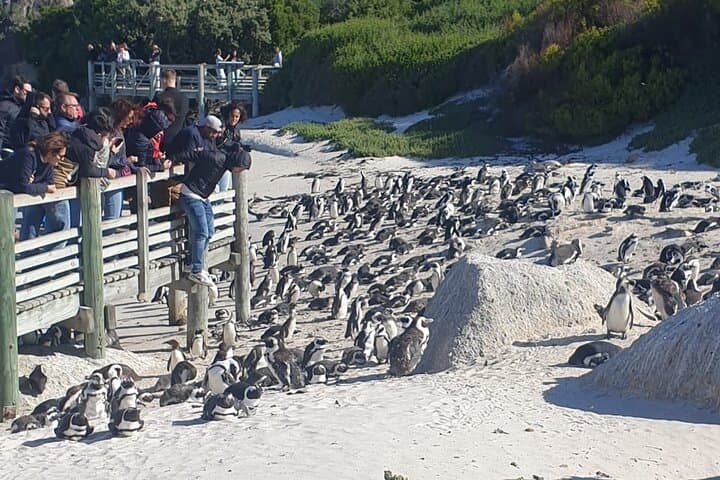
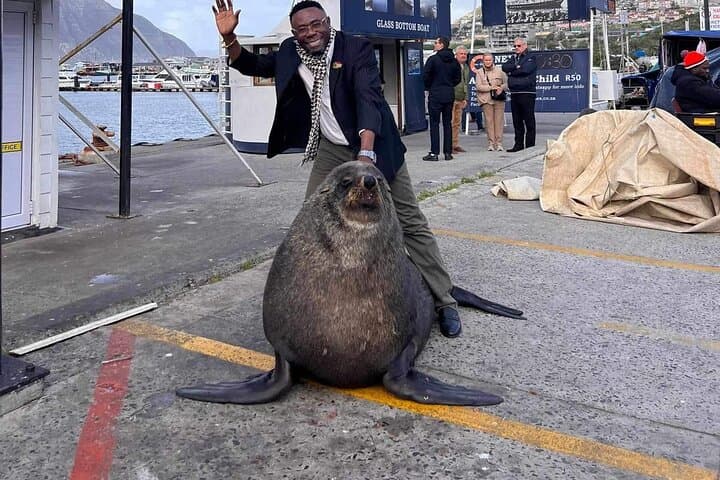
By late morning you’re watching a seal colony on Duiker Island from an optional zodiac — a spray of arched bodies and curious eyes. The guide points out how the Benguela current pushes nutrients up these shores, feeding seals, fish and the diving penguins that will become the day’s gentle stars. At Boulders Beach, roughly 3,000 African penguins shuffle across pale sand; these flightless swimmers, descendants of ancestors that crossed from South America, waddle among sheltered granite boulders and will ignore most human attention if you give them space.
The route threads natural history with human history. The Cape Point Nature Reserve is geology written in hard stone — rugged headlands carved by millennia of waves, where the warm Agulhas and cold Benguela currents flirt and clash. Simon van der Stel’s Constantia Valley, planted with vines in the 17th century, provides a softer counterpoint: centuries of winemaking tucked into oak-shaded lanes.
Culture here is a mix of seafaring legacy and Cape Town’s layered past. Simon’s Town still smells faintly of salt and diesel, a naval town with British-era buildings and harborside fish restaurants. The winery tasting at Constantia is more than a palate exercise — it’s a quiet way to read the soil and history in each glass.
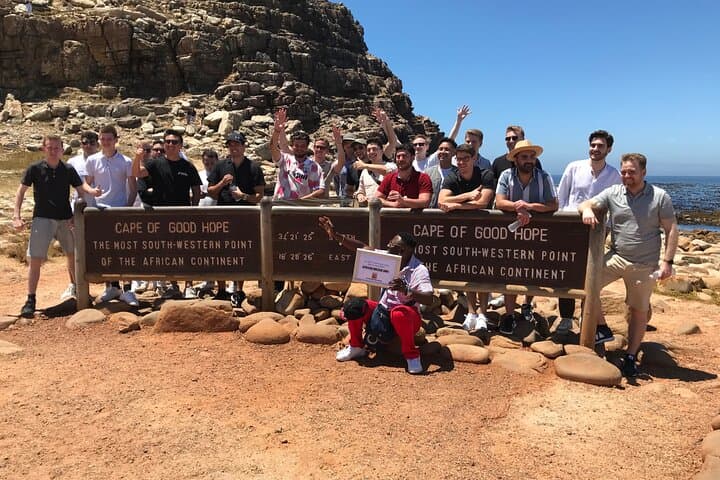
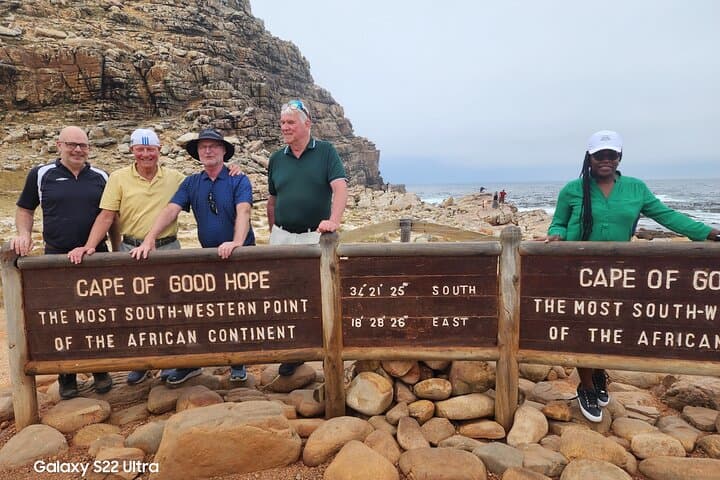
Practicalities: expect a full day — 8–10 hours on a shared tour with hotel pickup around 08:00. The itinerary covers Chapman’s Peak, Hout Bay, Cape of Good Hope and Cape Point, a boat option to Seal Island, Boulders Beach penguin reserve and a guided wine tasting in Constantia. Boulders penguin access and Chapman’s Peak drive entrance are included; the funicular at Cape Point and optional zodiac trips are paid locally. The reserve terrain includes short paved viewpoints and uneven coastal paths — bring sturdy shoes and a windproof layer. Hydrate, keep sunscreen handy (the wind can disguise strong UV), and carry binoculars for bird and marine spotting.
Timing matters: mornings and late afternoons deliver quieter wildlife viewing and softer light for photos. The tour accommodates most fitness levels and is wheelchair accessible in many areas, but some viewpoints require short walks. Leave space in your day for the slow, surprising pace of the peninsula — where currents push, penguins shuffle, and the vines wait calmly for you to notice them.
easy.
8–10 hours.
Suitable for most fitness levels; involves short paved and uneven walks, plus low-impact standing time.
Yes — pickup from Cape Town and surrounding hotels starts around 08:00; confirm your pickup point when you book.
Chapman’s Peak access and Boulders penguin entrance are included; additional activities like the Cape Point funicular and optional boat rides are paid locally.
No — the boat is optional and weather-dependent; availability is limited and booked on a first-come basis at the harbor.
Many areas and the transport are wheelchair accessible, but some viewpoints and trails have steps or uneven surfaces — contact the operator to confirm site access.
Marine mammals are seasonal and sighting-dependent; you may see dolphins, and in season (roughly June–November) whales are more likely off Hout Bay and along the peninsula.
Yes — tastings are included at Constantia; the tour provides transport so drinking at the winery is part of the itinerary, but drink responsibly.
The Constantia wine region dates to 1679 when Simon van der Stel established vineyards; Simon’s Town later became a strategic naval base under British rule.
The Cape Peninsula is part of the Cape Floristic Region — a biodiversity hotspot; stick to trails and boardwalks to protect fragile fynbos and nesting sites.
african macaw dmc and Safaris operates guided outdoor trips and adventures with an emphasis on safety, stewardship, and memorable experiences.
The bus peels away from Cape Town and the Atlantic immediately presses against the window — a living, cold sheet that seems intent on testing anyone who thinks the sea is tame. The first stretch is Chapman’s Peak Drive, a carved ribbon of asphalt clinging to vertical rock; at about 9 km it twists through 114 curves and climbs toward 593 m above sea level, offering moments where the ocean reaches up and dares you to look away.
The bus peels away from Cape Town and the Atlantic immediately presses against the window — a living, cold sheet that seems intent on testing anyone who thinks the sea is tame. The first stretch is Chapman’s Peak Drive, a carved ribbon of asphalt clinging to vertical rock; at about 9 km it twists through 114 curves and climbs toward 593 m above sea level, offering moments where the ocean reaches up and dares you to look away.
By late morning you’re watching a seal colony on Duiker Island from an optional zodiac — a spray of arched bodies and curious eyes. The guide points out how the Benguela current pushes nutrients up these shores, feeding seals, fish and the diving penguins that will become the day’s gentle stars. At Boulders Beach, roughly 3,000 African penguins shuffle across pale sand; these flightless swimmers, descendants of ancestors that crossed from South America, waddle among sheltered granite boulders and will ignore most human attention if you give them space.
The route threads natural history with human history. The Cape Point Nature Reserve is geology written in hard stone — rugged headlands carved by millennia of waves, where the warm Agulhas and cold Benguela currents flirt and clash. Simon van der Stel’s Constantia Valley, planted with vines in the 17th century, provides a softer counterpoint: centuries of winemaking tucked into oak-shaded lanes.
Culture here is a mix of seafaring legacy and Cape Town’s layered past. Simon’s Town still smells faintly of salt and diesel, a naval town with British-era buildings and harborside fish restaurants. The winery tasting at Constantia is more than a palate exercise — it’s a quiet way to read the soil and history in each glass.
Practicalities: expect a full day — 8–10 hours on a shared tour with hotel pickup around 08:00. The itinerary covers Chapman’s Peak, Hout Bay, Cape of Good Hope and Cape Point, a boat option to Seal Island, Boulders Beach penguin reserve and a guided wine tasting in Constantia. Boulders penguin access and Chapman’s Peak drive entrance are included; the funicular at Cape Point and optional zodiac trips are paid locally. The reserve terrain includes short paved viewpoints and uneven coastal paths — bring sturdy shoes and a windproof layer. Hydrate, keep sunscreen handy (the wind can disguise strong UV), and carry binoculars for bird and marine spotting.
Timing matters: mornings and late afternoons deliver quieter wildlife viewing and softer light for photos. The tour accommodates most fitness levels and is wheelchair accessible in many areas, but some viewpoints require short walks. Leave space in your day for the slow, surprising pace of the peninsula — where currents push, penguins shuffle, and the vines wait calmly for you to notice them.