THE ADVENTURE COLLECTIVE® · Independent discovery and booking for outdoor travel

A small-group excursion from Larnaca that concentrates the dramatic eastern coast into a four-and-a-half-hour outing—sea caves, natural bridges and a coastal walk through Cape Greko National Park. Ideal for photographers and anyone who prefers a guided, low-effort exploration of rugged shoreline.
A small-group excursion from Larnaca that concentrates the dramatic eastern coast into a four-and-a-half-hour outing—sea caves, natural bridges and a coastal walk through Cape Greko National Park. Ideal for photographers and anyone who prefers a guided, low-effort exploration of rugged shoreline.
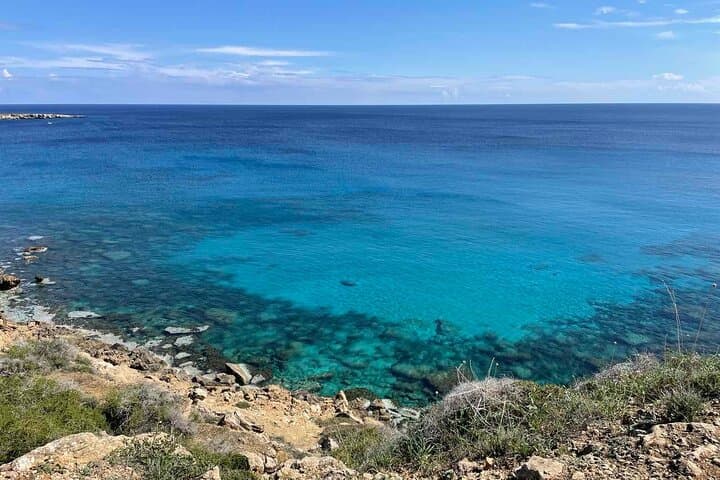
The coach pulls away from Larnaca as the island light flattens the salt pans and the Mediterranean widens into a hard, bright horizon. Within forty minutes the road threads past tourist towns and scrub, and the cliffs of Cape Greko begin to sharpen—bleached limestone dropping into turquoise water, jagged coves carved by a sea that still does most of the talking.
Verified experiences and guided adventures in the surrounding area.
Operated by Sergio · Ayia Napa, Famagusta District
The coach pulls away from Larnaca as the island light flattens the salt pans and the Mediterranean widens into a hard, bright horizon. Within forty minutes the road threads past tourist towns and scrub, and the cliffs of Cape Greko begin to sharpen—bleached limestone dropping into turquoise water, jagged coves carved by a sea that still does most of the talking.
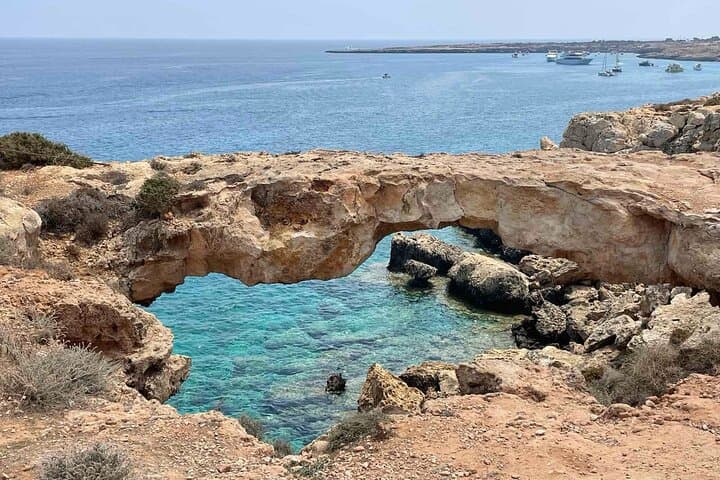
You disembark with a small group—this tour limits numbers to five—and the guide points out a network of trails that runs along the headland. Over the next four and a half hours you’ll move between viewpoints and short walks: a 45–60 minute nature walk on uneven coastal paths, quick photo stops, and pauses at natural arches like the Bridge of Love and Kamara tou Koraka. The sea caves, with their honeycombed roofs and narrow entrances, make a dramatic foil to the open cliffs; waves spend centuries chiselling a dozen different incisions into the rock.
Cape Greko is part of the Cape Greco National Forest Park, a protected coastal reserve whose name—literally “Cape of the Greeks”—hints at centuries of sailors using this promontory as a navigation point. Geologically the cape is mostly Neogene limestone; erosion has produced sea caves and natural bridges that become focal points for both photographers and local folklore. The area is also a crossroads of Mediterranean culture: seasonal fishing, scattered chapels, and the long history of shipping lanes that passed just off these rocks.
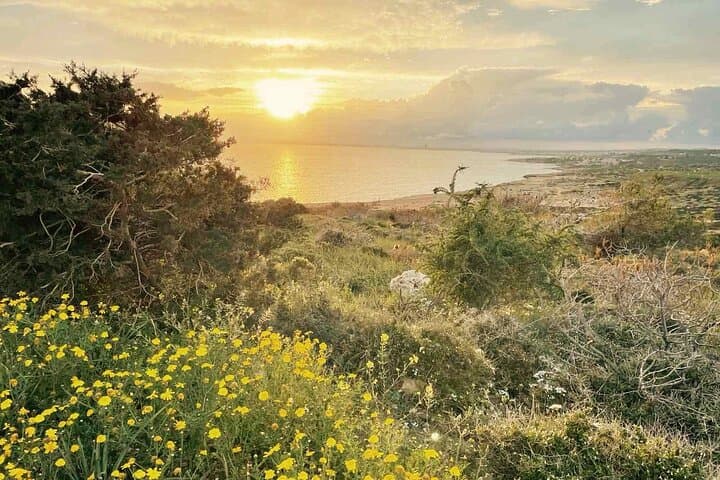
A local guide adds texture—pointing out nesting gulls, the odd rock lizard, and the best place to watch the afternoon light hit the cliffs. There’s a practical rhythm to the day: short, intense bursts of walking, then time to breathe in the spray and scan the horizon for loggerhead turtles.
Practical details matter. Expect a total guided duration of about 270 minutes, with roughly 3–4 km of walking over uneven limestone paths and modest cumulative elevation gains (a few hundred feet total, mostly short climbs and steps). Wear grippy walking shoes and bring sun protection and water—the eastern coast offers little shade.
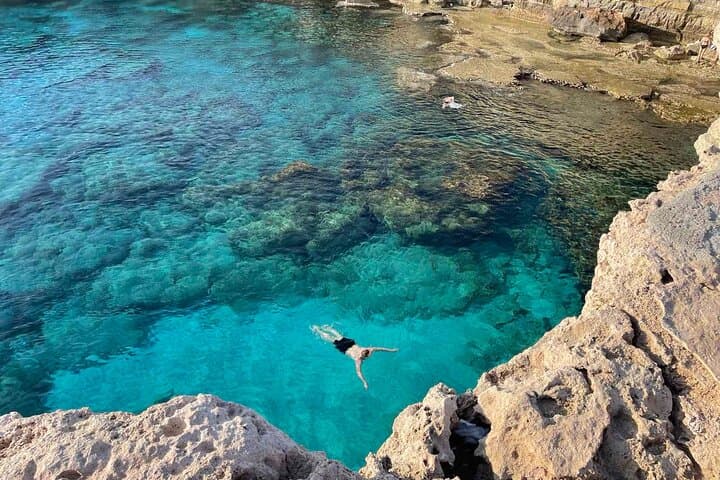
The small-group format means more time at each viewpoint and flexible pacing for swimmers or photographers. If you want to swim, check with the guide for safe access points; many coves are deep and rocky. Bookings include bottled water and transport in an air-conditioned vehicle; pickups can be arranged from most Larnaca hotels.
Cape Greko is a compact, intense coastal day: geological theatrics, tight sea caves, and natural arches that reward a careful eye. It’s an excellent half-day escape from Larnaca if you want wild shoreline without the crowds of the main beaches—just respect the park’s paths and the fragile marine life offshore.
moderate.
4–5 hours.
Be able to walk 3–4 km on uneven coastal ground and manage short climbs and steps; suitable for most reasonably fit travelers.
Expect about 45–60 minutes of walking spread across short nature trails and viewpoints; the full tour runs approximately 270 minutes including transport.
Yes—pickup from most Larnaca hotels is available; after booking the operator asks you to confirm your exact pickup location.
Yes—the supplier lists the tour as suitable for all fitness levels, but participants should be able to manage short uneven trails; infant seats are available for small children.
Some bays and coves are swimmable but are rocky; check with the guide for safe entry points and current conditions before attempting to swim.
Transport in an air-conditioned vehicle and bottled water are included; entrance fees are not applicable for the public park sites.
For a full refund cancel at least 24 hours before the scheduled departure; cancellations within 24 hours are not refundable.
Cape Greko lies within a designated National Forest Park; historically the cape has served as a coastal marker for sailors and retains small chapels and local maritime traditions.
The headland is protected—stay on trails, avoid disturbing nesting birds and sea grass beds, and minimize single-use plastics to protect marine life.
Sergio operates guided outdoor trips and adventures with an emphasis on safety, stewardship, and memorable experiences.
The coach pulls away from Larnaca as the island light flattens the salt pans and the Mediterranean widens into a hard, bright horizon. Within forty minutes the road threads past tourist towns and scrub, and the cliffs of Cape Greko begin to sharpen—bleached limestone dropping into turquoise water, jagged coves carved by a sea that still does most of the talking.
The coach pulls away from Larnaca as the island light flattens the salt pans and the Mediterranean widens into a hard, bright horizon. Within forty minutes the road threads past tourist towns and scrub, and the cliffs of Cape Greko begin to sharpen—bleached limestone dropping into turquoise water, jagged coves carved by a sea that still does most of the talking.
You disembark with a small group—this tour limits numbers to five—and the guide points out a network of trails that runs along the headland. Over the next four and a half hours you’ll move between viewpoints and short walks: a 45–60 minute nature walk on uneven coastal paths, quick photo stops, and pauses at natural arches like the Bridge of Love and Kamara tou Koraka. The sea caves, with their honeycombed roofs and narrow entrances, make a dramatic foil to the open cliffs; waves spend centuries chiselling a dozen different incisions into the rock.
Cape Greko is part of the Cape Greco National Forest Park, a protected coastal reserve whose name—literally “Cape of the Greeks”—hints at centuries of sailors using this promontory as a navigation point. Geologically the cape is mostly Neogene limestone; erosion has produced sea caves and natural bridges that become focal points for both photographers and local folklore. The area is also a crossroads of Mediterranean culture: seasonal fishing, scattered chapels, and the long history of shipping lanes that passed just off these rocks.
A local guide adds texture—pointing out nesting gulls, the odd rock lizard, and the best place to watch the afternoon light hit the cliffs. There’s a practical rhythm to the day: short, intense bursts of walking, then time to breathe in the spray and scan the horizon for loggerhead turtles.
Practical details matter. Expect a total guided duration of about 270 minutes, with roughly 3–4 km of walking over uneven limestone paths and modest cumulative elevation gains (a few hundred feet total, mostly short climbs and steps). Wear grippy walking shoes and bring sun protection and water—the eastern coast offers little shade.
The small-group format means more time at each viewpoint and flexible pacing for swimmers or photographers. If you want to swim, check with the guide for safe access points; many coves are deep and rocky. Bookings include bottled water and transport in an air-conditioned vehicle; pickups can be arranged from most Larnaca hotels.
Cape Greko is a compact, intense coastal day: geological theatrics, tight sea caves, and natural arches that reward a careful eye. It’s an excellent half-day escape from Larnaca if you want wild shoreline without the crowds of the main beaches—just respect the park’s paths and the fragile marine life offshore.