THE ADVENTURE COLLECTIVE® · Independent discovery and booking for outdoor travel

A focused two-day loop from Accra that pairs the heavy history of Elmina and Cape Coast castles with treetop hiking in Kakum National Park. Expect coastal fishing villages, fortress stairwells and a 30-meter canopy walkway.
A focused two-day loop from Accra that pairs the heavy history of Elmina and Cape Coast castles with treetop hiking in Kakum National Park. Expect coastal fishing villages, fortress stairwells and a 30-meter canopy walkway.
You arrive before dawn as the Atlantic pushes cool, saline air toward the palm-lined streets of Cape Coast — gulls calling, fishermen hauling nets — and the day unspools between two very different heights: the heavy history of the forts at sea level and the light, vertiginous canopy 30 meters above the forest floor.
Verified experiences and guided adventures in the surrounding area.
Operated by ProTour Africa · Cape Coast, Central Region
You arrive before dawn as the Atlantic pushes cool, saline air toward the palm-lined streets of Cape Coast — gulls calling, fishermen hauling nets — and the day unspools between two very different heights: the heavy history of the forts at sea level and the light, vertiginous canopy 30 meters above the forest floor.
The route threads Assin Manso’s river, Cape Coast Castle and Elmina Castle — stone fortifications first built by Europeans in the 15th–17th centuries that later became central hubs of the Atlantic slave trade — then climbs inland to Kakum National Park, established in 1932 to protect one of Ghana’s remaining primary rainforests. Geologically this stretch is coastal lowland, with sandy beaches giving way to lateritic soils and dense, humid forest that supports hornbills, parrots and elusive forest mammals.
Culturally, towns here are active fishing communities where Fante language and festivals mark daily life; guides will contextualize the forts within Ghana’s colonial and political history and the local community’s ongoing stewardship of heritage.
Practical guide: expect two days of light-to-moderate walking, stair climbs through castle dungeons and uneven forest trails. Plan early starts from Accra for cooler travel, bring insect repellent and cash for small purchases in coastal markets. On the canopy walkway, steady shoes and a calm head for heights make the view safer and more enjoyable.
Respect sacred sites at Assin Manso, follow your guide’s instructions in the park, and leave time to sample fresh fish by the harbor — this is a trip where history and wild forest converge, asking for both attention and care.
moderate.
2 days (≈48 hours).
Light-to-moderate: able to walk for several hours, handle stairs and uneven forest trails.
Yes — entrance fees to the tour sites and the canopy walkway are included in the tour price per the itinerary.
The tour is marketed as suitable for all fitness levels, but castle dungeons and canopy walkways involve stairs and uneven ground; it may be difficult for those with limited mobility.
The tour includes hotel pick-up and drop-off within Accra and one night of accommodation during the two-day itinerary.
Driving from Accra to Cape Coast typically takes 2.5–3.5 hours each way depending on traffic; expect early departures to maximize daylight.
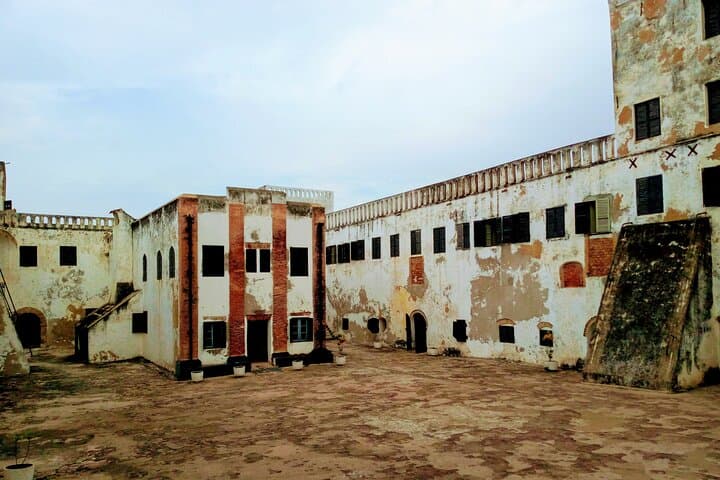
Elmina (1482) and Cape Coast Castles began as European trade posts and later became major hubs in the Atlantic slave trade, central to Ghana’s coastal colonial history.
Kakum National Park, protected since 1932, emphasizes low-impact access: stick to trails, use local guides and minimize plastic waste to protect fragile rainforest habitats.
ProTour Africa operates guided outdoor trips and adventures with an emphasis on safety, stewardship, and memorable experiences.
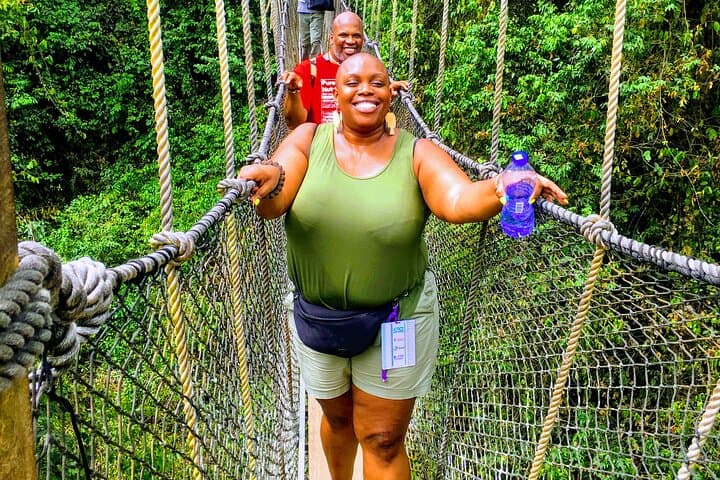
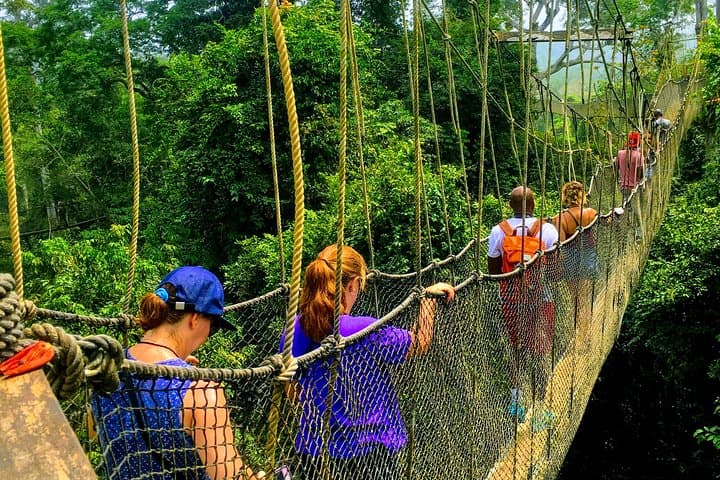
You arrive before dawn as the Atlantic pushes cool, saline air toward the palm-lined streets of Cape Coast — gulls calling, fishermen hauling nets — and the day unspools between two very different heights: the heavy history of the forts at sea level and the light, vertiginous canopy 30 meters above the forest floor.
You arrive before dawn as the Atlantic pushes cool, saline air toward the palm-lined streets of Cape Coast — gulls calling, fishermen hauling nets — and the day unspools between two very different heights: the heavy history of the forts at sea level and the light, vertiginous canopy 30 meters above the forest floor.
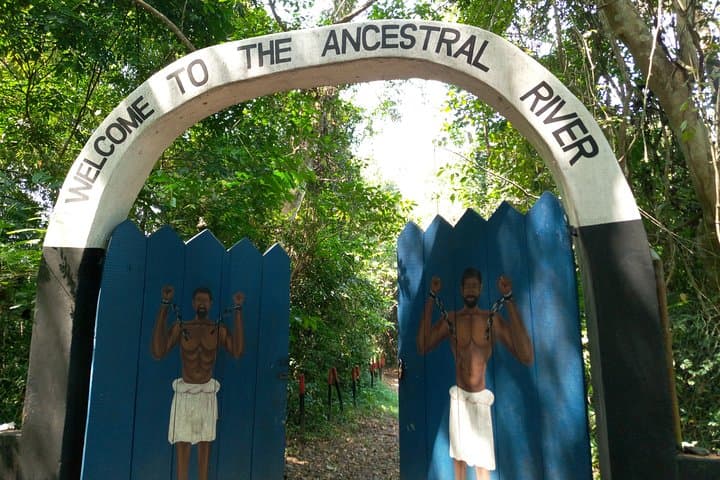
The route threads Assin Manso’s river, Cape Coast Castle and Elmina Castle — stone fortifications first built by Europeans in the 15th–17th centuries that later became central hubs of the Atlantic slave trade — then climbs inland to Kakum National Park, established in 1932 to protect one of Ghana’s remaining primary rainforests. Geologically this stretch is coastal lowland, with sandy beaches giving way to lateritic soils and dense, humid forest that supports hornbills, parrots and elusive forest mammals.
Culturally, towns here are active fishing communities where Fante language and festivals mark daily life; guides will contextualize the forts within Ghana’s colonial and political history and the local community’s ongoing stewardship of heritage.
Practical guide: expect two days of light-to-moderate walking, stair climbs through castle dungeons and uneven forest trails. Plan early starts from Accra for cooler travel, bring insect repellent and cash for small purchases in coastal markets. On the canopy walkway, steady shoes and a calm head for heights make the view safer and more enjoyable.
Respect sacred sites at Assin Manso, follow your guide’s instructions in the park, and leave time to sample fresh fish by the harbor — this is a trip where history and wild forest converge, asking for both attention and care.