THE ADVENTURE COLLECTIVE® · Independent discovery and booking for outdoor travel

Spend a day from Accra exploring Cape Coast Castle’s solemn history and Kakum National Park’s elevated canopy walkway. This full‑day tour pairs cultural history with rainforest hiking and wildlife viewing.
Spend a day from Accra exploring Cape Coast Castle’s solemn history and Kakum National Park’s elevated canopy walkway. This full‑day tour pairs cultural history with rainforest hiking and wildlife viewing.
You step out of the air‑conditioned vehicle and the Atlantic wind pushes a film of salt across the harbor — the coastline here seems to dare you to remember. The stones of Cape Coast Castle are dark with centuries; you can hear the guide’s measured voice over the hush of waves, tracing routes of trade and heartbreak through narrow rooms and chained doorways.
Verified experiences and guided adventures in the surrounding area.
Operated by Grassroot Tours Ghana · Cape Coast, Central Region
You step out of the air‑conditioned vehicle and the Atlantic wind pushes a film of salt across the harbor — the coastline here seems to dare you to remember. The stones of Cape Coast Castle are dark with centuries; you can hear the guide’s measured voice over the hush of waves, tracing routes of trade and heartbreak through narrow rooms and chained doorways.
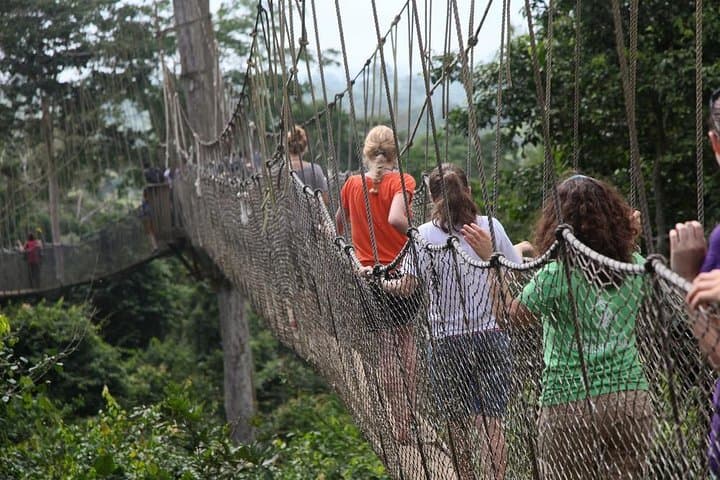
This short-day circuit links two contrasting chapters of Ghana’s Central Region: Cape Coast Castle, a UNESCO World Heritage site central to the trans‑Atlantic slave trade, and Kakum National Park, a fragment of wet evergreen forest where the canopy walkway threads seven suspension bridges roughly 350 meters in total and rises to about 40 meters above the forest floor. Geology here is coastal plain — lateritic soils, rocky headlands and a shoreline shaped by long Atlantic swell.
Local culture remains vibrant in fishing communities and market stalls where kente and fresh fish meet tour groups. Expect forest birds, monkeys and a chorus of insects in Kakum; the trees themselves feel watchful as you cross the canopy.
Practical guidance: tours typically depart Accra early and return the same day (plan 10–12 hours including a roughly 3‑hour drive each way). Wear sturdy walking shoes for the castle steps and forest trails, bring 1–2 liters of water, insect repellent and sun protection, and dress respectfully for the castle interior. Photography rules apply inside the dungeons and some areas are steep and uneven — moderate fitness and mobility are required. Start early to avoid heat and afternoon rains, and give yourself time at roadside stops to sample local food and support community vendors.
moderate.
10–12 hours.
Moderate fitness required — expect long periods of standing, stairs at the castle and uneven forest trails.
Expect about 2.5–3 hours each way depending on traffic; tours typically leave early to maximize time on site.
Children are allowed but must be supervised closely; operators set age/height or group size limits for safety — check with the tour for specifics.
Yes — roadside stops and local eateries offer meals (fish, kenkey, rice dishes); bring snacks if you have special dietary needs.
Photography rules vary by room; some interior areas and memorial spaces restrict flash or photos — follow the guide’s instructions out of respect for the site.
Cape Coast Castle was an administrative center and holding site in the trans‑Atlantic slave trade; nearby Kakum protects a remnant of Ghana’s wet evergreen forest.
Kakum is managed for conservation and tourism; stick to trails, avoid feeding wildlife, and support local conservation fees that fund park protection.
Grassroot Tours Ghana operates guided outdoor trips and adventures with an emphasis on safety, stewardship, and memorable experiences.
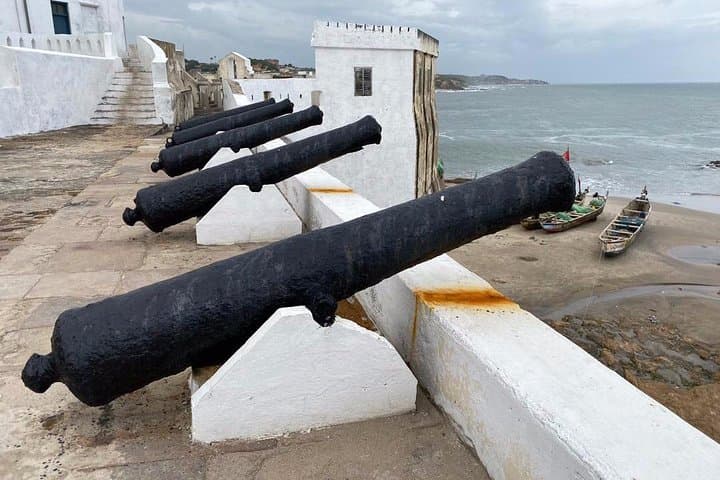
You step out of the air‑conditioned vehicle and the Atlantic wind pushes a film of salt across the harbor — the coastline here seems to dare you to remember. The stones of Cape Coast Castle are dark with centuries; you can hear the guide’s measured voice over the hush of waves, tracing routes of trade and heartbreak through narrow rooms and chained doorways.
You step out of the air‑conditioned vehicle and the Atlantic wind pushes a film of salt across the harbor — the coastline here seems to dare you to remember. The stones of Cape Coast Castle are dark with centuries; you can hear the guide’s measured voice over the hush of waves, tracing routes of trade and heartbreak through narrow rooms and chained doorways.
This short-day circuit links two contrasting chapters of Ghana’s Central Region: Cape Coast Castle, a UNESCO World Heritage site central to the trans‑Atlantic slave trade, and Kakum National Park, a fragment of wet evergreen forest where the canopy walkway threads seven suspension bridges roughly 350 meters in total and rises to about 40 meters above the forest floor. Geology here is coastal plain — lateritic soils, rocky headlands and a shoreline shaped by long Atlantic swell.
Local culture remains vibrant in fishing communities and market stalls where kente and fresh fish meet tour groups. Expect forest birds, monkeys and a chorus of insects in Kakum; the trees themselves feel watchful as you cross the canopy.
Practical guidance: tours typically depart Accra early and return the same day (plan 10–12 hours including a roughly 3‑hour drive each way). Wear sturdy walking shoes for the castle steps and forest trails, bring 1–2 liters of water, insect repellent and sun protection, and dress respectfully for the castle interior. Photography rules apply inside the dungeons and some areas are steep and uneven — moderate fitness and mobility are required. Start early to avoid heat and afternoon rains, and give yourself time at roadside stops to sample local food and support community vendors.