THE ADVENTURE COLLECTIVE® · Independent discovery and booking for outdoor travel

Learn to surf on Cape Canaveral’s gentle shorebreaks with a hands-on, two-hour group lesson. Instructors cover land technique, water safety and guided practice—equipment included.
Learn to surf on Cape Canaveral’s gentle shorebreaks with a hands-on, two-hour group lesson. Instructors cover land technique, water safety and guided practice—equipment included.
The Atlantic unfolds in a long, wind-scoured arc as instructors gather students on the sand by Buchanan Ave beach access. Salt stings the air, sunscreen gleams on shoulders, and a quick land session turns nervous energy into practiced pop-ups before the group steps into waist-to-chest-deep waves. Instructors rotate through the lineup, coaching stance, timing and basic wave selection while the ocean tests balance and resolve.
Verified experiences and guided adventures in the surrounding area.
Operated by Pure Aloha Surf School · Cape Canaveral, Florida
The Atlantic unfolds in a long, wind-scoured arc as instructors gather students on the sand by Buchanan Ave beach access. Salt stings the air, sunscreen gleams on shoulders, and a quick land session turns nervous energy into practiced pop-ups before the group steps into waist-to-chest-deep waves. Instructors rotate through the lineup, coaching stance, timing and basic wave selection while the ocean tests balance and resolve.
This part of Florida’s Space Coast sits on barrier island sands formed by Pleistocene sea-level shifts; the shallow continental shelf produces frequent, manageable shorebreaks that make it a reliable classroom for learners. Cocoa Beach and Cape Canaveral gained surf culture in the mid-20th century as locals and visitors chased easy, consistent breaks; today small surf schools maintain that accessible tradition.
Expect a two-hour, small-group experience (up to 10 students) that mixes onshore instruction and guided time in the water. Equipment—boards, surf jerseys and instructor guidance—is provided. Water temps range roughly 68–82°F seasonally; currents and occasional rip lines are constant reminders that the ocean has the final say.
Practical guidance: arrive 20 minutes early to sign waivers and change; bring a towel and a short change of clothes. If you can swim comfortably and tolerate waves, this lesson is designed to get you standing on soft, rolling whitewater. Peak learning window is when winds are light and small swells are consistent—typically fall through spring for the best shaped waves. Hydrate, use reef-safe sunscreen, and be ready to let the ocean push a little harder than you expect.
moderate.
2 hours.
Suitable for most people who can swim and are comfortable in moving water; some standing and paddling required
No—this group lesson is designed for beginners; instructors start on land and progress to basic wave riding in the whitewater.
Policies vary; check booking requirements, but many schools accept teens and adults—children may require guardian supervision.
Yes—boards, surf jerseys and basic safety gear are included in the lesson price.
Lessons are cancellable for a full refund with at least 24 hours notice; operators may also cancel for unsafe conditions and reschedule.
Cocoa Beach and Cape Canaveral developed a surf identity in the postwar era as motor tourism grew; local surf schools now keep that accessible, community-focused tradition alive.
Use reef-safe products and follow beach signage—local groups monitor dunes and nesting areas, and minimizing sunscreen runoff and litter helps protect marine habitats.
Pure Aloha Surf School operates guided outdoor trips and adventures with an emphasis on safety, stewardship, and memorable experiences.
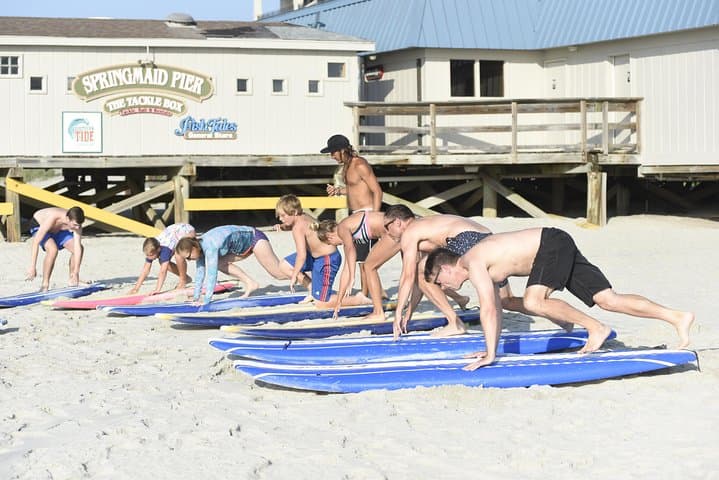
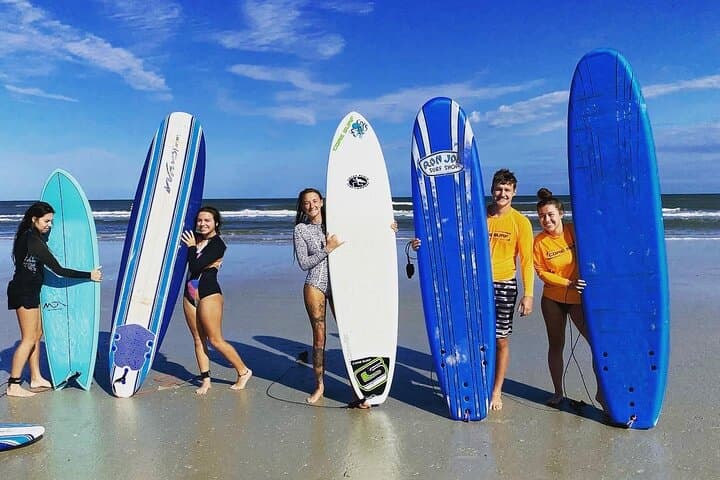
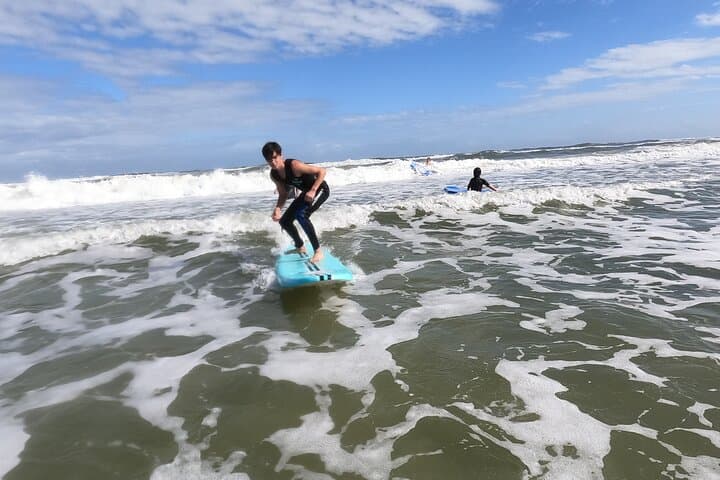
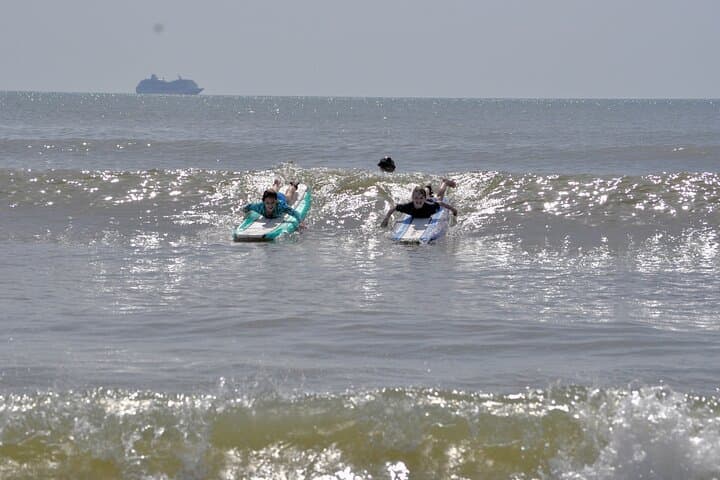
The Atlantic unfolds in a long, wind-scoured arc as instructors gather students on the sand by Buchanan Ave beach access. Salt stings the air, sunscreen gleams on shoulders, and a quick land session turns nervous energy into practiced pop-ups before the group steps into waist-to-chest-deep waves. Instructors rotate through the lineup, coaching stance, timing and basic wave selection while the ocean tests balance and resolve.
The Atlantic unfolds in a long, wind-scoured arc as instructors gather students on the sand by Buchanan Ave beach access. Salt stings the air, sunscreen gleams on shoulders, and a quick land session turns nervous energy into practiced pop-ups before the group steps into waist-to-chest-deep waves. Instructors rotate through the lineup, coaching stance, timing and basic wave selection while the ocean tests balance and resolve.
This part of Florida’s Space Coast sits on barrier island sands formed by Pleistocene sea-level shifts; the shallow continental shelf produces frequent, manageable shorebreaks that make it a reliable classroom for learners. Cocoa Beach and Cape Canaveral gained surf culture in the mid-20th century as locals and visitors chased easy, consistent breaks; today small surf schools maintain that accessible tradition.
Expect a two-hour, small-group experience (up to 10 students) that mixes onshore instruction and guided time in the water. Equipment—boards, surf jerseys and instructor guidance—is provided. Water temps range roughly 68–82°F seasonally; currents and occasional rip lines are constant reminders that the ocean has the final say.
Practical guidance: arrive 20 minutes early to sign waivers and change; bring a towel and a short change of clothes. If you can swim comfortably and tolerate waves, this lesson is designed to get you standing on soft, rolling whitewater. Peak learning window is when winds are light and small swells are consistent—typically fall through spring for the best shaped waves. Hydrate, use reef-safe sunscreen, and be ready to let the ocean push a little harder than you expect.