THE ADVENTURE COLLECTIVE® · Independent discovery and booking for outdoor travel

Drive south from Cape Town to the southernmost tip of Africa on a private full-day tour to Cape Agulhas. Visit the historic lighthouse, stand where the Indian and Atlantic Oceans meet, and look for whales and penguins with a knowledgeable local guide.
Drive south from Cape Town to the southernmost tip of Africa on a private full-day tour to Cape Agulhas. Visit the historic lighthouse, stand where the Indian and Atlantic Oceans meet, and look for whales and penguins with a knowledgeable local guide.
The road pours south from Cape Town through low, windswept fynbos; windows frame scrubby hills, farming patches and the Atlantic light that sharpens as you near the coastline. By late morning the Cape Agulhas lighthouse comes into view—a squat, brick sentinel marking the continent’s tip where two oceans meet.
Verified experiences and guided adventures in the surrounding area.
Operated by Safari Private Tours. · L'Agulhas, Western Cape
The road pours south from Cape Town through low, windswept fynbos; windows frame scrubby hills, farming patches and the Atlantic light that sharpens as you near the coastline. By late morning the Cape Agulhas lighthouse comes into view—a squat, brick sentinel marking the continent’s tip where two oceans meet.
This is a landscape shaped by ancient geology and maritime history. Cape Agulhas sits on folded Table Mountain sandstone and shale; its coast has long been notorious for shipwrecks, prompting the lighthouse’s first illumination in 1849. The area’s fishing and farming communities—L'Agulhas, Struisbaai and nearby Bredasdorp—carry a pragmatic coastal culture: boats, nets, hardy hospitality and seafood kitchens.
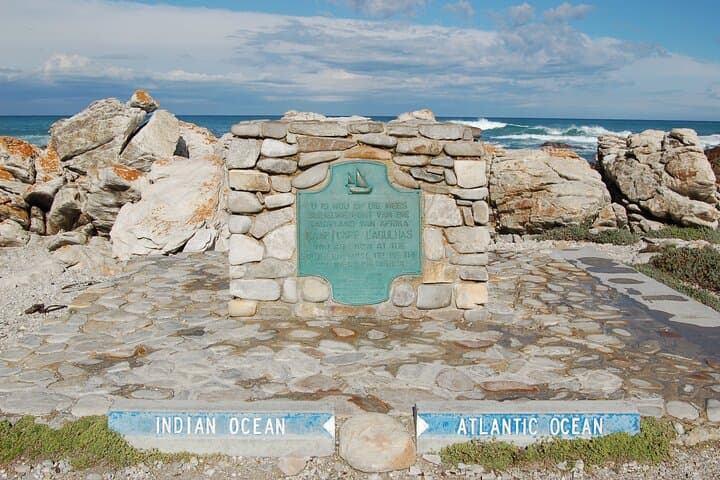
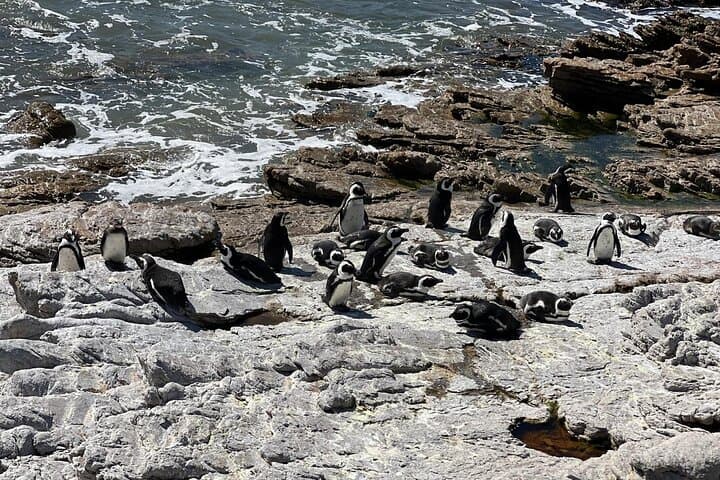
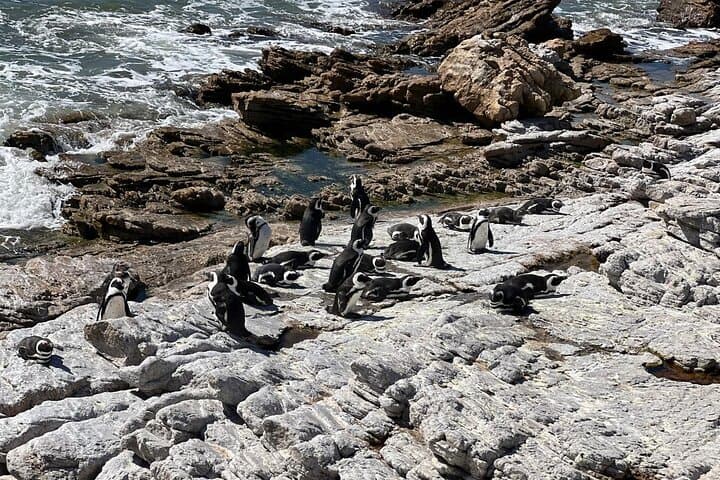
On a private full-day tour you’ll step onto the marker that denotes the meeting of the Indian and Atlantic oceans, climb the lighthouse precinct, and walk low dunes and rocky platforms where tide pools expose limpets and anemones. In season, the sea performs: Southern Right Whales cruise the bays and African penguins strut at Stony Point. Guides weave local history—shipwreck tales, lighthouse lore and the maritime cadastral boundary—into the day.
Practicalities matter: plan for an 8-hour day with about 2–4 short walks, comfortable shoes for uneven shorelines, layered clothing against wind and sun, and binoculars for wildlife. Expect a mix of paved driving and brief strolls; accessibility is generally good at main sites but rocky stretches require sure footing. Bring water, sunscreen and a camera—the light here is the reason people come.
easy.
8 hours.
Suitable for most fitness levels; requires short walks of 10–30 minutes on uneven terrain and standing at viewpoints.
The full-day private tour runs about 8 hours; it typically includes hotel pickup/drop-off, an air-conditioned vehicle, bottled water, a professional guide and entrance to the Cape Agulhas lighthouse and Stony Point penguin colony when on the route.
Southern Right Whales are most commonly seen from June to November along the Overberg and Hermanus coast; sightings are seasonal and never guaranteed.
Major visitor areas and parking at Cape Agulhas have accessible surfaces, but some rocky shoreline sections and smaller viewing platforms are uneven; check with the operator about specific accessibility needs.
Be cautious—there are strong currents and cold water; swimming is possible at sheltered beaches like Struisbaai but always heed local warnings and conditions.
Cape Agulhas has a long maritime history; its lighthouse was first lit in 1849 to reduce shipwrecks on the hazardous Agulhas Banks. The point also marks the official dividing line between the Indian and Atlantic Oceans.
The region protects sensitive coastal habitats and penguin colonies—stay on marked paths, respect nesting sites and avoid littering to limit human impact.
Safari Private Tours. operates guided outdoor trips and adventures with an emphasis on safety, stewardship, and memorable experiences.
The road pours south from Cape Town through low, windswept fynbos; windows frame scrubby hills, farming patches and the Atlantic light that sharpens as you near the coastline. By late morning the Cape Agulhas lighthouse comes into view—a squat, brick sentinel marking the continent’s tip where two oceans meet.
The road pours south from Cape Town through low, windswept fynbos; windows frame scrubby hills, farming patches and the Atlantic light that sharpens as you near the coastline. By late morning the Cape Agulhas lighthouse comes into view—a squat, brick sentinel marking the continent’s tip where two oceans meet.
This is a landscape shaped by ancient geology and maritime history. Cape Agulhas sits on folded Table Mountain sandstone and shale; its coast has long been notorious for shipwrecks, prompting the lighthouse’s first illumination in 1849. The area’s fishing and farming communities—L'Agulhas, Struisbaai and nearby Bredasdorp—carry a pragmatic coastal culture: boats, nets, hardy hospitality and seafood kitchens.
On a private full-day tour you’ll step onto the marker that denotes the meeting of the Indian and Atlantic oceans, climb the lighthouse precinct, and walk low dunes and rocky platforms where tide pools expose limpets and anemones. In season, the sea performs: Southern Right Whales cruise the bays and African penguins strut at Stony Point. Guides weave local history—shipwreck tales, lighthouse lore and the maritime cadastral boundary—into the day.
Practicalities matter: plan for an 8-hour day with about 2–4 short walks, comfortable shoes for uneven shorelines, layered clothing against wind and sun, and binoculars for wildlife. Expect a mix of paved driving and brief strolls; accessibility is generally good at main sites but rocky stretches require sure footing. Bring water, sunscreen and a camera—the light here is the reason people come.