THE ADVENTURE COLLECTIVE® · Independent discovery and booking for outdoor travel

Drive from Cape Town to the southernmost tip of Africa and visit a mainland African penguin colony at Stony Point. This accessible day trip combines rugged coastal scenery, a historic lighthouse, and close-up wildlife viewing on boardwalks.
Drive from Cape Town to the southernmost tip of Africa and visit a mainland African penguin colony at Stony Point. This accessible day trip combines rugged coastal scenery, a historic lighthouse, and close-up wildlife viewing on boardwalks.
You leave Cape Town with the coastline sliding past — fishing villages, scrubbed headlands and the Atlantic swell on your left. The road eases into the wide, windswept flats of the Overberg and, before long, you arrive at the rocky promontory marking the southernmost tip of Africa. The Cape Agulhas lighthouse stands against a pale horizon while waves thud on hidden reefs and kelp beds, reminding you this shoreline has guided sailors and shipwrecks for centuries.
Verified experiences and guided adventures in the surrounding area.
Operated by Joel · L'Agulhas, Western Cape
You leave Cape Town with the coastline sliding past — fishing villages, scrubbed headlands and the Atlantic swell on your left. The road eases into the wide, windswept flats of the Overberg and, before long, you arrive at the rocky promontory marking the southernmost tip of Africa. The Cape Agulhas lighthouse stands against a pale horizon while waves thud on hidden reefs and kelp beds, reminding you this shoreline has guided sailors and shipwrecks for centuries.
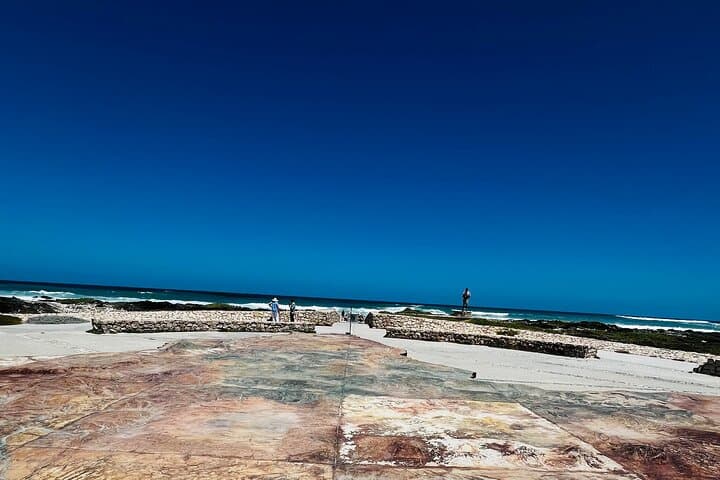
Geology here is blunt and honest: low, wind-scoured schist and sandstone, punctuated by fynbos adapted to salt spray. At the point the Indian and Atlantic Oceans are said to meet — a navigational and cultural landmark that anchored 19th-century maritime routes and gave rise to the 1849 lighthouse and its museum. A short drive up the coast brings you to Stony Point in Betty’s Bay, where a wooden boardwalk threads through an African penguin colony and the faint remnants of a whaling station speak to changing coastal economies.
Practical guidance: the full-day tour runs about 5–6 hours with hotel pick-up, short guided walks and accessible boardwalks; mobility-friendly but expect uneven sand and low stone steps. Bring sunscreen, windproof layers and binoculars for seabirds and occasional whales in season. Respect the boardwalks and viewing distances — the colony is protected and penguin numbers remain vulnerable. For photographers, morning or late-afternoon light sharpens the coastline; for comfort, plan footwear for mixed beach, boardwalk and gravel surfaces.
easy.
5–6 hours.
Suitable for most people who can manage short, level walks and a few steps; mostly seated travel between stops.
The experience runs approximately 5–6 hours including hotel pick-up and drop-off, with guided stops at Cape Agulhas and Stony Point.
You can view penguins at eye level from the boardwalk, but touching or feeding wildlife is prohibited to protect the colony.
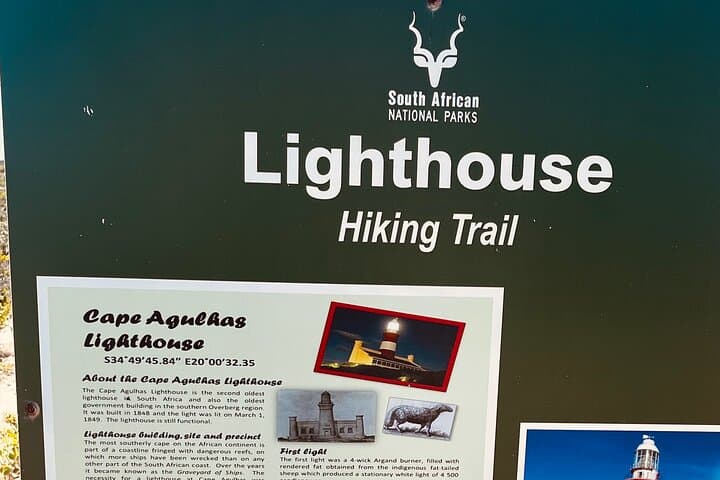
The Cape Agulhas lighthouse has a small museum and limited access to the tower; hours depend on the park schedule and may be included on organized stops.
Most operators provide accessible transportation and the boardwalks are stroller- and wheelchair-friendly, but some short gravel sections and steps may require assistance.
The Cape Agulhas lighthouse, erected in 1849, marks historic shipping routes and a coastline long associated with shipwrecks and maritime navigation.
Agulhas National Park and Stony Point are actively managed to protect fynbos and the endangered African penguin; visitors should adhere to boardwalks, avoid disturbances, and follow guide instructions.
Joel operates guided outdoor trips and adventures with an emphasis on safety, stewardship, and memorable experiences.
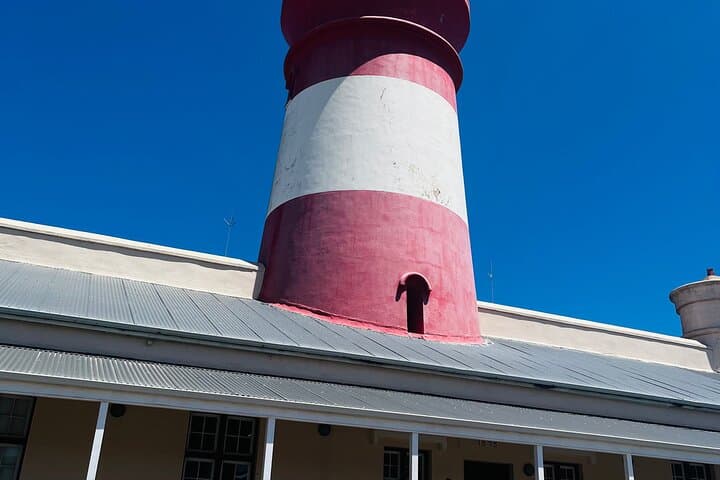
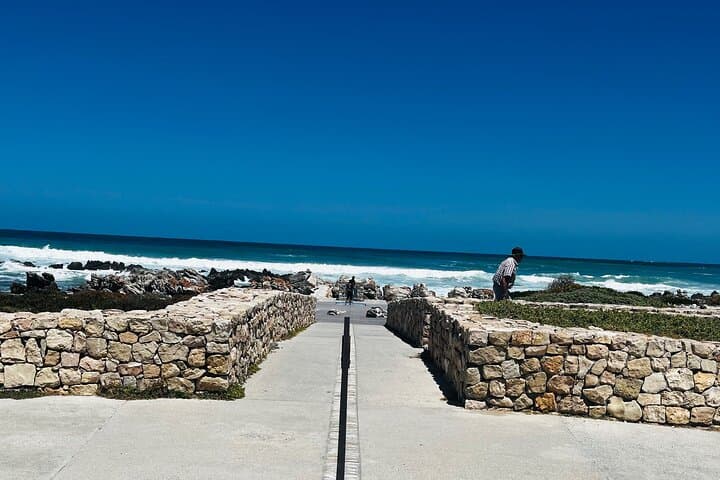
You leave Cape Town with the coastline sliding past — fishing villages, scrubbed headlands and the Atlantic swell on your left. The road eases into the wide, windswept flats of the Overberg and, before long, you arrive at the rocky promontory marking the southernmost tip of Africa. The Cape Agulhas lighthouse stands against a pale horizon while waves thud on hidden reefs and kelp beds, reminding you this shoreline has guided sailors and shipwrecks for centuries.
You leave Cape Town with the coastline sliding past — fishing villages, scrubbed headlands and the Atlantic swell on your left. The road eases into the wide, windswept flats of the Overberg and, before long, you arrive at the rocky promontory marking the southernmost tip of Africa. The Cape Agulhas lighthouse stands against a pale horizon while waves thud on hidden reefs and kelp beds, reminding you this shoreline has guided sailors and shipwrecks for centuries.
Geology here is blunt and honest: low, wind-scoured schist and sandstone, punctuated by fynbos adapted to salt spray. At the point the Indian and Atlantic Oceans are said to meet — a navigational and cultural landmark that anchored 19th-century maritime routes and gave rise to the 1849 lighthouse and its museum. A short drive up the coast brings you to Stony Point in Betty’s Bay, where a wooden boardwalk threads through an African penguin colony and the faint remnants of a whaling station speak to changing coastal economies.
Practical guidance: the full-day tour runs about 5–6 hours with hotel pick-up, short guided walks and accessible boardwalks; mobility-friendly but expect uneven sand and low stone steps. Bring sunscreen, windproof layers and binoculars for seabirds and occasional whales in season. Respect the boardwalks and viewing distances — the colony is protected and penguin numbers remain vulnerable. For photographers, morning or late-afternoon light sharpens the coastline; for comfort, plan footwear for mixed beach, boardwalk and gravel surfaces.