THE ADVENTURE COLLECTIVE® · Independent discovery and booking for outdoor travel

Attend the colorful midday mass at the Cao Dai Great Holy See, then descend into the Cu Chi tunnel network on a single full-day from Ho Chi Minh City. This combined cultural and wartime tour pairs vivid ceremony with hands-on history.
Attend the colorful midday mass at the Cao Dai Great Holy See, then descend into the Cu Chi tunnel network on a single full-day from Ho Chi Minh City. This combined cultural and wartime tour pairs vivid ceremony with hands-on history.
You arrive before noon on a humid Saigon morning and the city’s pace slips behind you as the road opens toward Tay Ninh and the Cu Chi forests. At the Great Holy See the building’s painted domes and the all-seeing eye demand attention; sunlight pours across lacquered wood and rows of devotees gathering for the midday mass.
Verified experiences and guided adventures in the surrounding area.
Operated by Cu Chi Tunnels Tours · Ho Chi Minh City, Ho Chi Minh
You arrive before noon on a humid Saigon morning and the city’s pace slips behind you as the road opens toward Tay Ninh and the Cu Chi forests. At the Great Holy See the building’s painted domes and the all-seeing eye demand attention; sunlight pours across lacquered wood and rows of devotees gathering for the midday mass.
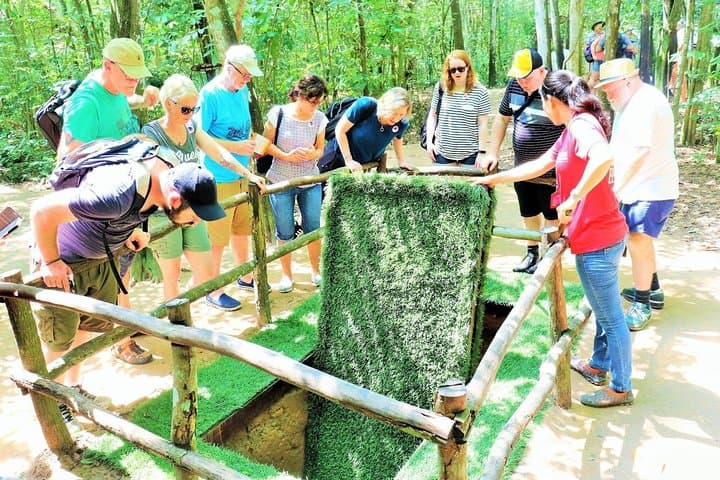
The Cao Dai movement, founded in 1926, blends Buddhist, Christian and Confucian elements into a visually arresting ceremony; colors, rank insignia and chanted prayers mark a living, 20th‑century religious practice. Later the bus eases into the low, scrubby landscape of Cu Chi, where red lateritic soil and secondary forest crown a network of tunnels—over 200 km in original length—dug by hand and used by Viet Cong guerrillas in the 1960s. The tunnels served as living quarters, hospitals, weapons caches and command posts; watching the introductory film gives context before you enter low, narrow sections that force you to crouch and move deliberately.
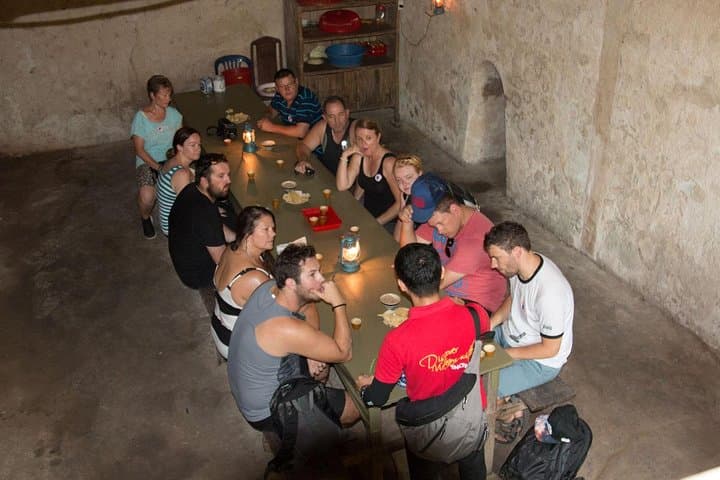
Expect a day of contrasts: bright ritual halls and the cool, pressurized hush of underground corridors, local lunches of simple rice dishes, and a chance to try cassava and tea as former combatants once did. Practical notes: the tour is a full eight hours with hotel pickup from Ho Chi Minh City, light walking on uneven surfaces, and short stretches of stooping; photography during worship may be restricted and pockets of the tunnel system are tight. Bring closed-toe shoes, modest clothing for the temple, sun protection and a reusable water bottle. The route balances cultural immersion with tangible history—an accessible full-day excursion that rewards curiosity and respect.
easy.
8 hours.
Light fitness: able to walk short distances, stand during ceremonies and crouch through low tunnel sections.
This is a full-day tour of about eight hours, typically with hotel pickup and drop-off in Ho Chi Minh City.
Many tunnel sections are low and narrow; visitors with claustrophobia should avoid entering or opt to view surface exhibits and the introductory film instead.
Photography rules vary; be discreet, avoid flash, and follow the guide’s instructions—some areas of the ceremony may be off-limits to cameras.
Lunch, guide services, and entrance fees are listed as included on this tour, and tea/cassava tasting at Cu Chi is usually provided.
The Cao Dai Great Holy See, completed in 1926, is the administrative center for the Cao Dai religion; Cu Chi’s tunnels were expanded in the 1940s–60s and played a pivotal role for Viet Cong forces during the Vietnam War.
Tour operators aim to concentrate visitors on maintained paths and limit touching of fragile wartime structures; support local guides and avoid leaving litter to reduce impact.
Cu Chi Tunnels Tours operates guided outdoor trips and adventures with an emphasis on safety, stewardship, and memorable experiences.
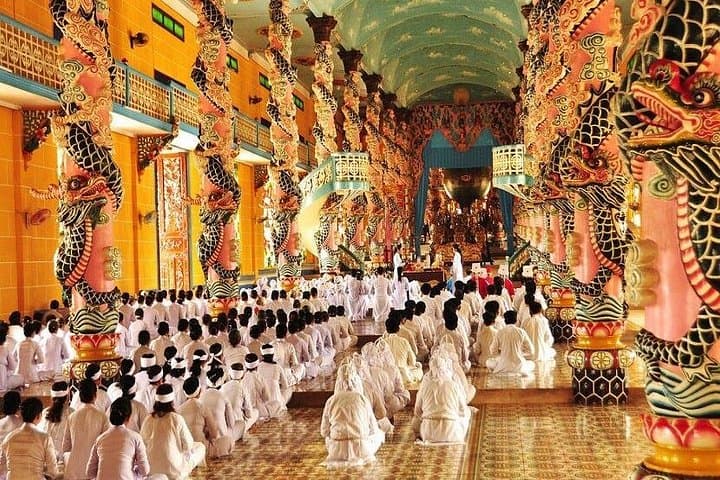
You arrive before noon on a humid Saigon morning and the city’s pace slips behind you as the road opens toward Tay Ninh and the Cu Chi forests. At the Great Holy See the building’s painted domes and the all-seeing eye demand attention; sunlight pours across lacquered wood and rows of devotees gathering for the midday mass.
You arrive before noon on a humid Saigon morning and the city’s pace slips behind you as the road opens toward Tay Ninh and the Cu Chi forests. At the Great Holy See the building’s painted domes and the all-seeing eye demand attention; sunlight pours across lacquered wood and rows of devotees gathering for the midday mass.
The Cao Dai movement, founded in 1926, blends Buddhist, Christian and Confucian elements into a visually arresting ceremony; colors, rank insignia and chanted prayers mark a living, 20th‑century religious practice. Later the bus eases into the low, scrubby landscape of Cu Chi, where red lateritic soil and secondary forest crown a network of tunnels—over 200 km in original length—dug by hand and used by Viet Cong guerrillas in the 1960s. The tunnels served as living quarters, hospitals, weapons caches and command posts; watching the introductory film gives context before you enter low, narrow sections that force you to crouch and move deliberately.
Expect a day of contrasts: bright ritual halls and the cool, pressurized hush of underground corridors, local lunches of simple rice dishes, and a chance to try cassava and tea as former combatants once did. Practical notes: the tour is a full eight hours with hotel pickup from Ho Chi Minh City, light walking on uneven surfaces, and short stretches of stooping; photography during worship may be restricted and pockets of the tunnel system are tight. Bring closed-toe shoes, modest clothing for the temple, sun protection and a reusable water bottle. The route balances cultural immersion with tangible history—an accessible full-day excursion that rewards curiosity and respect.