THE ADVENTURE COLLECTIVE® · Independent discovery and booking for outdoor travel

A six-day motorbike loop from Ha Giang into Cao Bang traverses steep passes, deep canyons and UNESCO-listed geopark scenery. Expect 50–110 km riding days, homestays, and technical mountain roads that reward persistence with sweeping views and cultural encounters.
A six-day motorbike loop from Ha Giang into Cao Bang traverses steep passes, deep canyons and UNESCO-listed geopark scenery. Expect 50–110 km riding days, homestays, and technical mountain roads that reward persistence with sweeping views and cultural encounters.
You kick the bike into life before dawn, the road a ribbon unspooling between terraces and limestone teeth. Mist clings to ridgelines as you climb Bac Sum and Can Ty passes; the Nho Que River below dares you to look away while cliffs hold steady like old guards.
Verified experiences and guided adventures in the surrounding area.
Operated by Annie Go · Ha Giang, Ha Giang Province
You kick the bike into life before dawn, the road a ribbon unspooling between terraces and limestone teeth. Mist clings to ridgelines as you climb Bac Sum and Can Ty passes; the Nho Que River below dares you to look away while cliffs hold steady like old guards.
The route threads two northern provinces where karst geology carves canyons, caves and jagged plateaus—Non Nuoc Cao Bang Global Geopark and the Don Van stone plateau among them. Centuries of H’Mong, Tay and Dzao culture show in stone houses, linen weaving cooperatives and the seasonal rituals of markets like Khau Vai.
Expect varied surfaces: paved national roads, worn switchbacks, steep braided passes with grades up to 40 degrees, and short ferry or raft transfers for motorbikes. Daily riding averages 50–110 km with technical sections daily; total loop roughly 500–550 km. Elevations range from valley rivers up to 1,200–1,600 m on high passes.
Practical points: ride with full-face helmet and layered protective clothing, keep fuel topped at every town (gas is included but remote stretches are long), and schedule early starts to avoid afternoon storms in summer. Homestays and dorm-style eco-lodges are standard; meals focus on local produce and hot soups—bring electrolytes for long days and a compact tool kit for punctures.
This is a demanding, high-reward ride: you’ll swap stories over local liquor or tea, sleep to mountain sounds, and carry back landscapes that look like maps someone forgot to finish. Train with long-days on varied terrain, expect soreness, and plan a travel day before returning to Hanoi.
challenging.
6 days.
Good aerobic fitness and endurance for consecutive long riding days; able to control a 150–250cc bike over steep, technical terrain.
Yes—participants should be comfortable riding their motorcycle over steep, winding mountain passes and some rough unpaved sections for multiple days.
Yes, helmets and basic protection are provided, but bringing your own properly fitted gear is strongly recommended for comfort and safety.
Overnight stays are mostly in local homestays and dorm-style eco-lodges with shared facilities; private upgrades are often available for a fee.
Services can be sparse between towns—fuel, food and mechanical help should be planned around 60–120 km intervals and daily town stops included in the itinerary.
The route crosses territories of H’Mong and Tay people with century-old stone villages and remnants of French colonial forts in the highlands.
Ride on established roads, avoid littering and support homestays and cooperatives that promote local crafts to help sustain community-based tourism.
Annie Go operates guided outdoor trips and adventures with an emphasis on safety, stewardship, and memorable experiences.
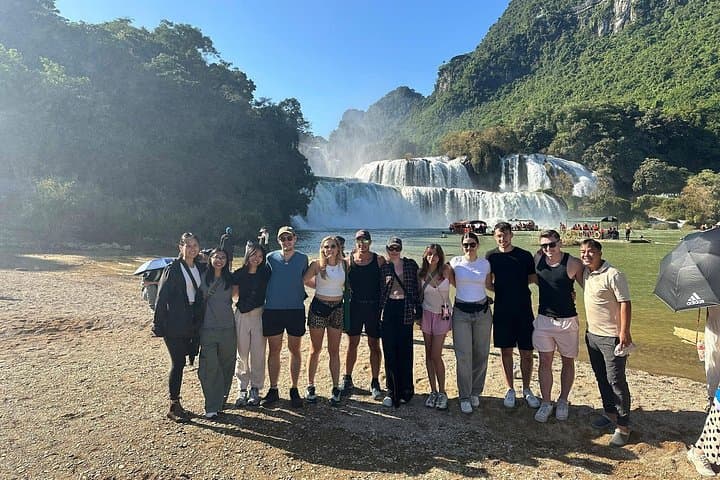
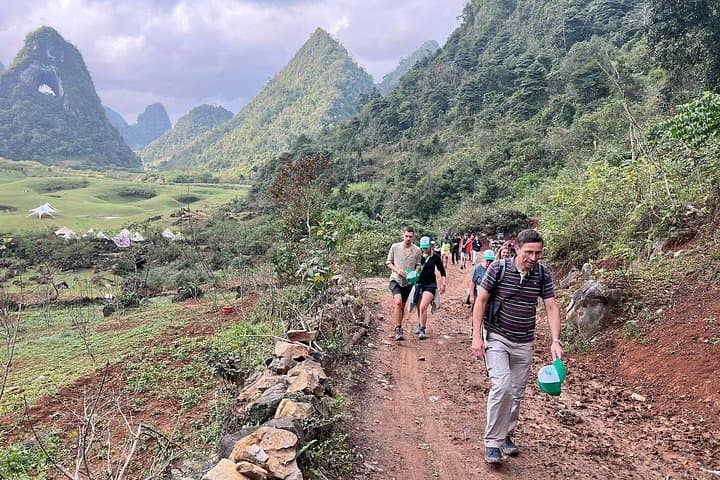
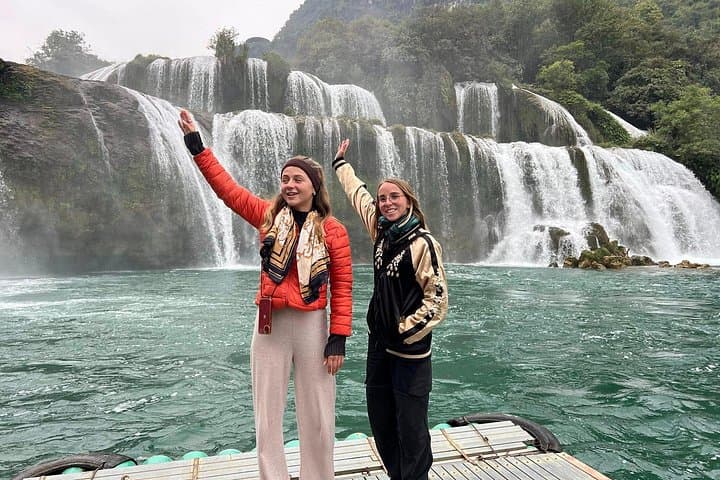
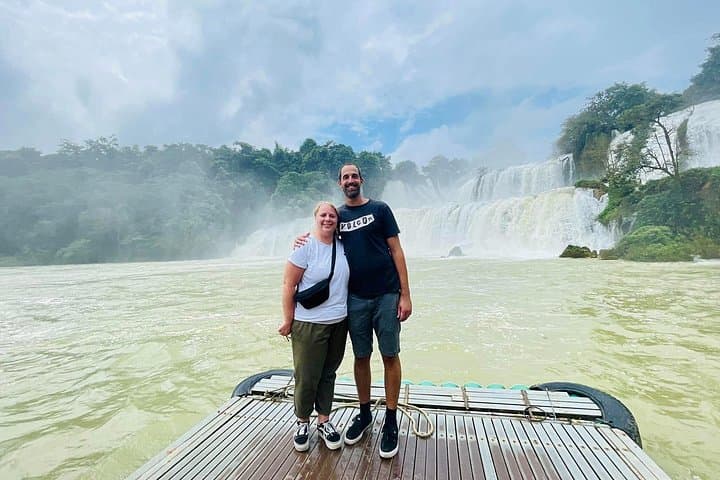
You kick the bike into life before dawn, the road a ribbon unspooling between terraces and limestone teeth. Mist clings to ridgelines as you climb Bac Sum and Can Ty passes; the Nho Que River below dares you to look away while cliffs hold steady like old guards.
You kick the bike into life before dawn, the road a ribbon unspooling between terraces and limestone teeth. Mist clings to ridgelines as you climb Bac Sum and Can Ty passes; the Nho Que River below dares you to look away while cliffs hold steady like old guards.
The route threads two northern provinces where karst geology carves canyons, caves and jagged plateaus—Non Nuoc Cao Bang Global Geopark and the Don Van stone plateau among them. Centuries of H’Mong, Tay and Dzao culture show in stone houses, linen weaving cooperatives and the seasonal rituals of markets like Khau Vai.
Expect varied surfaces: paved national roads, worn switchbacks, steep braided passes with grades up to 40 degrees, and short ferry or raft transfers for motorbikes. Daily riding averages 50–110 km with technical sections daily; total loop roughly 500–550 km. Elevations range from valley rivers up to 1,200–1,600 m on high passes.
Practical points: ride with full-face helmet and layered protective clothing, keep fuel topped at every town (gas is included but remote stretches are long), and schedule early starts to avoid afternoon storms in summer. Homestays and dorm-style eco-lodges are standard; meals focus on local produce and hot soups—bring electrolytes for long days and a compact tool kit for punctures.
This is a demanding, high-reward ride: you’ll swap stories over local liquor or tea, sleep to mountain sounds, and carry back landscapes that look like maps someone forgot to finish. Train with long-days on varied terrain, expect soreness, and plan a travel day before returning to Hanoi.