THE ADVENTURE COLLECTIVE® · Independent discovery and booking for outdoor travel

Follow a cool torrent through tight limestone walls and natural slides in Val Maggiore, a half-day canyoning route near Lake Santa Croce. Guided abseils, swims and toboggans make this a high-adrenaline but accessible experience for fit beginners.
Follow a cool torrent through tight limestone walls and natural slides in Val Maggiore, a half-day canyoning route near Lake Santa Croce. Guided abseils, swims and toboggans make this a high-adrenaline but accessible experience for fit beginners.
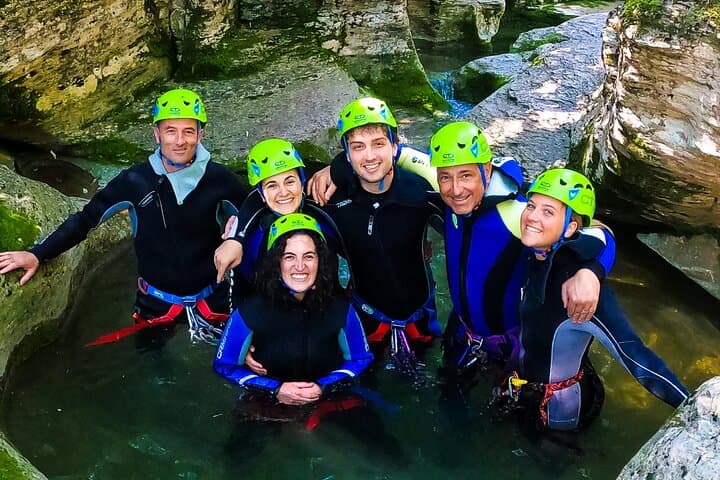
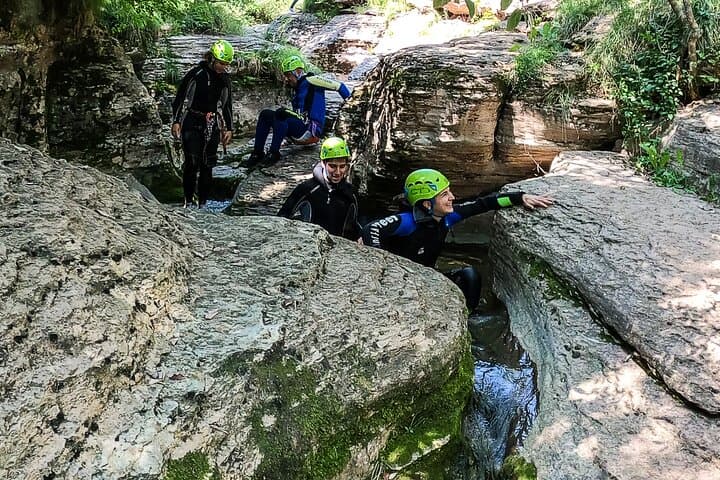
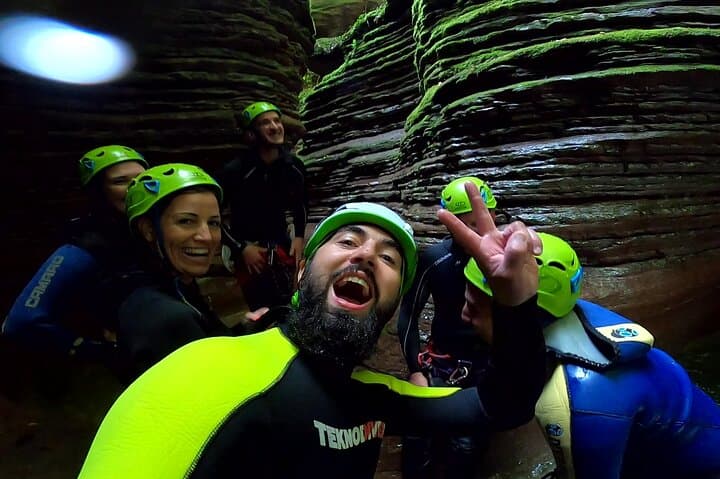
A narrow ribbon of water threads the canyon floor, cool and bright against pale limestone walls as guides clip harnesses and test ropes. In Val Maggiore, beneath the craggy silhouette of the Dolomites and within sight of Lake Santa Croce, participants move through a sequence of slides, swims, jumps and short abseils that follow the torrent’s ancient course. The sound of rushing water sets the pace; the rock demands attention.
Verified experiences and guided adventures in the surrounding area.
Operated by Giovanni Orlando · Alpago, Veneto
A narrow ribbon of water threads the canyon floor, cool and bright against pale limestone walls as guides clip harnesses and test ropes. In Val Maggiore, beneath the craggy silhouette of the Dolomites and within sight of Lake Santa Croce, participants move through a sequence of slides, swims, jumps and short abseils that follow the torrent’s ancient course. The sound of rushing water sets the pace; the rock demands attention.
Geologically, this is Dolomite country—rock laid down as seabed in the Triassic and later uplifted and carved by millennia of water. Canyons here are sculpted by relentless flow, alternating shallow pools and tight drops. Culturally the area sits in Veneto’s Prealps, where mountain agriculture and alpine guiding traditions meet watersports—local alpine guides (UIAGM certified) run technical rope systems and manage safety for mixed-ability groups.
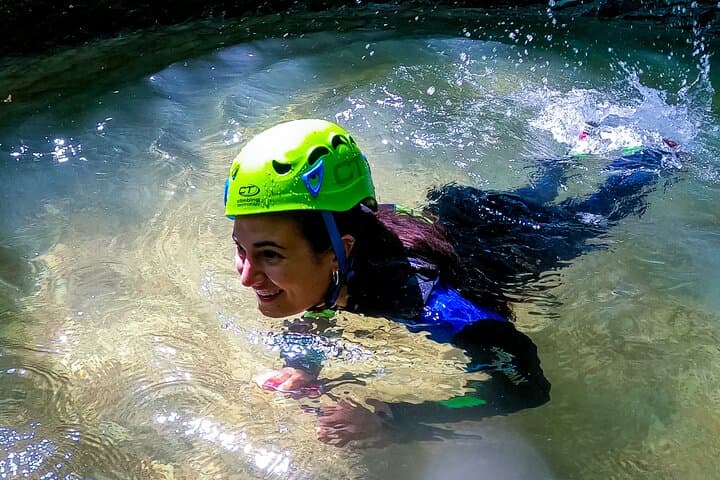
Expect short hikes in and out of the gorge, cold, clear pools, natural toboggans and a few abseils where guides lower less-experienced guests. The route suits those with basic swimming ability and a tolerance for heights; wetsuits, helmets and harnesses are provided. Timing matters: water level, air temperature and sunlight influence comfort and safety, so most operators run trips late spring through early autumn.
Practical tips: arrive hydrated and sun-protected, wear laced water shoes that won’t come off, and leave valuables in a dry vehicle. Follow guide instructions for jumps and rope work, and plan a warm change of clothes for after the canyon. For anyone seeking a compact, wet-and-wild half-day in striking Dolomite limestone, Val Maggiore delivers both adrenaline and clear-water scenery.
moderate.
4 hours.
Moderate fitness: able to walk uneven terrain, swim short distances and tolerate exposure to heights.
No—guided trips in Val Maggiore accept beginners with good basic swimming ability; guides manage technical ropework and abseil novices when needed.
Participants must weigh at least 40 kg, not be pregnant, and have no serious cardiovascular or spinal conditions; if you can’t swim or have severe vertigo this trip is not recommended.
Neoprene wetsuit, helmet and harness are supplied along with UIAGM-certified alpine guide instruction and technical equipment for abseils.
High water, storms or unsafe conditions may cancel the activity—operators typically cancel for bad weather and offer refunds if notified within the stated policy window.
The Dolomites originated as ancient seabeds; the limestone and dolomite rock were uplifted and later sculpted by glacial and fluvial erosion, forming narrow gorges like Val Maggiore.
Guides operate with low-impact practices—stay on established access routes, pack out waste, and avoid altering pools or rock features to preserve habitat and water quality.
Giovanni Orlando operates guided outdoor trips and adventures with an emphasis on safety, stewardship, and memorable experiences.
A narrow ribbon of water threads the canyon floor, cool and bright against pale limestone walls as guides clip harnesses and test ropes. In Val Maggiore, beneath the craggy silhouette of the Dolomites and within sight of Lake Santa Croce, participants move through a sequence of slides, swims, jumps and short abseils that follow the torrent’s ancient course. The sound of rushing water sets the pace; the rock demands attention.
A narrow ribbon of water threads the canyon floor, cool and bright against pale limestone walls as guides clip harnesses and test ropes. In Val Maggiore, beneath the craggy silhouette of the Dolomites and within sight of Lake Santa Croce, participants move through a sequence of slides, swims, jumps and short abseils that follow the torrent’s ancient course. The sound of rushing water sets the pace; the rock demands attention.
Geologically, this is Dolomite country—rock laid down as seabed in the Triassic and later uplifted and carved by millennia of water. Canyons here are sculpted by relentless flow, alternating shallow pools and tight drops. Culturally the area sits in Veneto’s Prealps, where mountain agriculture and alpine guiding traditions meet watersports—local alpine guides (UIAGM certified) run technical rope systems and manage safety for mixed-ability groups.
Expect short hikes in and out of the gorge, cold, clear pools, natural toboggans and a few abseils where guides lower less-experienced guests. The route suits those with basic swimming ability and a tolerance for heights; wetsuits, helmets and harnesses are provided. Timing matters: water level, air temperature and sunlight influence comfort and safety, so most operators run trips late spring through early autumn.
Practical tips: arrive hydrated and sun-protected, wear laced water shoes that won’t come off, and leave valuables in a dry vehicle. Follow guide instructions for jumps and rope work, and plan a warm change of clothes for after the canyon. For anyone seeking a compact, wet-and-wild half-day in striking Dolomite limestone, Val Maggiore delivers both adrenaline and clear-water scenery.