THE ADVENTURE COLLECTIVE® · Independent discovery and booking for outdoor travel

Cold plunge pools, natural slides and waterfall abseils define canyoning in Snowdonia. Expect guided ropework, progressive jumps and three hours of high-energy gorge travel in glacially carved terrain.
Cold plunge pools, natural slides and waterfall abseils define canyoning in Snowdonia. Expect guided ropework, progressive jumps and three hours of high-energy gorge travel in glacially carved terrain.
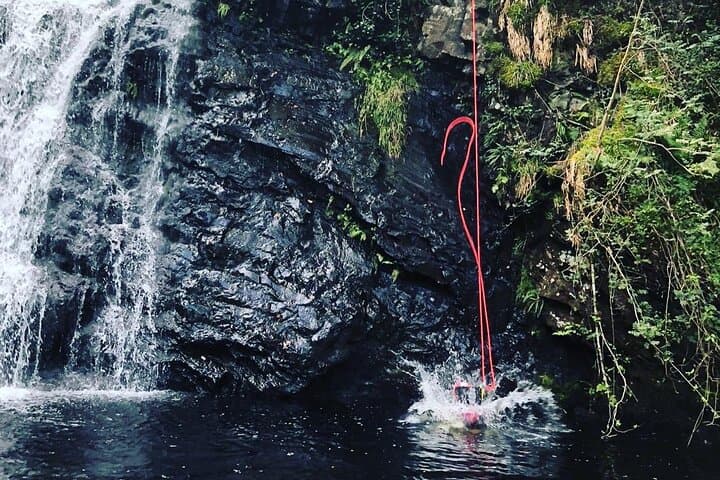
You stand at the lip of a cold plunge pool as wind off the peaks sharpens your breath. Below, a carved bowl of slate and stone waits—clear, churning water daring you to leap, slide, and abseil into it. That first angel fall backward becomes an immediate measure of the canyon: narrow walls, polished rock, and a current that pulls you toward the next feature.
Verified experiences and guided adventures in the surrounding area.
Operated by Bearded Men Adventures · Betws-y-Coed, Gwynedd
You stand at the lip of a cold plunge pool as wind off the peaks sharpens your breath. Below, a carved bowl of slate and stone waits—clear, churning water daring you to leap, slide, and abseil into it. That first angel fall backward becomes an immediate measure of the canyon: narrow walls, polished rock, and a current that pulls you toward the next feature.
Snowdonia’s canyons are products of Ice Age sculpting; glaciers gouged steep-sided gullies and left waterfalls that today feed natural slides and plunge pools. The activity threads local culture too—the rugged landscape shaped slate mining communities and a living Welsh language in nearby villages.
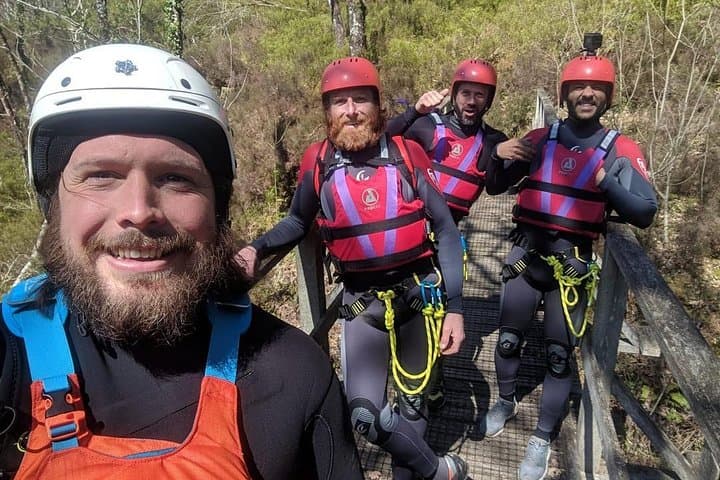
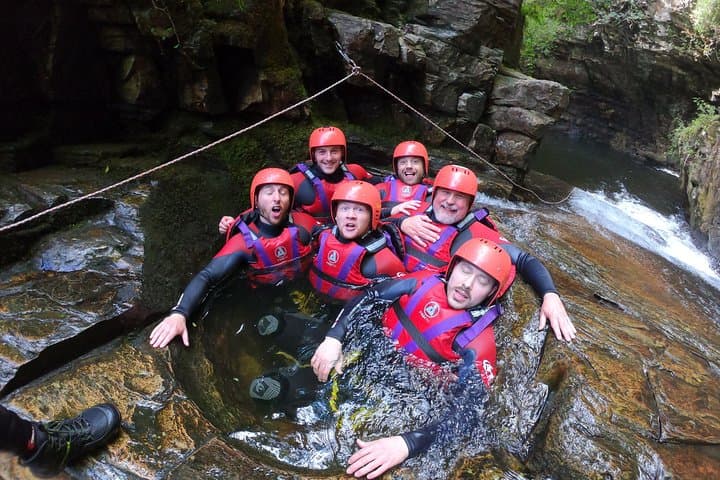
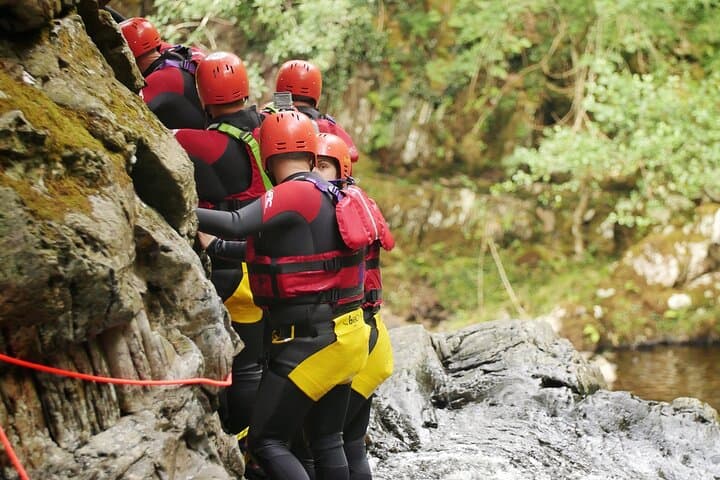
On a typical session you’ll wear a wetsuit, harness, helmet and buoyancy aid, then move through guided sequences: slides into deep pools, short swims between features, abseiling a main face, and progressive jumps at the Cauldron with an optional “big one” for those chasing adrenaline. Guides teach ropework, entry and exit technique, and safety planning so you can focus on flow and timing.
Practical advice: be prepared for cold water and variable weather; closed-toe water shoes, a dry change, and a decent breakfast matter. Groups move at different paces—expect instruction, practice runs, then a series of feature attempts within a 3-hour window. Operators typically cancel in severe weather; fitness should be moderate — able to swim and manage short climbs and drops. In short, this is gorge walking on adrenaline: physically engaging, technically coached, and deeply rooted in Snowdonia’s raw geology.
challenging.
3 hours.
Moderate to fit — comfortable swimming, able to scramble and manage short, steep climbs and drops.
You should be at a moderate fitness level: able to swim short distances, climb and descend uneven rock, and handle short bursts of exertion; guides coach technical moves.
No—operators provide instruction and safety briefings; however, comfort with heights and basic swimming are expected.
Operators may postpone or cancel trips when river flows or weather make the route unsafe; most offer refunds if cancelled with sufficient notice.
Yes — most operators supply wetsuit, wetsuit socks, harness, buoyancy aid and helmet as part of the activity.
Canyons and bowls in Snowdonia were carved by glacial action; local communities were shaped by slate quarrying and mountain farming for centuries.
Stick to marked access points and follow guide instructions to limit erosion and impact; operators often support local leave-no-trace practices and respect freshwater habitats.
Bearded Men Adventures operates guided outdoor trips and adventures with an emphasis on safety, stewardship, and memorable experiences.
You stand at the lip of a cold plunge pool as wind off the peaks sharpens your breath. Below, a carved bowl of slate and stone waits—clear, churning water daring you to leap, slide, and abseil into it. That first angel fall backward becomes an immediate measure of the canyon: narrow walls, polished rock, and a current that pulls you toward the next feature.
You stand at the lip of a cold plunge pool as wind off the peaks sharpens your breath. Below, a carved bowl of slate and stone waits—clear, churning water daring you to leap, slide, and abseil into it. That first angel fall backward becomes an immediate measure of the canyon: narrow walls, polished rock, and a current that pulls you toward the next feature.
Snowdonia’s canyons are products of Ice Age sculpting; glaciers gouged steep-sided gullies and left waterfalls that today feed natural slides and plunge pools. The activity threads local culture too—the rugged landscape shaped slate mining communities and a living Welsh language in nearby villages.
On a typical session you’ll wear a wetsuit, harness, helmet and buoyancy aid, then move through guided sequences: slides into deep pools, short swims between features, abseiling a main face, and progressive jumps at the Cauldron with an optional “big one” for those chasing adrenaline. Guides teach ropework, entry and exit technique, and safety planning so you can focus on flow and timing.
Practical advice: be prepared for cold water and variable weather; closed-toe water shoes, a dry change, and a decent breakfast matter. Groups move at different paces—expect instruction, practice runs, then a series of feature attempts within a 3-hour window. Operators typically cancel in severe weather; fitness should be moderate — able to swim and manage short climbs and drops. In short, this is gorge walking on adrenaline: physically engaging, technically coached, and deeply rooted in Snowdonia’s raw geology.